


President William Lai (賴清德) attended a dinner held by the American Israel Public Affairs Committee (AIPAC) when representatives from the group visited Taiwan in October. In a speech at the event, Lai highlighted similarities in the geopolitical challenges faced by Israel and Taiwan, saying that the two countries “stand on the front line against authoritarianism.”
Lai noted how Taiwan had “immediately condemned” the Oct. 7, 2023, attack on Israel by Hamas and had provided humanitarian aid.
Lai was heavily criticized from some quarters for standing with AIPAC and Israel.
On Nov. 4, the Taipei Times published an opinion article (“Speak out on the situation in Gaza”) by Chiu E-ling (邱伊翎) and Echo Lin (林仁惠), the executive director and chair respectively of Amnesty International Taiwan. Chiu and Lin said that Lai’s speech had a “glaring omission,” neglecting to speak of the plight of Palestinians in Gaza, which risked Taiwan “losing the moral high ground that has long distinguished it from authoritarian regimes.” That represented a strategic misjudgement that “threatens to undermine [Taiwan’s] international credibility,” they wrote.
However, there are nuances to soft power, as it often involves conflicting considerations and it is in stark contrast to hard power.
Regarding matters of hard power, Lai also spoke about his determination to increase military investment, including developing the indigenous defense industry, and purchasing weapons and technology from other countries. Comparing Israel’s and Taiwan’s “David against Goliath” predicaments, Lai expressed his ambition to develop a T-Dome multilayered air defense system inspired by Israel’s Iron Dome.
Sometimes the two methods of power projection are complementary. The Lai government’s strategic calculus when it comes to ties with Israel is more than just soft power, which should mitigate some of the criticism he faces.
Another aspect of the relationship became apparent after reports that Deputy Minister of Foreign Affairs Francois Wu (吳志中) had secretly visited Israel in the past few weeks.
On this page, Mor Sobol, an assistant professor in the Department of Diplomacy and International Relations at Tamkang University, writes that the only surprising aspect about close security cooperation between Taiwan and Israel is the dormancy over the past few decades, which recently ended.
Sobol suggests that one of the reasons for the revival of cooperation was the actions of the Chinese Communist Party (CCP), which not only pushed Taipei to seek solutions from Jerusalem, but also reduced Israel’s reluctance to engage with Taiwan despite knowing how Beijing was sure to respond.
Chinese President Xi Jinping (習近平) and the Chinese People’s Liberation Army (PLA) seem to be content with what their aggressive signaling in East Asia is doing globally, but their choices are creating the very conditions they fear.
Several recent editorials, including “The CCP’s playbook of deception,” (Nov. 19, page 8), have said that Beijing’s attempts to blame regional tensions on the re-emergence of “Japanese militarism” are not only unfounded and transparent, they are a form of projection, in the sense that China condemns in others what it practices itself. Its tactics are counterproductive.
Xi is concerned that China is surrounded by rival states and wants to consolidate the security calculus by annexing Taiwan, but the way he is going about it not only sends warnings to regional players, it gives them cause to consolidate their own alliances against military aggression from the PLA. How is the PLA’s activity in the South China Sea, the Taiwan Strait and the Miyako Strait supposed to signal that Xi’s expansionist ambitions would stop with the annexation of Taiwan?
Not only have the PLA’s actions prompted South Korea, Japan, the Philippines, Australia and New Zealand to increase their military budgets, they have formed alliances among themselves and with the US, with the links extending across the entire region beyond China’s eastern seaboard.
Even in Israel, as Sobol writes, Beijing’s response to Hamas’ Oct. 7, 2023, attack prompted the political and security establishment to view China as a strategic problem, accounting for the willingness to risk Beijing’s anger by engaging more closely with Taiwan.
Xi’s own strategic misjudgements have extended his problems to beyond the region.
While warning others not to “play with fire” over Taiwan, he should perhaps listen to his own advice and concede to a diplomatic approach with Taipei.
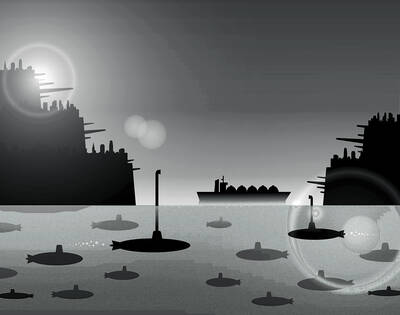
In the event of a war with China, Taiwan has some surprisingly tough defenses that could make it as difficult to tackle as a porcupine: A shoreline dotted with swamps, rocks and concrete barriers; conscription for all adult men; highways and airports that are built to double as hardened combat facilities. This porcupine has a soft underbelly, though, and the war in Iran is exposing it: energy. About 39,000 ships dock at Taiwan’s ports each year, more than the 30,000 that transit the Strait of Hormuz. About one-fifth of their inbound tonnage is coal, oil, refined fuels and liquefied natural gas (LNG),
To counter the CCP’s escalating threats, Taiwan must build a national consensus and demonstrate the capability and the will to fight. The Chinese Communist Party (CCP) often leans on a seductive mantra to soften its threats, such as “Chinese do not kill Chinese.” The slogan is designed to frame territorial conquest (annexation) as a domestic family matter. A look at the historical ledger reveals a different truth. For the CCP, being labeled “family” has never been a guarantee of safety; it has been the primary prerequisite for state-sanctioned slaughter. From the forced starvation of 150,000 civilians at the Siege of Changchun
The two major opposition parties, the Chinese Nationalist Party (KMT) and the Taiwan People’s Party (TPP), jointly announced on Tuesday last week that former TPP lawmaker Chang Chi-kai (張啟楷) would be their joint candidate for Chiayi mayor, following polling conducted earlier this month. It is the first case of blue-white (KMT-TPP) cooperation in selecting a joint candidate under an agreement signed by their chairpersons last month. KMT and TPP supporters have blamed their 2024 presidential election loss on failing to decide on a joint candidate, which ended in a dramatic breakdown with participants pointing fingers, calling polls unfair, sobbing and walking
In recent weeks, Taiwan has witnessed a surge of public anxiety over the possible introduction of Indian migrant workers. What began as a policy signal from the Ministry of Labor quickly escalated into a broader controversy. Petitions gathered thousands of signatures within days, political figures issued strong warnings, and social media became saturated with concerns about public safety and social stability. At first glance, this appears to be a straightforward policy question: Should Taiwan introduce Indian migrant workers or not? However, this framing is misleading. The current debate is not fundamentally about India. It is about Taiwan’s labor system, its


 RSS
RSS