


When Irish billionaire Denis O’Brien set about building a cellphone company in Haiti — the western hemisphere’s poorest country — there was no shortage of skeptics.
Six years later, O’Brien’s company, Digicel, is the largest private investor in Haiti and has 4.8 million users, about half of the population. It is a rare beacon of entrepreneurship in a country still struggling to rebuild after the 2010 earthquake.
O’Brien’s ambitious plans for Digicel are part of his bullish vision for Haiti, which stands in sharp contrast to the usually gloomy forecasts for a nation crippled by perpetual political turmoil and natural disasters.
Promotion of homegrown entrepreneurship is rare in Haiti, where the government and banks have done little to stimulate investment and a small business elite has profited from import monopolies that stifle local production.
On a typically whirlwind visit shortly before Christmas, O’Brien, 54, flew into Haiti from New York on his corporate jet for a monthly Digicel board meeting. He then hosted a gala celebrating Digicel’s ‘Entrepreneur of the Year,’ a televised event he imported from Ireland to inspire small businesses.
Close to 2m tall with white hair and ruddy cheeks, O’Brien is easy to spot among the crowd of mostly local business people and dignitaries, including Haitian President Michel Martelly.
“Haiti needs more people like you,” Martelly said. “If it wasn’t for Denis, we’d all be sitting here alone.”
The Digicel Group is a privately-held company founded by O’Brien in 2001 and headquartered in Jamaica, with 13 million customers in 31 emerging markets, mostly in the Caribbean and Pacific regions.
O’Brien holds 94 percent of Digicel’s shares and made Forbes magazine’s billionaires list last year at No. 205 with a net worth of US$5 billion. He models himself on Sudanese-born British billionaire Mo Ibrahim, the founder of Africa-wide cellphone network Celtel, and India-based Sunil Mittal, the founder of Bharti Airtel.
Ibrahim sold Celtel in 2005 for US$3.4 billion and now runs the Mo Ibrahim Foundation to encourage better governance in Africa, while Mittal also runs his own foundation.
“They proved the concept that you can have people with very little disposable income in real terms, but who want a phone and they’ll pay you for it and you can afford to build up quite a large network,” O’Brien told reporters.
Digicel is now looking to enter Myanmar, a country of about 60 million people that has one of the lowest mobile penetration rates in the world. Only 3 percent of Myanmar’s population owned a phone in 2011, World Bank data show.
Digicel says it had revenue of about US$2.5 billion in the year ending on March last year, with Haiti leading the way by generating US$439 million.
Digicel’s 2006 launch in Haiti was a rare example of foreign investment in a country more used to depending on foreign aid.
Two existing cellphone companies which offered spotty, more expensive services were quickly overtaken as Digicel invested in a national infrastructure and offered handsets for as little as US$7 with low rates for its mostly pre-paid customer base.
“Denis revolutionized the communications sector. Before, cellphones were a luxury and now they are a must,” Haitian Minister of Tourism Stephanie Villedrouin said.
O’Brien’s investments in Haiti go far beyond telephony.
Last month, he broke ground on Haiti’s first Marriott hotel and Digicel’s charity foundation is spending millions to build 150 schools across the country.
His approach has won acclaim from the likes of former US president Bill Clinton, who heads the Clinton Global Initiative (CGI) and is the UN’s special envoy to Haiti.
O’Brien coordinates CGI’s Haiti Action Network, whose members have committed more than US$350 million to education, infrastructure and business development projects.
“The CGI program in Haiti is considered one of the best. It’s really because of Denis’ strong leadership,” said Anne Hastings, the director of Fonkoze, a micro-credit finance institution in Haiti. “He sets goals and people have to achieve them. That’s unusual in Haiti.”
His first non-profit investment in Haiti was the capital’s historic Iron Market, the heart of downtown commercial activity, which O’Brien spent millions to rebuild after the earthquake.
“All the problems in Haiti are fixable, you just need the right project skills,” he said.
To prove his point, Digicel has moved its call center for the French-speaking Caribbean from affluent Martinique to Haiti.
On his first visit to Haiti, O’Brien was struck by the streets crowded with vendors.
“You have all these entrepreneurs all over this city. They are natural-born sellers,” he said.
By celebrating enterprise on the television show, a highly-produced affair with crane-mounted cameras, lighting, dry ice and confetti, O’Brien hopes to inspire a new business culture of import substitution. This year’s finalists included a coffee milling business, a solar energy company, a fish exporter and fashion designers.
“Hopefully, somebody is sitting at home or under a tree and says: ‘I got an idea,’” he said. “Instead of importing rice, grow rice. Instead of importing chickens, breed chickens. Instead of importing eggs, lay eggs.”
O’Brien’s next goal: launching a smartphone revolution in Haiti and offering mobile banking to the poor. Digicel is investing in extra bandwidth this year to handle a fourth-generation (4G) network upgrade, raising its total investment in Haiti to more than US$600 million.
“What we’re trying to have is a First World telecommunications network in a developing economy, and most of the time that doesn’t happen,” he said.
Digicel relies on Asian firms such as Samsung Electronics Co to continue lowering prices thanks to cheap Taiwanese semi-conductors.
“We can buy a smartphone for US$70 today. In 2013 it will be US$30,” he said.
Since gobbling up its main competitor, Comcel, last year, Digicel admits it has had service issues, but says they are being addressed. Some suggest it may have too cozy a relationship with the Haitian government, creating a virtual state within a state that rivals the influence of the UN or the World Bank.
Digicel is Haiti’s largest taxpayer and its main building houses the offices of the mayor of Port-au-Prince as well as the Red Cross.
O’Brien, whose mother was a human rights activist in Ireland and who is a father of four, has spent US$25 million on development projects through the foundation.
“Most multi-billion dollar companies rob the country blind. We like to make a good profit, but sleep well at night,” O’Brien said.
The morning after the business gala, O’Brien drove out to the rural community of Saut d’Eau for the inauguration of one of the new schools built by his foundation.
The school’s nine classrooms, computer lab, auditorium, cafeteria, library and basketball court cost US$326,000.
The Digicel Foundation has built 87 schools so far, at an average cost of about US$180,000. It does not pay operating costs and so is careful to pick communities that are committed to running the school.
At the inauguration, children in plaid uniforms sang a welcome song ending with a shout of: “Long live Haiti. Long live Digicel.”
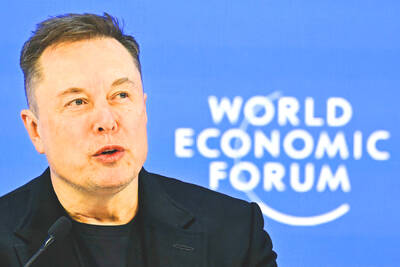
Elon Musk’s lieutenants have reached out to chip industry suppliers, including Applied Materials Inc, Tokyo Electron Ltd and Lam Research Corp, for his envisioned Terafab, early steps in an audacious and likely arduous attempt to break into the production of cutting-edge chips. Staff working for the joint venture between Tesla Inc and Space Exploration Technologies Corp (SpaceX) have sought price quotes and delivery times for an array of chipmaking gear, people familiar with the matter said. In past weeks, they’ve contacted makers of photomasks, substrates, etchers, depositors, cleaning devices, testers and other tools, according to the people, who asked not to

JET JUICE: The war on Iran’s secondary effects have seen fuel prices skyrocket, knocking flight schedules down to earth in return as airlines struggle with costs Airline passengers should brace for more irritation in the next few months as carriers worldwide cancel flights and ground planes to cope with stratospheric increases in jet-fuel prices. Dutch flag carrier KLM is the latest company to cut its schedule, saying on Thursday that it would scrap 80 return flights at Amsterdam’s Schiphol Airport in the coming month. That puts it in the same league as United Airlines Holdings Inc, Deutsche Lufthansa AG and Cathay Pacific Airways Ltd, which have all pruned itineraries to mitigate costs. Global capacity for next month has been reduced by about 3 percentage points, with all

Taiwan is attracting a growing number of foreign jobseekers as companies increasingly recruit overseas talent to ease labor shortages and expand global reach, recruitment platform 104 Job Bank (104人力銀行) said yesterday. More than 40,000 foreign nationals searched for jobs in Taiwan through the platform last year, a 28 percent increase from a year earlier, the company said. Malaysians accounted for the largest share of overseas jobseekers at 12.2 percent, followed by Indonesians at 11.9 percent and Vietnamese at 10.8 percent. Indonesian applicants surged more than 50 percent year-on-year, while Vietnamese jobseekers rose by more than 30 percent. Applicants from the
NO SHORTCUTS: Asked about Elon Musk’s Terafab initiative, TSMC CEO C.C. Wei said it takes two to three years to build a fab and another one to two to ramp it up Taiwan Semiconductor Manufacturing Co (TSMC, 台積電) yesterday raised its revenue growth forecast for this year to above 30 percent, up from the 25 percent it estimated three months earlier, citing extremely robust artificial intelligence (AI)-related chip demand. “Our customers and customers’ customers, who are mainly cloud service providers, continue to send us very positive signals and outlook,” TSMC chairman and CEO C.C. Wei (魏哲家) said at an earnings conference. The company also hiked its capital expenditure for this year toward the higher end of its forecast, or US$56 billion, as it aims to step up advanced chip capacity expansions, such as


 RSS
RSS