


Finance ministers and central bankers from the world’s leading economies agreed yesterday on the need to cooperate in fending off financial market turmoil and keeping the world economic recovery on track.
In a statement that will serve as an outline for talks later this month by national leaders, including US President Barack Obama, the G20 endorsed rescue policies for Europe and the need to rebalance global economic growth by supporting more domestic demand and greater trade by developing countries.
The agreement included no major new initiatives, but bridged differences over details on far-reaching financial reforms, with calls to step up regulatory changes and cut back on massive budget deficits.
“The recent volatility in financial markets reminds us that significant challenges remain and underscores the importance of international cooperation,” the G20 statement said.
It also called on countries to “put in place credible, growth-friendly measures, to deliver fiscal sustainability,” noting that national policies would have to fit each country’s unique situation.
Europe’s sovereign debt crisis has sparked worries that the global economy could succumb to a second downturn following the meltdown sparked by the collapse of US investment bank Lehman Brothers in 2008.
“We welcome the determined actions taken by the European Union, the European Central Bank (ECB) and the IMF,” the statement said, referring to a US$1 trillion bailout to help countries cope with the fallout from unsustainably high debt levels.
South Korean Minister of Strategy and Finance Yoon Jeung-hyun said concerns over the crisis in Greece and other European countries added urgency to work on regulatory reforms.
As the ministers hashed out the priorities to forward to their leaders, US Treasury Secretary Timothy Geithner urged his counterparts to reaffirm their commitment to safeguarding the recovery.
“The G20’s strong policy response has played a pivotal role in restoring economic growth but concerns about growth, as Europe makes needed policy adjustments, threaten to undercut the momentum of the recovery,” Geithner said in a letter published online by the Wall Street Journal. Its authenticity was confirmed by his staff.
Hungary warned on Friday that it was the latest European country facing problems following Greece, Spain and Portugal, prompting the euro to fall below US$1.20 for the first time in more than four years.
European officials insisted that worries about Hungary and the euro were overblown.
“Hungary has made serious progress in consolidating its public finances over the last couple of years,” European Commissioner for Economic and Monetary Affairs Olli Rehn said after the meeting.
ECB President Jean-Claude Trichet defended the euro, calling it a “solid currency, a credible currency, a currency that has kept its value in terms of price stability.”
The G20, founded in 1999, shifted its focus to crisis management after the Lehman Brothers collapse. In addition to its annual finance meetings, it has been holding summits since late 2008.
A chief concern is how to rein in ballooning fiscal deficits without hobbling growth.
The G20 is working hard on technical details to reform financial regulations and participants said a basic consensus was reached on the need for banks and other financial institutions to bear the burden of government bailouts and other interventions.
“The financial sector should make a fair and substantial contribution toward paying for any burdens associated with government interventions,” the statement said, adding that such an approach could involve a “range of policy approaches.”
It also said that banks should be discouraged from excessive indebtedness and risk taking.
“It is critical that our banking regulators develop capital and liquidity rules of sufficient rigor to allow our financial firms to withstand future downturns in the global financial system,” the statement said.
Details of such initiatives are still being worked out. Some members worry that an increase in the capital reserves banks must hold to cushion themselves against potential loan losses could hinder lending, possibly undermining funding crucial for the recovery.
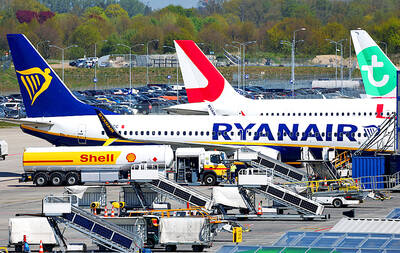
Ryanair, Transavia, Volotea and other low-cost airlines are feeling the financial pain from high jet fuel prices as a result of the Middle East war and are cutting flights. The closure of the Strait of Hormuz has taken a huge chunk of oil supplies off the market, sending the price of jet fuel soaring and triggering fears of shortages that could force airlines to cancel flights. Airlines are not waiting for a lack of supplies to react. “Travel alert: Airlines are cutting thousands of flights right now,” Travel Therapy host Karen Schaler said in an Instagram reel this past weekend.
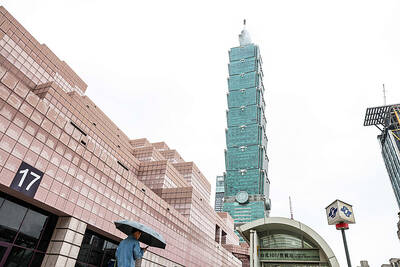
MANAGING RISKS: Taiwan has secured LNG sufficient to cover 95 percent of electricity demand for next month, UBS said, describing the government’s approach as proactive UBS Group AG has raised its forecast for Taiwan’s economic growth this year to 8 percent, up from 6.9 percent previously, and said expansion could reach as high as 8.6 percent if external energy shocks are avoided. The upgrade reflects a stronger-than-expected first-quarter performance and sustained momentum in artificial intelligence (AI)-driven exports, which UBS said are providing a firm foundation for growth despite geopolitical and energy risks. Taiwan’s GDP expanded 13.69 percent year-on-year in the first quarter, the fastest growth since the second quarter of 1987, the Directorate-General of Budget, Accounting and Statistics (DGBAS) reported on Thursday. On a seasonally
The Fair Trade Commission’s (FTC) ongoing review of Grab Holdings Ltd’s US$600 million acquisition of Foodpanda Taiwan’s operations, announced on March 23, has taken on fresh urgency as industry experts warn that the transaction could embed significant Chinese cybersecurity vulnerabilities into Taiwan’s digital infrastructure through Grab’s deep ties to autonomous-driving firm WeRide (文遠知行). Less than 16 months after the FTC blocked Uber Eats’ direct attempt to acquire Foodpanda Taiwan — citing potential combined market shares of 80 to 90 percent — the emergence of Grab as the buyer has prompted questions about whether the same competitive harm is simply being rerouted
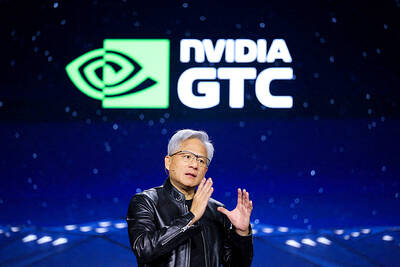
The list of Asian stocks that benefit from business partnership with Nvidia Corp is getting longer, as the region further integrates into the artificial intelligence (AI) chip giant’s business ecosystem. Just in the past week, South Korea’s LG Electronics Inc, Taiwan’s Nanya Technology Corp (南亞科技), as well as China’s Huizhou Desay SV Automotive Co (德賽西威) and Pateo Connect Technology Shanghai Corp (博泰車聯) have become the latest to rally on news of tie-ups, supply-chain participation or product collaboration with the US chip designer. Asian suppliers account for about 90 percent of Nvidia’s production costs, up from about 65 percent last year, data compiled


 RSS
RSS