


Microsoft Corp will offer computer users a choice of rival Web browsers to ward off new EU antitrust fines, EU regulators and Microsoft said on Friday.
Microsoft said its proposal, if accepted by the European Commission, would “fully address” antitrust worries over its browser and “mark a big step forward in addressing a decade of legal issues.”
The EU has charged the company with monopoly abuse for tying the Internet Explorer browser to the Windows operating system installed on most of the world’s desktop computers.
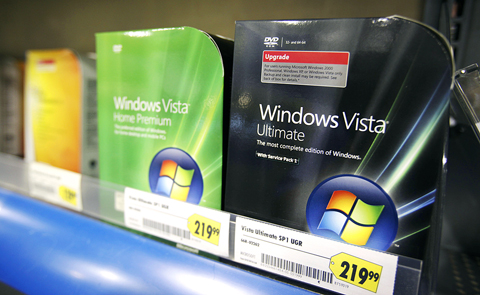
PHOTO: AP
It welcomed Microsoft’s suggestions and said it would evaluate the proposal and seek input from other browser makers and computer companies before making a decision.
If approved, the proposal could be legally binding for five years.
On the browser case, Microsoft is suggesting that users of Windows XP, Vista or its latest release Windows 7 who have Internet Explorer set as the default browser would see a Web page prompting them to pick from five of the most popular browsers in Europe.
Existing Windows users would get the ballot screen from a software update.
Microsoft said the list of browsers would be reviewed twice a year based on usage data for the previous six months.
Microsoft’s browser is the most widely used worldwide, but Mozilla Corp’s Firefox is gaining in popularity.
Mozilla and Google Inc — which recently released the browser Chrome — are supporting the case against Microsoft.
Windows would still include Internet Explorer, but users would be able to disable it. Computer manufacturers would also be able to choose to install other browsers, set them as default and disable Internet Explorer.
The company had said last month that it would remove its browser from Windows entirely to avoid antitrust problems. Instead, it planned to give Internet Explorer away as a download or on a disc.
EU regulators slammed the idea, saying the 5 percent of people who buy Windows off the shelf wouldn’t have a real choice of browsers.
Most people buy the software pre-installed on a computer assembled by manufacturers such as Dell Inc or Hewlett-Packard Co.
Brad Smith, Microsoft’s general counsel, said in a statement that until EU regulators rule on the company’s proposal, it will continue to require PC makers to sell computers with the browserless Windows 7 “E” version in the region. Windows 7 will go on sale on Oct. 22.
The ballot screen that Microsoft is proposing is close to what regulators called for in January when they asked Microsoft to offer several browsers on Windows.
Under that proposal, PC companies would have been responsible for building the browser-choosing technology.
Under Microsoft’s plan, the software maker would handle the technology.
The original ballot-screen proposal was also backed by Norwegian mobile Internet browser maker Opera Software ASA, which triggered the EU antitrust case by complaining that Microsoft was unfairly using its power as the dominant supplier of operating system software to squeeze out rivals.
Opera lawyer Thomas Vinje welcomed Microsoft’s announcement on Friday but said “the devil is in the detail” on how far it would go to calm antitrust fears.
Offering the ballot screen to existing Windows users “will change the world,” Vinje said, because it would encourage developers to make cross-platform software based on Web standards instead of tailoring their work to Microsoft software.
Microsoft has said that it fully complies with existing Internet standards.
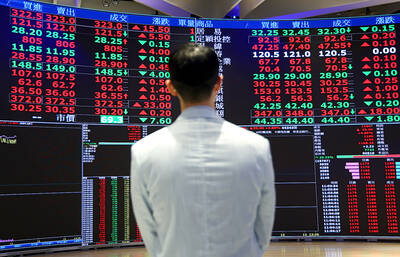
Shares in Taiwan closed at a new high yesterday, the first trading day of the new year, as contract chipmaker Taiwan Semiconductor Manufacturing Co (TSMC, 台積電) continued to break records amid an artificial intelligence (AI) boom, dealers said. The TAIEX closed up 386.21 points, or 1.33 percent, at 29,349.81, with turnover totaling NT$648.844 billion (US$20.65 billion). “Judging from a stronger Taiwan dollar against the US dollar, I think foreign institutional investors returned from the holidays and brought funds into the local market,” Concord Securities Co (康和證券) analyst Kerry Huang (黃志祺) said. “Foreign investors just rebuilt their positions with TSMC as their top target,
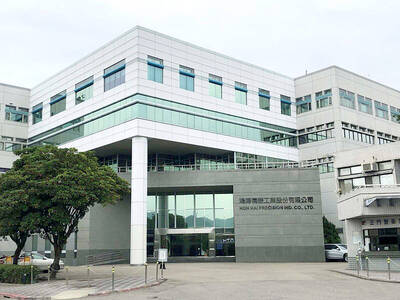
REVENUE PERFORMANCE: Cloud and network products, and electronic components saw strong increases, while smart consumer electronics and computing products fell Hon Hai Precision Industry Co (鴻海精密) yesterday posted 26.51 percent quarterly growth in revenue for last quarter to NT$2.6 trillion (US$82.44 billion), the strongest on record for the period and above expectations, but the company forecast a slight revenue dip this quarter due to seasonal factors. On an annual basis, revenue last quarter grew 22.07 percent, the company said. Analysts on average estimated about NT$2.4 trillion increase. Hon Hai, which assembles servers for Nvidia Corp and iPhones for Apple Inc, is expanding its capacity in the US, adding artificial intelligence (AI) server production in Wisconsin and Texas, where it operates established campuses. This
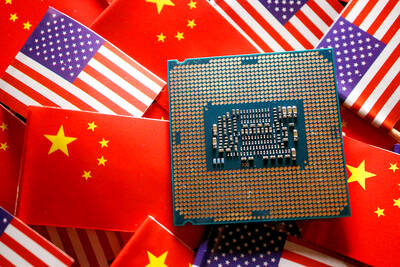
US President Donald Trump on Friday blocked US photonics firm HieFo Corp’s US$3 million acquisition of assets in New Jersey-based aerospace and defense specialist Emcore Corp, citing national security and China-related concerns. In an order released by the White House, Trump said HieFo was “controlled by a citizen of the People’s Republic of China” and that its 2024 acquisition of Emcore’s businesses led the US president to believe that it might “take action that threatens to impair the national security of the United States.” The order did not name the person or detail Trump’s concerns. “The Transaction is hereby prohibited,”
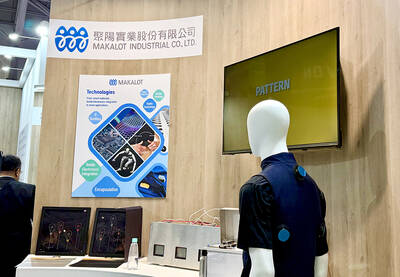
Garment maker Makalot Industrial Co (聚陽) yesterday reported lower-than-expected fourth-quarter revenue of NT$7.93 billion (US$251.44 million), down 9.48 percent from NT$8.76 billion a year earlier. On a quarterly basis, revenue fell 10.83 percent from NT$8.89 billion, company data showed. The figure was also lower than market expectations of NT$8.05 billion, according to data compiled by Yuanta Securities Investment and Consulting Co (元大投顧), which had projected NT$8.22 billion. Makalot’s revenue this quarter would likely increase by a mid-teens percentage as the industry is entering its high season, Yuanta said. Overall, Makalot’s revenue last year totaled NT$34.43 billion, down 3.08 percent from its record NT$35.52


 RSS
RSS