


The Taiwan-based Ret-Ser Engineering Corp (榮民工程) has decided to withdraw from the construction of a highway in Costa Rica that was initiated with aid from Taiwan in 2005, said a Ret-Ser official stationed in Costa Rica.
Ret-Ser is looking for a Costa Rican engineering company to take over the contract for the construction of the Naranjo-San Carlos Highway, said Chang Chih-kang (張志剛), who is in charge of the project.
Chang said part of the project had been suspended since Dec. 12 because of a delay in land procurement and persistent technical problems as the Costa Rican side had repeatedly changed the construction blueprints.
As a result, the completion date for the 29.73km highway has been pushed from October next year to April 2010, Chang said.
“Ret-Ser hopes it will be able to withdraw from the construction project peacefully,” he said.
Ret-Ser has seven Taiwanese employees in Costa Rica, 10 construction workers from the Philippines and 40 Costa Rican construction workers.
La Republica, a Costa Rican newspaper, quoted Vice Minister of Public Works Pedro Castro as saying that Ret-Ser’s withdrawal from the highway construction was a response to Costa Rica severing diplomatic ties with Taiwan in June last year.
Ret-Ser entered talks with Costa Rican engineering company Sanchez Carvajal two weeks ago on transferring the contract, the report said.
The Costa Rican government has given its assurance that the project will not be affected by the contract transfer, it said.
Castro was quoted as saying that the Ministry of Public Works was looking into the issue and was expected to submit a report to the Ministry of Audit within two weeks.
The construction of the highway at an estimated cost of US$61 million was launched in October 2005 when under the administration of former Costa Rican president Abel Pacheco.
The administration of Costan Rican President Oscar Arias has altered the project to four lanes from two lanes, doubling the construction costs and resulting in disputes with the Ret-Ser, the newspaper said.
Costa Rica switched diplomatic recognition from Taipei to Beijing on June 6 last year, ending 63 years of ties with Taiwan.
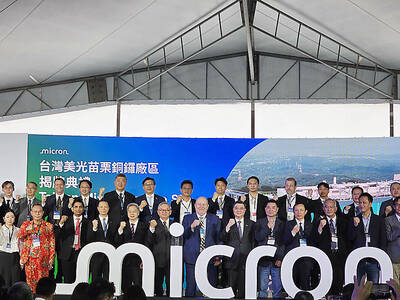
UNPRECEDENTED PACE: Micron Technology has announced plans to expand manufacturing capabilities with the acquisition of a new chip plant in Miaoli Micron Technology Inc unveiled a newly acquired chip plant in Miaoli County yesterday, as the company expands capacity to meet growing demand for advanced DRAM chips, including high-bandwidth memory chips amid the artificial intelligence boom. The plant in Miaoli County’s Tongluo Township (銅鑼), which Micron acquired from Powerchip Semiconductor Manufacturing Corp (力積電) for US$1.8 billion, is expected to make a sizeable capacity contribution to the company from fiscal 2028, the company said in a statement. It would be an extended production site of Micron’s large-scale manufacturing hub in Taichung, the company said. As the global semiconductor industry is racing to reach US$1 trillion
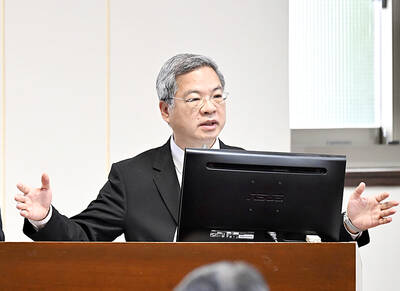
ABOVE LEGAL REQUIREMENT: The Ministry of Economic Affairs is prepared if LNG supply is disrupted, with more than the legal requirement of 11 days of inventory Taiwan has largely secured liquefied natural gas (LNG) supplies through May and arranged about half of June’s supply, Minister of Economic Affairs Kung Ming-hsin (龔明鑫) said yesterday. Since the Middle East conflict began on Feb. 28, Taiwan’s LNG inventories have remained more than 12 days, exceeding the legal requirement of 11 days, indicating no major supply concerns for domestic gas and electricity, Kung said at a meeting of the legislature’s Economics Committee in Taipei. The ministry aims to increase the figure to 14 days by the end of next year, he said. While one or two LNG or crude oil shipments for May

Taiwan’s food delivery market could undergo a major shift if Singapore-based Grab Holdings Ltd completes its planned acquisition of Delivery Hero SE’s Foodpanda business in Taiwan, industry experts said. Grab on Monday last week announced it would acquire Foodpanda’s Taiwan operations for US$600 million. The deal is expected to be finalized in the second half of this year, with Grab aiming to complete user migration to its platform by the first half of next year. A duopoly between Uber Eats and Foodpanda dominates Taiwan’s delivery market, a structure that has remained intact since the Fair Trade Commission (FTC) blocked Uber Technologies Inc’s

Memory chip stocks extended their losses yesterday after Alphabet Inc’s Google publicized research that could allow more efficient use of the storage needed for artificial intelligence (AI) development. SK Hynix Inc and Samsung Electronics Co, South Korean leaders in the market, fell more than 6 percent and about 5 percent respectively in Seoul. In the US, Micron Technology Inc, Western Digital Corp and Sandisk Corp slid more than 2 percent in pre-market trading, after they all closed lower on Wednesday. Memory companies have been on a tear in recent months as the rapid development of AI infrastructure triggered a spike in chip


 RSS
RSS