


Taiwan's benchmark index gained 4.17 percent yesterday, boosted by strength in electronics and plastic shares.
The Weighted Price Index of the Taiwan Stock Exchange rose 314.73 points to close at 7,865.28, its highest close since Jan. 21.
The rise followed the overnight rally in US tech shares after encouraging retail sales data.
Edward Lien (
"Concerns over a US economic slowdown seemed to ease a bit in the Asian markets," Lien said.
The electronics subindex rebounded from a 10.5 percent fall in the past month, gaining 4.9 percent.
Hon Hai Precision Industry (
The New Taiwan dollar was little changed on speculation some exporters bought the currency to guard against further gains while some traders sold it on the prospect the central bank would intervene.
The currency swung between gains and losses near a 20-month high, an advance that was spurred by the interest-rate premium over the US following two cuts in borrowing costs by the Federal Reserve this year.
"Exporters and retail investors are taking the Taiwan dollar," said Yang Kung-yi (楊恭逸), a currency trader at Shanghai Commercial & Savings Bank (上海商業儲蓄銀行) in Taipei.
"Some conservative investors who had bought foreign currency because of interest-rate differentials are converting their US dollars into the local currency," Yang said.
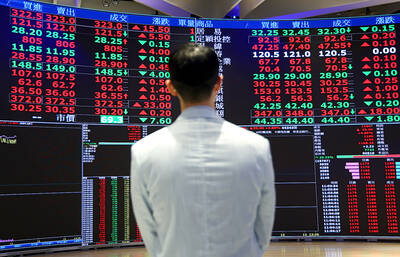
Shares in Taiwan closed at a new high yesterday, the first trading day of the new year, as contract chipmaker Taiwan Semiconductor Manufacturing Co (TSMC, 台積電) continued to break records amid an artificial intelligence (AI) boom, dealers said. The TAIEX closed up 386.21 points, or 1.33 percent, at 29,349.81, with turnover totaling NT$648.844 billion (US$20.65 billion). “Judging from a stronger Taiwan dollar against the US dollar, I think foreign institutional investors returned from the holidays and brought funds into the local market,” Concord Securities Co (康和證券) analyst Kerry Huang (黃志祺) said. “Foreign investors just rebuilt their positions with TSMC as their top target,
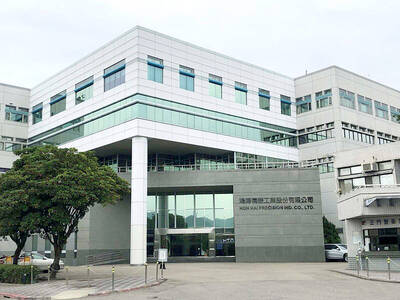
REVENUE PERFORMANCE: Cloud and network products, and electronic components saw strong increases, while smart consumer electronics and computing products fell Hon Hai Precision Industry Co (鴻海精密) yesterday posted 26.51 percent quarterly growth in revenue for last quarter to NT$2.6 trillion (US$82.44 billion), the strongest on record for the period and above expectations, but the company forecast a slight revenue dip this quarter due to seasonal factors. On an annual basis, revenue last quarter grew 22.07 percent, the company said. Analysts on average estimated about NT$2.4 trillion increase. Hon Hai, which assembles servers for Nvidia Corp and iPhones for Apple Inc, is expanding its capacity in the US, adding artificial intelligence (AI) server production in Wisconsin and Texas, where it operates established campuses. This
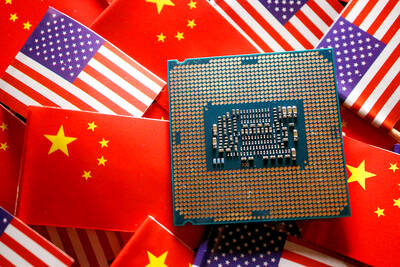
US President Donald Trump on Friday blocked US photonics firm HieFo Corp’s US$3 million acquisition of assets in New Jersey-based aerospace and defense specialist Emcore Corp, citing national security and China-related concerns. In an order released by the White House, Trump said HieFo was “controlled by a citizen of the People’s Republic of China” and that its 2024 acquisition of Emcore’s businesses led the US president to believe that it might “take action that threatens to impair the national security of the United States.” The order did not name the person or detail Trump’s concerns. “The Transaction is hereby prohibited,”
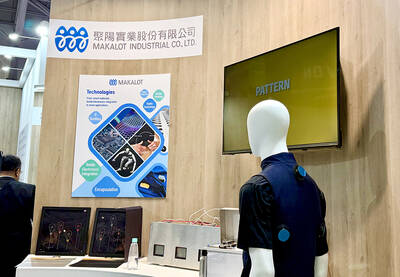
Garment maker Makalot Industrial Co (聚陽) yesterday reported lower-than-expected fourth-quarter revenue of NT$7.93 billion (US$251.44 million), down 9.48 percent from NT$8.76 billion a year earlier. On a quarterly basis, revenue fell 10.83 percent from NT$8.89 billion, company data showed. The figure was also lower than market expectations of NT$8.05 billion, according to data compiled by Yuanta Securities Investment and Consulting Co (元大投顧), which had projected NT$8.22 billion. Makalot’s revenue this quarter would likely increase by a mid-teens percentage as the industry is entering its high season, Yuanta said. Overall, Makalot’s revenue last year totaled NT$34.43 billion, down 3.08 percent from its record NT$35.52


 RSS
RSS