


Altria Group Inc's Philip Morris USA plans to unveil a new spitless, smokeless tobacco product under the Marlboro brand name to spur sales amid declining cigarette consumption.
Marlboro Snus will be tested in Dallas starting in August. It consists of a small pouch of finely ground tobacco in mint, spice and other flavors that users insert between their cheek and gum, Richmond, Virginia-based Philip Morris said yesterday in a statement.
Philip Morris, the largest US tobacco company, is using the world's top-selling cigarette brand to try to tap growth in the US$3.8 billion US smokeless tobacco market.
Marlboro Snus is the company's second test of a spitless snuff after introducing Taboka in Indianapolis last July.
"It's a hard category because of established brand loyalty" to products such as UST Inc's Copenhagen, said Thomas Russo, who manages more than US$3 billion, including Altria shares, at Gardner Russo & Gardner in Lancaster, Pennsylvania.
Marlboro's "familiarity will give them a stronger chance at unseating other brands," he said.
The smokeless, spitless Marlboro product will sell for less than a pack of Marlboro cigarettes, said Philip Morris spokesman Steve Callahan, who declined to be more specific.
Marlboro's popularity "may help to encourage trial of this product by adult smokers," Philip Morris said in the statement.
Snus may appeal to consumers who don't like smokeless products that require spitting, the company said.
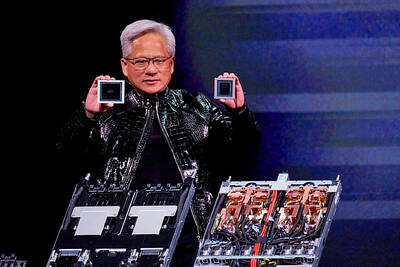
Nvidia Corp chief executive officer Jensen Huang (黃仁勳) on Monday introduced the company’s latest supercomputer platform, featuring six new chips made by Taiwan Semiconductor Manufacturing Co (TSMC, 台積電), saying that it is now “in full production.” “If Vera Rubin is going to be in time for this year, it must be in production by now, and so, today I can tell you that Vera Rubin is in full production,” Huang said during his keynote speech at CES in Las Vegas. The rollout of six concurrent chips for Vera Rubin — the company’s next-generation artificial intelligence (AI) computing platform — marks a strategic
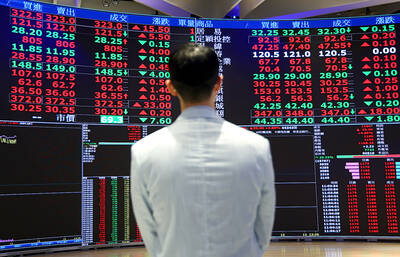
Shares in Taiwan closed at a new high yesterday, the first trading day of the new year, as contract chipmaker Taiwan Semiconductor Manufacturing Co (TSMC, 台積電) continued to break records amid an artificial intelligence (AI) boom, dealers said. The TAIEX closed up 386.21 points, or 1.33 percent, at 29,349.81, with turnover totaling NT$648.844 billion (US$20.65 billion). “Judging from a stronger Taiwan dollar against the US dollar, I think foreign institutional investors returned from the holidays and brought funds into the local market,” Concord Securities Co (康和證券) analyst Kerry Huang (黃志祺) said. “Foreign investors just rebuilt their positions with TSMC as their top target,
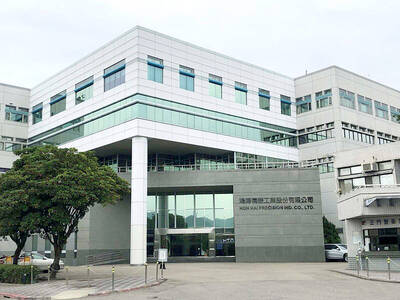
REVENUE PERFORMANCE: Cloud and network products, and electronic components saw strong increases, while smart consumer electronics and computing products fell Hon Hai Precision Industry Co (鴻海精密) yesterday posted 26.51 percent quarterly growth in revenue for last quarter to NT$2.6 trillion (US$82.44 billion), the strongest on record for the period and above expectations, but the company forecast a slight revenue dip this quarter due to seasonal factors. On an annual basis, revenue last quarter grew 22.07 percent, the company said. Analysts on average estimated about NT$2.4 trillion increase. Hon Hai, which assembles servers for Nvidia Corp and iPhones for Apple Inc, is expanding its capacity in the US, adding artificial intelligence (AI) server production in Wisconsin and Texas, where it operates established campuses. This
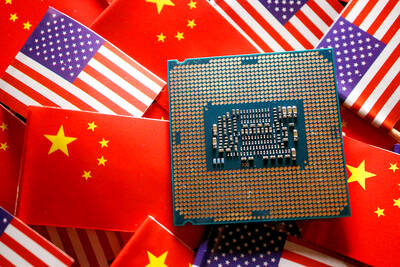
US President Donald Trump on Friday blocked US photonics firm HieFo Corp’s US$3 million acquisition of assets in New Jersey-based aerospace and defense specialist Emcore Corp, citing national security and China-related concerns. In an order released by the White House, Trump said HieFo was “controlled by a citizen of the People’s Republic of China” and that its 2024 acquisition of Emcore’s businesses led the US president to believe that it might “take action that threatens to impair the national security of the United States.” The order did not name the person or detail Trump’s concerns. “The Transaction is hereby prohibited,”


 RSS
RSS