


The sour smell of fermenting soy beans hangs in the air at the Lee Kum Kee (李錦記) sauce factory as company chairman Eddy Lee (李惠民) explains why he's haunted by a old Chinese saying: "Wealth doesn't go beyond the third generation."
The family firm -- which began making sauces more than 100 years ago and is now a major global brand -- is already being run by the fourth generation. And the fifth wave is showing no interest in taking over, Lee says.
"There are so many family businesses that fail to continue. We want to break that curse," Lee, 50, says from a sofa in the living room of his bungalow on the factory's grounds, with a huge green lawn and a grove of banana trees.
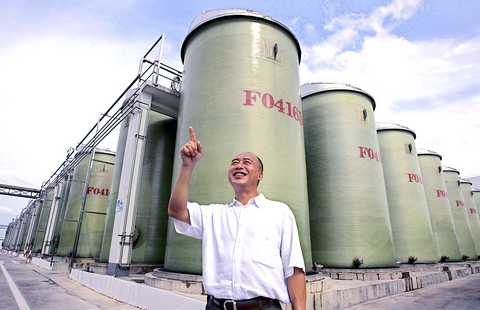
PHOTO: AP
It's the classic succession issue -- one of the most serious challenges facing family businesses around the world. How do you groom the next generation, restructure the company for new leadership and avoid the familial feuding that has sunk so many others?
The Lee family has decided to take a bold step: hiring an outsider to be the chief executive officer by the end of this year. Until now, most top management spots have been filled by family members or longtime employees.
"We believe the company is becoming big enough that it's not an easy job to do anymore. It requires more management skills," Lee said.
It's a huge move for a company founded in 1888. The firm's first product was oyster sauce.
Lee's great grandfather developed the sauce recipe by accident. The restaurateur left a pot of oyster soup boiling too long and discovered the broth had been reduced to a thick, dark brown sauce that was tastier than the soup.
The company moved to Hong Kong in 1946 and began quickly expanding its global business, selling its premium sauces to wealthy Chinese living in San Francisco, London, New York and Hawaii. Now Lee Kum Kee sells nearly 300 sauces and condiments, including chili garlic sauce, minced ginger, sesame oil and soy sauce, in grocery stores worldwide.
Lee is tightlipped about the company's financials and only shares vague figures about sales and production: "Every year, we have 15 percent to 20 percent, at the most 25 percent, growth ... But this is not what we want. We want breakthroughs all the time."
Lee said the company is making a big push to become the leader in China's huge soy sauce market.
"I think if we can be No. 1 in China, we have a good chance to be No. 1 in the world in Asian or Chinese sauces ... We're currently No. 2," he said.
Lee Kum Kee produces about 100,000 tonnes of soy sauce each year, he said. The company has a factory in Hong Kong, two in China and distribution centers and sales offices in the US and Europe.
The plant in Xinhui employs about 1,400 people and has several football field-sized spaces with rows of silo-like fermentation tanks that each hold enough soy sauce to fill 100,000 bottles.
Lee said the firm tries to work out problems by having regular family retreats. The family -- four brothers, a sister and two parents -- also holds an election every two years for the chairmanship, said Lee, who will serve until 2008.
Lee said the company has had a difficult time searching for a CEO. It needs someone -- preferably ethnic Chinese -- with global experience who understands Chinese food culture and the sauce business. The person also has to understand how to work with the family, he said.
This is a tough time to be looking for such a person, said Maris Martinsons, associate professor of management at City University of Hong Kong: "The Chinese economy is booming and lots of other companies are looking for the same profile."
He said Lee Kum Kee was smart to be seeking leadership from the outside, but said there were risks for executives considering the job.
"If the company is not publicly listed, it hasn't been properly vetted by the outside investment community," he said. "There may be skeletons in the family business' closet and that would make the executive think twice before he or she takes the job."
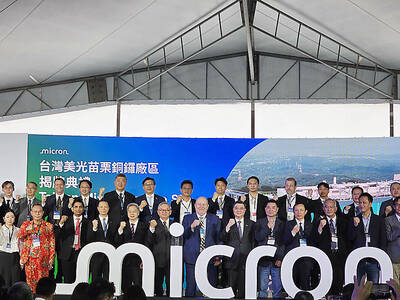
UNPRECEDENTED PACE: Micron Technology has announced plans to expand manufacturing capabilities with the acquisition of a new chip plant in Miaoli Micron Technology Inc unveiled a newly acquired chip plant in Miaoli County yesterday, as the company expands capacity to meet growing demand for advanced DRAM chips, including high-bandwidth memory chips amid the artificial intelligence boom. The plant in Miaoli County’s Tongluo Township (銅鑼), which Micron acquired from Powerchip Semiconductor Manufacturing Corp (力積電) for US$1.8 billion, is expected to make a sizeable capacity contribution to the company from fiscal 2028, the company said in a statement. It would be an extended production site of Micron’s large-scale manufacturing hub in Taichung, the company said. As the global semiconductor industry is racing to reach US$1 trillion

Singapore-based ride-hailing and delivery giant Grab Holdings Ltd has applied for regulatory approval to acquire the Taiwan operations of Germany-based Delivery Hero SE's Foodpanda in a deal valued at about US$600 million. Grab submitted the filing to the Fair Trade Commission on Friday last week, with the transaction subject to regulatory review and approval, the company said in a statement yesterday. Its independent governance structure would help foster a healthy and competitive market in Taiwan if the deal is approved, Grab said. Grab, which is listed on the NASDAQ, said in the filing that US-based Uber Technologies Inc holds about 13 percent of

Taiwan’s food delivery market could undergo a major shift if Singapore-based Grab Holdings Ltd completes its planned acquisition of Delivery Hero SE’s Foodpanda business in Taiwan, industry experts said. Grab on Monday last week announced it would acquire Foodpanda’s Taiwan operations for US$600 million. The deal is expected to be finalized in the second half of this year, with Grab aiming to complete user migration to its platform by the first half of next year. A duopoly between Uber Eats and Foodpanda dominates Taiwan’s delivery market, a structure that has remained intact since the Fair Trade Commission (FTC) blocked Uber Technologies Inc’s

Memory chip stocks extended their losses yesterday after Alphabet Inc’s Google publicized research that could allow more efficient use of the storage needed for artificial intelligence (AI) development. SK Hynix Inc and Samsung Electronics Co, South Korean leaders in the market, fell more than 6 percent and about 5 percent respectively in Seoul. In the US, Micron Technology Inc, Western Digital Corp and Sandisk Corp slid more than 2 percent in pre-market trading, after they all closed lower on Wednesday. Memory companies have been on a tear in recent months as the rapid development of AI infrastructure triggered a spike in chip


 RSS
RSS