


Oil prices of near US$100 per barrel caused alarm in consuming countries last year and analysts forecast another tense crude market this year, with triple-figure records a real prospect.
Despite a murky outlook for the world economy, crude prices are seen settling at elevated levels, spelling more pain for consumers and a steady flow of petrodollars for the world's oil exporters.
From a low point of just below US$50 per barrel in January, prices doubled last year, hitting US$99.29 a barrel on Nov. 21, an all-time record.
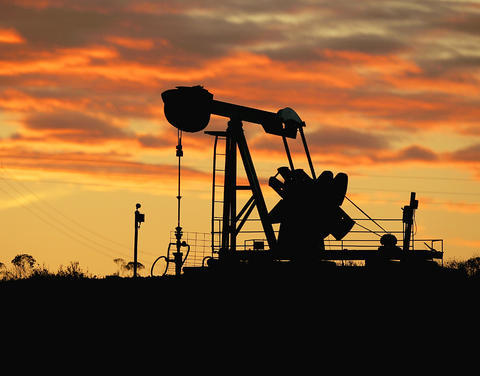
PHOTO:AP
Oil forecasting is a notoriously difficult business, but few had expected such a run-up -- besides an analyst at investment bank Goldman Sachs who famously foresaw early in 2005 a "super spike" in prices to US$105.
At the start of this year, geopolitical risks, with unrest in Pakistan foremost among them, are driving prices back towards the US$100 level, with a colder-than-usual winter in the northern hemisphere another danger.
"Political unrest around the world has once again become a major factor" for the oil market, said David Johnson, an analyst with Macquarie Securities.
Tension between the US and Iran, the second-biggest producer in OPEC, had helped push prices higher in the last two years with traders fearful of US military action against the Islamic republic.
But Iran was expected to fade as a concern in the new year after a recent US intelligence assessment said the country had shelved its disputed nuclear weapons program in 2003.
Oil prices ended the year on Monday with a modest dip on the eve of the New Year's Day market holiday amid concerns about instability in Pakistan after last week's assassination of former Pakistani prime minister and opposition leader Benazir Bhutto.
New York's main contract, light sweet crude for February, fell US$0.02 to close at US$95.98, while in London, Brent North Sea crude for February delivery slipped US$0.03 to US$93.85.
Goldman Sachs, one of the most active banks in the energy market, raised its price forecasts for this year by US$10 on Dec. 12, with average benchmark US prices now seen at US$95.
The price could reach US$105 by the end of this year, it said.
The London-based Centre for Global Energy Studies sees an average of about US$90 in the first half of the year, with a spike to US$100 a possibility.
"There are conditions in which we would see well over US$100 per barrel, such as a cool winter, tightness of OPEC supplies, or non-OPEC supply not growing as much as predicted," CGES analyst Leo Drollas said.
Analysts at investment bank Merrill Lynch pointed to upside risks to prices early this year in research published on Dec. 13 and they predicted average oil prices this year of US$82.
Some analysts said softening global economic growth, particularly in the US, could help temper price gains, however.
"I do have some concerns about demand," said a Washington-based analyst for oil consultancy PFC Energy, David Kirsch
"The global economy is weak ... and that's going to be the worry that potentially keeps you from US$100," he said.
The US has been battling crises on two fronts. In the housing sector, prices are falling sharply and an increasing number of people are defaulting on home loans.
The 13-member OPEC is likely to remain under pressure to bring down prices this year, but the cartel shrugged off calls for more crude at a December meeting in Abu Dhabi.
Many hold the group responsible for the surge in prices last year by restricting supplies to reduce stock levels in industrialized countries.
"OPEC has not been pumping enough. It's as simple as that," Drollas said.
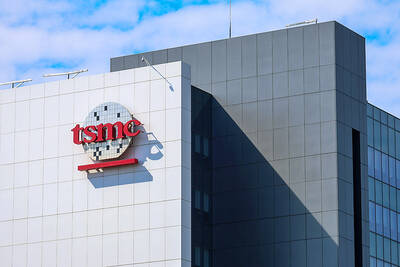
Taiwan Semiconductor Manufacturing Co (TSMC, 台積電), the world’s largest foundry service provider, yesterday said that global semiconductor revenue is projected to hit US$1.5 trillion in 2030, after the figure exceeds US$1 trillion this year, as artificial intelligence (AI) demand boosts consumption of token and compute power. “We are still at the beginning of the AI revolution, but we already see a significant impact across the whole semiconductor ecosystem,” TSMC deputy cochief operating officer Kevin Zhang (張曉強) said at the company’s annual technology symposium in Hsinchu City. “It is fair to say that in the past decade, smartphones and other mobile devices were
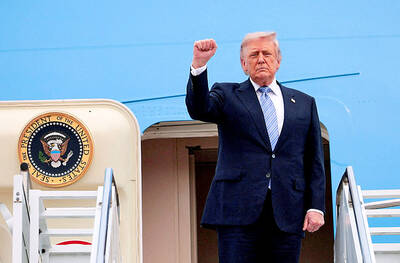
US-CHINA SUMMIT: MOFA welcomed US reassurance of no change in its Taiwan policy; Trump said he did not comment when Xi talked of opposing independence US President Donald Trump yesterday said he has not made a decision on whether to move forward with a major arms package for Taiwan after hearing concerns about it from Chinese President Xi Jinping (習近平). Trump’s comments on Taiwan came as he flew back to Washington after wrapping up critical talks in which both leaders said important progress was made in stabilizing US-China relations even as deep differences persist between the world’s two biggest powers on Iran and Taiwan. “I will make a determination,” Trump said, adding: “I’ll be making decisions. But, you know, I think the last thing we need right
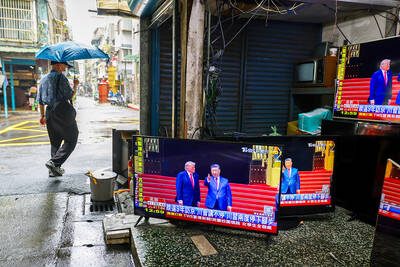
TAIWAN ISSUE: US treasury secretary Scott Bessent said on the first day of meetings that ‘it wouldn’t be a US-China summit without the Taiwan issue coming up’ There were no surprises on the first day of the summit between US President Donald Trump and Chinese President Xi Jinping (習近平), the Mainland Affairs Council (MAC) said yesterday, as the government reiterated that cross-strait stability is crucial to the Asia-Pacific region, as well as the world. As the two presidents met for a highly anticipated summit yesterday, Chinese state media reported that Xi warned Trump that missteps regarding Taiwan could push their two countries into “conflict.” Trump arrived in China with accolades for his host, calling Xi a “great leader” and “friend,” and extending an invitation to visit the White House
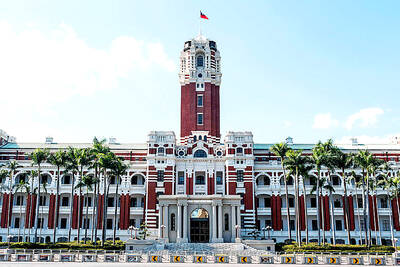
SECURITY: Taipei presses the US for arms supplies, saying the arms sales are not only a reflection of the US security commitment to Taiwan but also serve as a mutual deterrent against regional threats Taiwan is committed to preserving the cross-strait “status quo” and contributing to regional peace and stability, the Presidential Office said yesterday. “It is an undeniable fact that the Republic of China is a sovereign and independent democratic nation,” Presidential Office spokeswoman Karen Kuo (郭雅慧) reiterated, adding that Beijing has no right to claim sovereignty over Taiwan. The statements came after US President Donald Trump warned against Taiwanese independence. Trump wrapped up a state visit to Beijing on Friday, during which Chinese President Xi Jinping (習近平) had pressed him not to support Taiwan. Taiwan depends heavily on US security backing to deter China from carrying


 RSS
RSS