


Animation in America once meant Mickey Mouse, Snow White and Winnie the Pooh. These days, it's just as likely to mean Japanese fighting cyborgs, doe-eyed schoolgirls and sinister monsters -- thanks in large part to people like John Ledford.
The 36-year-old American is one of the top foreign distributors of Japanese "manga" comics and animation, known as "anime," building his fortune on a genre that is rapidly changing from a niche market to a mass phenomenon.
Ledford, who's so busy that his dubbing studio in Houston, Texas, is running 24 hours a day, sees the key to Japanese manga and anime's success in the US as its widely varied, cutting-edge subject matter.
"We're kind of like the anti-Disney," Ledford, a bespectacled fast-talking man with a friendly smile, said during a recent visit to Tokyo. "Disney is very family type. We are appealing to the video game, PlayStation, Generation X, Generation Y kind of crowd in America."
Although US animation re-leases, such as Toy Story, Shrek and The Incredibles, continue to wow audiences, they are largely aimed at children.
Japanese anime spans a range of topics, including science fiction, horror thrillers and soap-operatic melodrama, all without the constraints of massive computer-graphics funding required for films starring real actors, Ledford said.
Kathie Borders, who runs Wizzywig Collectibles, a store devoted to manga and anime in Ann Arbor, Michigan, which carries Ledford's videos and books, says the popularity of Pokemon and YuGiOh! has propelled a boom in anime that's not only for the usually male, 20-something video-game-loving crowd, but all ages and increasingly women.
"They're fascinated by the difference in the culture," Borders said in a telephone interview. "They like reading something that's not the normal, run-of-the-mill story that they might have been used to."
Ledford, who speaks a little Japanese, started by bringing video games from Japan to the US after dropping out of college. He later expanded into manga and anime.
His first anime deal was in 1992 for the cartoon version of his best-selling video-game Devil Hunter Yoko, about a teenager who defeats goblins -- an investment returned in full in just three months.
More recently, Ledford's A.D. Vision Inc has been taking part in funding for Japanese animation. His film unit now records US$150 million in annual sales.
Ledford also has 1,000 manga books under license and publishes Newtype USA, the English-language version of a top manga and animation monthly magazine. His Anime Network moved from video-on-demand to a national cable network in July.
Manga and anime may not be for everyone with their heavy dosage of corny romanticism, blood-splattering violence and pubescent sense of erotica. But both are clearly no longer just for Japanese geeks as their counterparts in the US, Europe and other parts of Asia simply can't get enough.
Works like Spirited Away by Hayao Miyazaki, which won an Oscar and the Golden Bear award at the Berlin International Film Festival, are helping raise anime's reputation.
Kelly Lamb, a 14-year-old Ann Arbor high school student, has never been to Japan but is an avid anime fan and sometimes makes her own anime-inspired costumes.
"It's so funny and so hysterical," she said of Excel Saga. "If you're really feeling down, it's so funny it cheers you up."
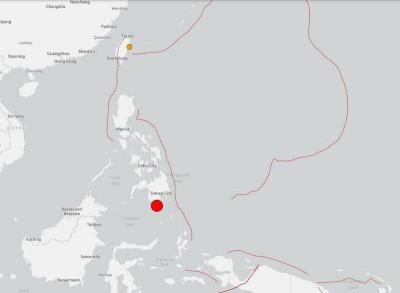
A magnitude 7.8 earthquake struck off the southern coast of Mindanao in the Philippines at 7:38am today, prompting the US Tsunami Warning System to issue an alert for neighboring countries, including Taiwan. The system issued a purple alert indicating a "tsunami threat." The potential threat zone includes Taiwan, the Philippines, Papua New Guinea, Yap and Palau. Philippine authorities were assessing the damage from the quake, with the office of civil defense seeking to verifying initial reports that 15 people had been killed and 129 injured in the region, mostly from falling debris. Arlene Hollero, disaster chief of Maasim town in the Philippines' Sarangani Province,

‘GRAY ZONE’ PRESSURE: Beijing’s activities are intended to create the deceitful impression that China has jurisdiction over the area around Taiwan, the CGA said Taiwan’s rights over its territorial waters and exclusive economic zone must not be violated by any country, the Mainland Affairs Council said yesterday, adding that it will not accept any unprovoked actions. The council issued the remarks in response to the China Coast Guard conducting maritime enforcement drills near eastern Taiwan and claiming to fully exercise China’s maritime administrative law enforcement authority. The Coast Guard Administration (CGA) has been closely monitoring the situation and is taking concrete steps to defend the nation’s sovereignty and secure its waters, the council said. China has no sovereign rights over the waters off eastern

RESILIENCE: Taiwan plays a key role in semiconductors, energy, information infrastructure and advanced manufacturing, AIT Director Raymond Greene said Taiwan’s continued investment in deterrence and resilience remains vital, especially in uncrewed systems and other emerging technologies, American Institute in Taiwan (AIT) Director Raymond Greene said yesterday. Greene made the remarks at the annual National Strategic Summit on Supply Chain Resilience held by the Research Institute for Democracy, Society and Emerging Technology (DSET), a government-backed think tank. As Taiwan last year became the US’ fourth-largest trading partner and supply chain security is becoming more important, cooperation in emerging technologies continues to deepen between the two countries, he said. The US is committed to accelerating innovation, building key infrastructure, strengthening cooperation

The National Chungshan Institute of Science and Technology yesterday showcased its locally developed variants of the Vision 60 robotic patrol dog, which it plans to deploy on the nation’s outlying territories in the South China Sea. The variants were produced under the Joint Lab project — created by the institute and domestic companies — and assembled with domestically produced motors, lenses and artificial intelligence (AI) systems alongside licensed tech from the US, Missile and Rocket Systems Research Division deputy director Jen Kuo-kang (任國光) told the media event at a military base in Taipei’s Dazhi (大直) area. Taiwan has built up its strengths


 RSS
RSS