


HSBC Holdings PLC is deepening its commitment to Taiwan as the economy emerges as one of the bank’s fastest-growing markets globally, driven by an artificial intelligence (AI) investment boom, expanding cross-border trade, and rising wealth creation.
“The advantage that Taiwan has is a growth story linked to the semiconductor and broader AI industries, strong underlying corporate performance, and wealth creation,” said Surendra Rosha, HSBC’s co-chief executive for Asia and the Middle East, in an exclusive interview with the Taipei Times on June 2, during this year’s HSBC Taiwan Conference.
That combination has helped HSBC cement its position as the most profitable international bank in Taiwan while opening new opportunities across corporate banking, wealth management and capital markets.
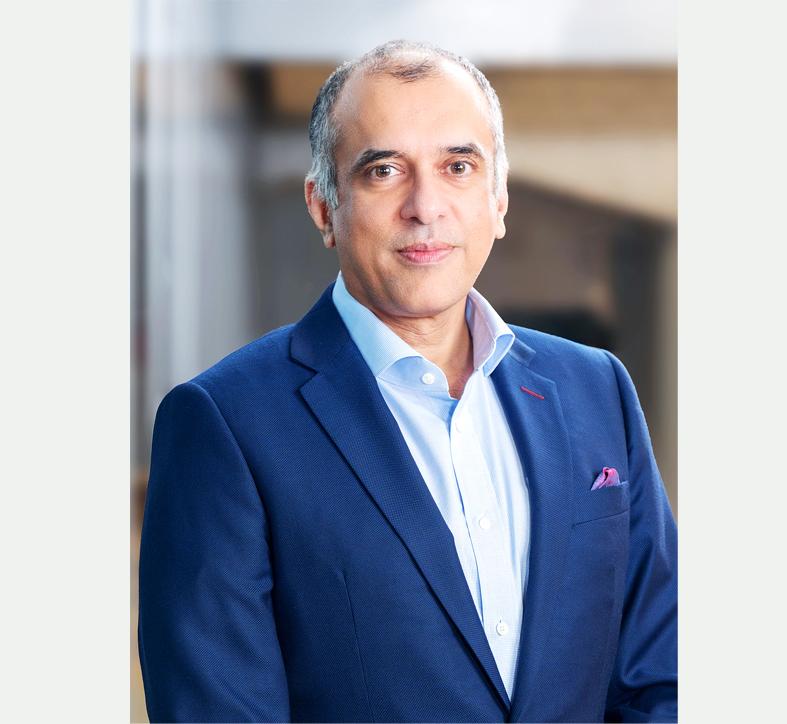
Photo courtesy of HSBC Bank (Taiwan) Ltd
HSBC’s Taiwan subsidiary and Taipei Branch reported a combined pre-tax profit of about NT$4 billion (US$127.1 million) in the first quarter, maintaining its lead among foreign banks operating in the market, based on statistics provided by the Banking Bureau.
HSBC has led every year since 2022, underscoring the scale of its franchise despite intense competition from domestic lenders and global rivals.
The bank’s optimism reflects broader structural shifts in Taiwan’s economy, which has become increasingly central to the global AI supply chain. Taiwan produces about 90 percent of the world’s most advanced semiconductors, Rosha said, citing a report by the American Chamber of Commerce in Taiwan.
Technology leaders such as Nvidia Corp and Advanced Micro Devices Inc have announced major investments in Taiwan, reinforcing its strategic importance in the next generation of computing infrastructure.
For HSBC, the AI boom is already translating into business opportunities, as heavy capital spending by cloud-service providers and technology companies is boosting trade flows between Taiwan and its key Corridors markets, Adam Chen (陳志堅), chief executive officer and head of banking at HSBC Taiwan added.
The reconfiguration of global supply chains has increased demand for HSBC’s international banking network. As Taiwanese companies diversify manufacturing bases and expand overseas, they require financing, treasury management, foreign-exchange solutions and advisory services across multiple jurisdictions.
“That is where HSBC has a distinct advantage,” Rosha said.
HSBC is the only international lender in Taiwan with a global footprint across more than 50 markets, and provides fully-fledged capabilities spanning wealth management and corporate and institutional banking. That model allows the bank to serve affluent clients, entrepreneurs, and family-owned businesses across personal and corporate financial needs, from wealth planning and succession strategies to overseas expansion and capital raising.
Taiwan’s growing affluence is providing another powerful tailwind.
Taiwan ranks 15th in terms of its number of US dollar-millionaires and it has more than twice as many as Singapore, while average wealth per adult exceeds US$312,000, signifying the great potential for the market’s wealth business, Rosha said, citing a market report.
A prolonged rally in Taiwan’s stock market has boosted household wealth and intensified competition among banks for high-net-worth clients.
Chen said that the bank has been showing strong performance in Taiwan’s wealth business, delivering double-digit growth in assets under management, wealth income and Premier Elite customer numbers year-on-year in the first quarter, supported by continued expansion and investment in its wealth franchise.
HSBC is positioning itself to benefit from the government’s ambition to transform Taiwan into a regional asset-management hub, Chen added.
As one of the first financial institutions approved to operate in the Kaohsiung Asset Management Zone, HSBC has expanded its wealth offerings, including a premium-financing solution launched with Allianz Life earlier this year. Eyeing high-net-worth customer needs, the bank is continuing its pace of developing services, such as Lombard Lending, under this government initiative.
Beyond wealth management, Taiwan’s rapidly expanding exchange-traded fund market is creating new opportunities in securities services, a business in which HSBC has long maintained a leading position. The bank operates one of Taiwan’s most comprehensive securities services, offering custody, government bond clearing, fund accounting, and transfer agency services.
Sustainable finance is another area of growth. Taiwan is the largest offshore wind market in Asia-Pacific and among the region’s most ambitious renewable-energy developers. HSBC has played a key role in financing several landmark projects, drawing on its global expertise in project finance and advisory services, Chen said.
The lender was among the first to introduce some sustainable-finance solutions to Taiwanese corporations and continues to support its clients on their climate transitions.
HSBC is increasingly serving as a bridge between Taiwan and international capital markets, with the HSBC Taiwan Conference just finishing in Taipei, showcasing how the bank connects hundreds of Taiwan’s corporate clients with international investors and helps both ends capture unique business opportunities, Rosha said.
As Taiwan reinforces its position in global tech supply chains and domestic wealth continues to expand, the bank sees significant room for growth, deepening HSBC’s long-term commitment to the market, he said.
“Our ambition is to continue our growth and maintain the position to be the leading international bank in Taiwan,” Rosha added.


Taiwanese firms have increased investment in the Philippines in recent years as Manila’s ties with Washington deepen and global supply chains continue to shift away from China, an expert at the Chung-Hua Institution for Economic Research (CIER, 中華經濟研究院) said yesterday. The Philippines had not been among Taiwanese investors’ top choices in Southeast Asia, CIER Taiwan ASEAN Studies Center director Kristy Hsu (徐遵慈) said at a seminar in Taipei. However, Taiwan’s investment in the country has grown significantly since the COVID-19 pandemic, reaching US $257 million last year, a high in recent years, she said. Although Taiwan’s total investment in the Philippines still lags
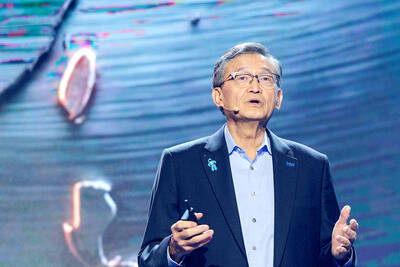
Intel Corp regards Taiwan Semiconductor Manufacturing Co (TSMC, 台積電) as a longstanding partner, as the US chipmaker would continue outsourcing production of advanced chips to TSMC, Intel chief executive officer Lip-Bu Tan (陳立武) said yesterday. “I don’t look at people as competitors. I look at the collaboration... Nvidia is also, you know, a good friend,” Tan told a news conference following his keynote speech at the Computex trade show in Taipei. “It’s a very trusted partnership for us... We are a big, top customer for them, and we’re going to continue doing that,” he said, referring to TSMC, the world’s largest foundry

Hon Hai Precision Industry Co (鴻海精密) yesterday said it would work with US chipmaker Intel Corp to jointly develop and deploy next-generation artificial intelligence (AI) infrastructure and intelligent computing platforms in a move to capture booming demand for AI computing systems. Hon Hai, also known as Foxconn Technology Group (富士康), said in a statement that the partnership would combine its global manufacturing scale, system integration expertise and AI data center deployment capabilities with Intel’s strengths in processor architecture, silicon technologies and software ecosystem. The companies said they plan to work on equipment used in AI data centers, including server racks powered by

Artificial intelligence (AI) agents would supplant smartphones as the center of people’s digital lives, fundamentally reshaping personal devices and driving a major computing upgrade cycle, Qualcomm Inc CEO Cristiano Amon said yesterday. In his keynote speech for this year’s Computex trade show in Taipei, Amon said that the rise of "agentic AI" — AI systems capable of reasoning, planning and carrying out tasks autonomously — would transform how people interact with technology across phones, PCs, vehicles and wearable devices. Describing the technology as the next major evolution in computing, Amon said that "2026 is the year of agents.” For decades, smartphones have sat


 RSS
RSS