


Apple Computer Inc had a first-quarter net loss as costs increased, marking the personal-computer maker's first back-to-back losses since co-founder Steve Jobs regained control in 1997.
The loss was US$8 million, or US$0.02 a share, compared with net income of US$38 million, or 11 cents, a year earlier, the company said in a statement. Sales in the quarter ended Dec. 28 rose 7.1 percent to US$1.47 billion from US$1.38 billion.
Chief Executive Jobs has tried to attract customers with new designs for Apple's Macintosh computers and software that runs on them, as the company copes with a two-year slump in demand. Apple spends a higher percentage of its sales on research and development than larger rivals Dell Computer Corp, International Business Machines Corp or Hewlett-Packard Co, according to Bloomberg data.
"We're not going to mortgage the future for short-term profit maximization," Chief Financial Officer Fred Anderson said on a conference call. "We have an extraordinarily strong pipeline of future products coming."
The company said it will swing back to a profit in the second quarter, and sales will be about even with the first quarter.
Apple boosted research-and-development spending 7.1 percent to US$121 million in the quarter, while it recorded US$19 million in costs to close a Singapore factory, shut some sales offices and make an accounting adjustment. Gross margin, or the percentage of sales left after subtracting manufacturing costs, narrowed to 27.6 percent from 30.7 percent a year earlier.
The shares of Cupertino, California-based Apple dropped to US$14.32 in extended trading after the report. They fell US$0.18 to US$14.43 by 4pm New York time on the NASDAQ Stock Market. The stock has dropped 34 percent in the past year.
Sales to schools and so-called creative professions such as advertising agencies haven't rebounded, Anderson said.
US schools, which accounted for one-fifth of Apple's sales last year, are coping with reduced funding as states confront what is expected to be more than US$100 billion in deficits in the next year and a half. Ad agencies and designers have spent less on equipment to cope with a slowdown in their businesses.
"The PC market overall is weak right now," said Gus Vinn, an analyst at Waddell & Reed Financial Inc, which held more than 1 million Apple shares in the New Concepts Fund as of September.
Jobs, who left Apple in 1985, was named chief executive in September 1997, after the company racked up US$1.86 billion in losses the previous two years.
He revived Apple by shutting down the Newton hand-held device and introducing the curvy, colorful iMac computers. A follow-up, the translucent Cube, failed to attract consumers in 2000. The stock dropped 71 percent that year and hasn't recovered.
Jobs is again leaning on new products to regain sales. Apple spends almost US$500 million a year on research and development, Anderson said on the call.
"We are going to continue to keep investing through this downturn," he said.
At the Macworld trade show in San Francisco last week, Jobs showcased two new laptop computers, an Internet browser he said works three times faster that Microsoft Corp's Internet Explorer, a slide-show program called "Keynote," and the latest versions of its software for digital photography, video and music.
Apple shipped 743,000 new computers in the first quarter, down 3,000 from a year earlier. Shipments of iMac models rose 28 percent, boosted by the release of the eMac computer for classrooms and a flat-screened iMac. Sales of iBook portable PCs rose 1 percent, while the Power Mac G4 line computers, including server models, dropped 25 percent from a year ago.
"We believe the sluggish economy continues to have a very negative impact on many of our creative professional customers and our G4 sales in turn," he said.
Apple sold 216,000 iPod digital music players during the first quarter, more that half of which were models equipped with software that works with Microsoft Corp's Windows operating system.
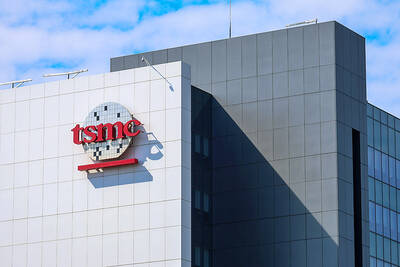
Taiwan Semiconductor Manufacturing Co (TSMC, 台積電), the world’s largest foundry service provider, yesterday said that global semiconductor revenue is projected to hit US$1.5 trillion in 2030, after the figure exceeds US$1 trillion this year, as artificial intelligence (AI) demand boosts consumption of token and compute power. “We are still at the beginning of the AI revolution, but we already see a significant impact across the whole semiconductor ecosystem,” TSMC deputy cochief operating officer Kevin Zhang (張曉強) said at the company’s annual technology symposium in Hsinchu City. “It is fair to say that in the past decade, smartphones and other mobile devices were
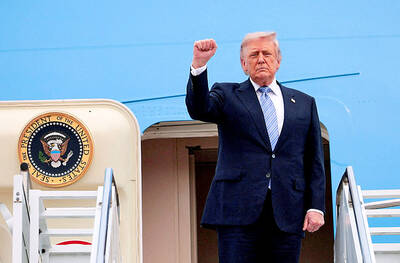
US-CHINA SUMMIT: MOFA welcomed US reassurance of no change in its Taiwan policy; Trump said he did not comment when Xi talked of opposing independence US President Donald Trump yesterday said he has not made a decision on whether to move forward with a major arms package for Taiwan after hearing concerns about it from Chinese President Xi Jinping (習近平). Trump’s comments on Taiwan came as he flew back to Washington after wrapping up critical talks in which both leaders said important progress was made in stabilizing US-China relations even as deep differences persist between the world’s two biggest powers on Iran and Taiwan. “I will make a determination,” Trump said, adding: “I’ll be making decisions. But, you know, I think the last thing we need right
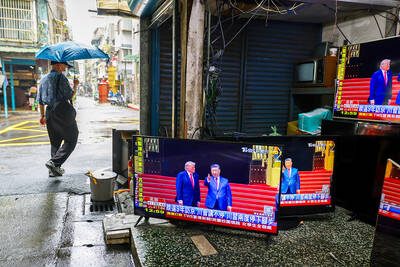
TAIWAN ISSUE: US treasury secretary Scott Bessent said on the first day of meetings that ‘it wouldn’t be a US-China summit without the Taiwan issue coming up’ There were no surprises on the first day of the summit between US President Donald Trump and Chinese President Xi Jinping (習近平), the Mainland Affairs Council (MAC) said yesterday, as the government reiterated that cross-strait stability is crucial to the Asia-Pacific region, as well as the world. As the two presidents met for a highly anticipated summit yesterday, Chinese state media reported that Xi warned Trump that missteps regarding Taiwan could push their two countries into “conflict.” Trump arrived in China with accolades for his host, calling Xi a “great leader” and “friend,” and extending an invitation to visit the White House
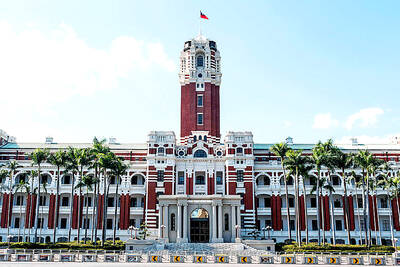
SECURITY: Taipei presses the US for arms supplies, saying the arms sales are not only a reflection of the US security commitment to Taiwan but also serve as a mutual deterrent against regional threats Taiwan is committed to preserving the cross-strait “status quo” and contributing to regional peace and stability, the Presidential Office said yesterday. “It is an undeniable fact that the Republic of China is a sovereign and independent democratic nation,” Presidential Office spokeswoman Karen Kuo (郭雅慧) reiterated, adding that Beijing has no right to claim sovereignty over Taiwan. The statements came after US President Donald Trump warned against Taiwanese independence. Trump wrapped up a state visit to Beijing on Friday, during which Chinese President Xi Jinping (習近平) had pressed him not to support Taiwan. Taiwan depends heavily on US security backing to deter China from carrying


 RSS
RSS