


Compaq Computer Corp will have a tough time surviving alone if its planned US$20.7 billion sale to larger rival Hewlett-Packard Co falls through, and the prospects for finding another buyer look dim, investors said.
"They'd need a real heavyweight to step in" if another company is to buy Compaq, said Todd Ahlsten, research director at Parnassus Investments, which owns 700,000 shares. "I don't know who else would have the critical mass to consummate the deal."
Shareholders have criticized the transaction since Hewlett-Packard Chief Executive Officer Carly Fiorina unveiled plans to buy Compaq on Sept. 3. With relatives of her company's two founders opposing the deal, investors say the acquisition is more likely to come apart -- leaving Compaq without a buyer in the toughest personal-computer market in more than 15 years.
Compaq CEO Michael Capellas decided to sell the company after having tried to restructure it three times in two years. He lost the crown as the top seller of PCs to rival Dell Computer Corp. and has said sales slipped in recent weeks as customers fretted over which products would emerge at the combined company after the acquisition. Capellas has announced 8,500 job cuts so far this year as sales dried up.
"As the merger faces insurmountable difficulties, the prospects for Compaq as a stand-alone company remain questionable," Ashok Kumar, a US Bancorp Piper Jaffray analyst, wrote in a note to clients yesterday.
The stock fell US$0.51 to US$7.99 on Wednesday and has dropped 35 percent since the purchase was disclosed. The shares are trading 34 percent below the value of Hewlett-Packard's offer, indicating that investors think the deal will unravel.
"There's no Plan B," said Compaq spokesman Arch Currid.
"We're fully committed to this merger."
He noted that a large investor, billionaire Prince Alwaleed Bin Talal, who says he owns 1 percent of Compaq, supports the acquisition. Compaq has signed more than US$2 billion in sales contracts since the merger, a signal that the company is still attracting customers, Currid said.
H-P director Walter Hewlett, his sisters Eleanor Hewlett Gimon and Mary Hewlett Jaffe, and the William R. Hewlett Revocable Trust on Tuesday said they intend to vote their 5 percent stake against the acquisition. Together with the William and Flora Hewlett Foundation, they own more than 100 million H-P shares. David Packard's Packard Humanities Institute, which owns 1.3 percent of the shares, will also oppose the transaction.
"Any way you look at it, it's negative for Compaq," said Sunil Reddy, whose Fifth Third Bancorp owns 39,000 Compaq shares.
"The fact that they agreed to a modest premium shows the internals are pretty tough. Compaq is a value play for a long, long-term holder."
The David and Lucile Packard Foundation, the company's largest shareholder with a 10 percent stake, hasn't made a decision about the purchase. That foundation is controlled by Susan Packard Orr.
Compaq's board yesterday said it unanimously supports the acquisition. H-P's directors support it, except Walter Hewlett. H-P couldn't be reached to comment further yesterday.
H-P shares fell US$0.63 to US$19.18 yesterday, and have declined 17 percent since Sept. 3. The acquisition was valued at $25 billion when it was announced.
Capellas and Fiorina have touted the benefits of the planned combination, citing new services capabilities, broader product offerings for server computers and a company that could mount a bigger challenge to International Business Machines Corp.
IBM is the biggest seller of computers and related services, yet it only controls about 6.6 percent of the PC market, according to researcher Gartner Dataquest. By contrast, a combined H-P and Compaq would have about 17 percent of that market, a business where profit margins are shrinking as prices fall and competition intensifies.
If the purchase falls apart, there are few potential buyers.
Heavyweights like IBM with the potential to snap up Compaq wouldn't do so, investors said.
"There's no way that IBM would want to increase its exposure to PCs, especially at the retail end," said Reddy.
"Why would you want to dilute your core franchise by going into the commodity business?"
Compaq reported a loss on a 33 percent sales decline in the third quarter, and analysts expect losses to continue in the next two periods. Still, the company doesn't need to sell at any price, some shareholders said.
Houston-based Compaq has US$3.94 million in cash and equivalents, a server business that analysts said is worth more than US$8 a share on its own and a brand name that's well regarded by consumers. H-P backing off wouldn't end that.
"It would be a traumatic experience, but it's not like the company is near death," said Ahlsten. "They still have a decent balance sheet and quite a bit of cash. I don't see a lot of risk at buying stock at US$8."
Without H-P, Compaq will have to go through another restructuring, investors said. This time, the focus needs to be on cutting costs and increasing its direct sales from the current 35 percent of revenue, Lehman Brothers analyst Dan Niles said.
"Compaq will end up going direct," said Niles, who doesn't own the stock.
"It will have to adopt the Dell model. You'll see some major changes to compete with Dell."
That makes Capellas more important than ever. While investors say Fiorina may lose her job if the purchase is called off, they said 47-year-old Capellas has what it takes to help Compaq survive alone. Capellas, who became CEO in July 1999, has built a reputation as a savvy operations manager.
"He's tried to turn around a huge battleship," Ahlsten said.
"I hope he survives because he knows better than anyone what needs to be done."
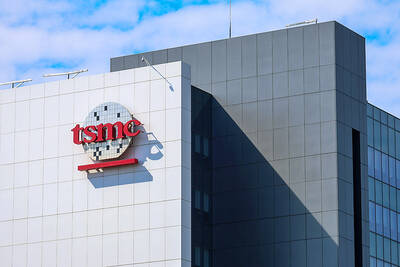
Taiwan Semiconductor Manufacturing Co (TSMC, 台積電), the world’s largest foundry service provider, yesterday said that global semiconductor revenue is projected to hit US$1.5 trillion in 2030, after the figure exceeds US$1 trillion this year, as artificial intelligence (AI) demand boosts consumption of token and compute power. “We are still at the beginning of the AI revolution, but we already see a significant impact across the whole semiconductor ecosystem,” TSMC deputy cochief operating officer Kevin Zhang (張曉強) said at the company’s annual technology symposium in Hsinchu City. “It is fair to say that in the past decade, smartphones and other mobile devices were
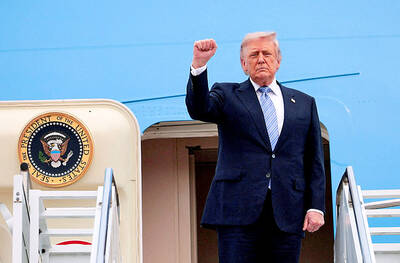
US-CHINA SUMMIT: MOFA welcomed US reassurance of no change in its Taiwan policy; Trump said he did not comment when Xi talked of opposing independence US President Donald Trump yesterday said he has not made a decision on whether to move forward with a major arms package for Taiwan after hearing concerns about it from Chinese President Xi Jinping (習近平). Trump’s comments on Taiwan came as he flew back to Washington after wrapping up critical talks in which both leaders said important progress was made in stabilizing US-China relations even as deep differences persist between the world’s two biggest powers on Iran and Taiwan. “I will make a determination,” Trump said, adding: “I’ll be making decisions. But, you know, I think the last thing we need right
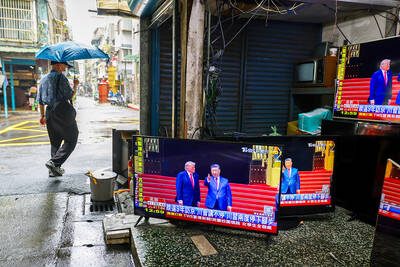
TAIWAN ISSUE: US treasury secretary Scott Bessent said on the first day of meetings that ‘it wouldn’t be a US-China summit without the Taiwan issue coming up’ There were no surprises on the first day of the summit between US President Donald Trump and Chinese President Xi Jinping (習近平), the Mainland Affairs Council (MAC) said yesterday, as the government reiterated that cross-strait stability is crucial to the Asia-Pacific region, as well as the world. As the two presidents met for a highly anticipated summit yesterday, Chinese state media reported that Xi warned Trump that missteps regarding Taiwan could push their two countries into “conflict.” Trump arrived in China with accolades for his host, calling Xi a “great leader” and “friend,” and extending an invitation to visit the White House
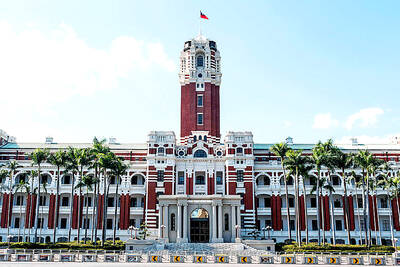
SECURITY: Taipei presses the US for arms supplies, saying the arms sales are not only a reflection of the US security commitment to Taiwan but also serve as a mutual deterrent against regional threats Taiwan is committed to preserving the cross-strait “status quo” and contributing to regional peace and stability, the Presidential Office said yesterday. “It is an undeniable fact that the Republic of China is a sovereign and independent democratic nation,” Presidential Office spokeswoman Karen Kuo (郭雅慧) reiterated, adding that Beijing has no right to claim sovereignty over Taiwan. The statements came after US President Donald Trump warned against Taiwanese independence. Trump wrapped up a state visit to Beijing on Friday, during which Chinese President Xi Jinping (習近平) had pressed him not to support Taiwan. Taiwan depends heavily on US security backing to deter China from carrying


 RSS
RSS