


A drone strike on the paramilitary-controlled town of Kutum in Sudan’s North Darfur state has killed at least 32 civilians, including women and children, a medical source and three residents said on Thursday.
The strike on Wednesday came amid a surge in drone attacks by both Sudan’s army and the paramilitary Rapid Support Forces (RSF), which have been at war since April 2023.
Hassan Khater, a Kutum resident, in a text message said that the drone struck a house where a wedding was taking place. He said he and others buried 32 victims from the attack on Thursday.
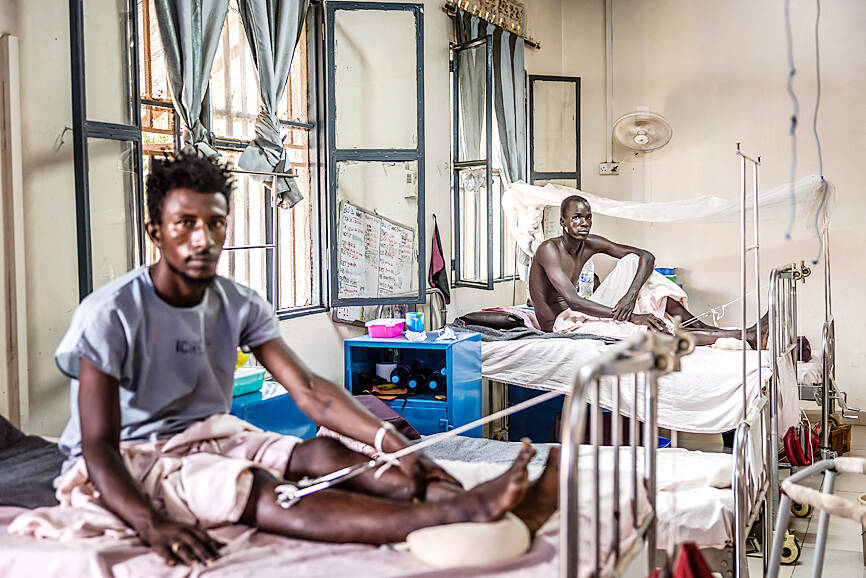
Photo: AFP
Another resident, Hussein Eissa, who also took part in the burial, sent a list of the victims showing that 12 children were among the dead.
A third resident, who requested anonymity for security reasons, said the strike occurred at about 10pm on Wednesday and “hit the house twice, completely destroying the building.”
“All the victims were pulled from beneath the rubble and later buried,” the resident said.
The El-Fasher Resistance Committee, a pro-democracy group, said the strike hit the al-Salama neighborhood and blamed the army for the attack.
A medical source earlier said that 12 bodies were brought to the hospital in Kutum, half of them children, including three female secondary-school students.
Sixteen others were injured, including women and children, and are receiving treatment, the source added, speaking on condition of anonymity for security reasons.
The army has yet to comment on the attack, while the RSF condemned it in a statement and put the death toll at no fewer than 56, including 17 children.
Kutum lies about 120km northwest of El-Fasher, the capital of North Darfur state, which was the army’s last stronghold in western Darfur before the RSF pushed it out in October last year.
The fall of the city was followed by reports of mass killings, looting, abductions and rape.
Near-daily drone strikes have disrupted life across Sudan, particularly in the southern Kordofan region, now the war’s main battleground, and in RSF-controlled areas of the west, including Darfur.
Doctors Without Borders (MSF) said it has treated about 400 people for drone-related injuries since February, after strikes hit civilian areas in eastern Chad near the Sudanese border and several parts of Darfur.
The UN has previously said drone attacks across Sudan had killed more than 500 civilians between January and the middle of last month, warning of “the devastating impact of high-tech and relatively cheap weapons in populated areas.”
“The teams are receiving patients with horrific injuries: patients with transfixing wounds, amputated limbs, devastating burns — many of whom are already dead by the time they reach the hospital,” MSF emergency coordinator in Darfur Muriel Boursier said. “The scale of violence and atrocity we witness is unbearable.”
A drone attack blamed on the RSF last week struck a hospital in White Nile state, just east of Kordofan, killing 10 people after hitting an operating theater and a maternity ward, MSF said.
Another attack on March 20 attributed to the Sudanese army territory gutted El-Daein Teaching Hospital in East Darfur, killing 70 people and wounding 146.
More than 2,000 people have been killed and 720 injured in 213 attacks on health facilities across Sudan since the war began, according to the WHO.
Sudan last year accounted for 82 percent of all global deaths resulting from attacks on healthcare facilities, the WHO said.
During the same period, MSF documented 100 violent incidents targeting its staff, facilities and medical supplies.
The conflict, now nearing its three-year mark, has already killed tens of thousands, displaced more than 11 million people and created what the UN describes as the world’s largest displacement and hunger crises.


Showcasing phallus-shaped portable shrines and pink penis candies, Japan’s annual fertility festival yesterday teemed with tourists, couples and families elated by its open display of sex. The spring Kanamara Matsuri near Tokyo features colorfully dressed worshipers carrying a trio of giant phallic-shaped objects as they parade through the street with glee. The festival, as legend has it, honors a local blacksmith in the Edo Period (1603-1868) who forged an iron dildo to break the teeth of a sharp-toothed demon inhabiting a woman’s vagina that had been castrating young men on their wedding nights. A 1m black steel phallus sits in the courtyard of

JAN. 1 CLAUSE: As military service is voluntary, applications for permission to stay abroad for over three months for men up to age 45 must, in principle, be granted A little-noticed clause in sweeping changes to Germany’s military service policy has triggered an uproar after it emerged that the law requires men aged up to 45 to get permission from the armed forces before any significant stay abroad, even in peacetime. The legislation, which went into effect on Jan. 1 aims to bolster the military and demands all 18-year-old men fill out a questionnaire to gauge their suitability to serve in the armed forces, but stops short of conscription. If the “modernized” model fails to pull in enough recruits, parliament will be compelled to discuss the reintroduction of compulsory service, German
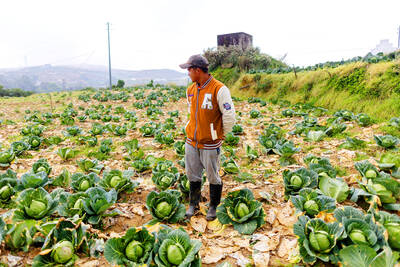
Filipino farmers like Romeo Wagayan have been left with little choice but to let their vegetables rot in the field rather than sell them at a loss, as rising oil prices linked to the Iran war drive up the cost of harvesting, labor and transport. “There’s nothing we can do,” said Wagayan, a 57-year old vegetable farmer in the northern Philippine province of Benguet. “If we harvest it, our losses only increase because of labor, transportation and packing costs. We don’t earn anything from it. That’s why we decided not to harvest at all,” he said. Soaring costs caused by the Middle East

Hungarian Prime Minister Viktor Orban’s officially declared wealth is fairly modest: some savings and a jointly owned villa in Budapest. However, voters in what Transparency International deems the EU’s most corrupt country believe otherwise — and they might make Orban pay in a general election this Sunday that could spell an end to his 16-year rule. The wealth amassed by Orban’s inner circle is fueling the increasingly palpable frustration of a population grappling with sluggish growth, high inflation and worsening public services. “The government’s communication machine worked well as long as our economic situation remained relatively good,” said Zoltan Ranschburg, a political analyst


 RSS
RSS