


Vintage kimonos, often regarded as family heirlooms and passed down through generations, are piling up in Japan’s secondhand markets as the garments fall out of fashion and the country’s population shrinks.
The long, loose attire is traditionally wrapped around the body in a series of precise folds, lifts and adjustments in a dressing process that can take 25 minutes or longer.
Designers are repurposing high-quality fabric from cast-off kimonos to make contemporary outfits more suited to today’s sensibilities and fashion. The transformation is as much an art as science.
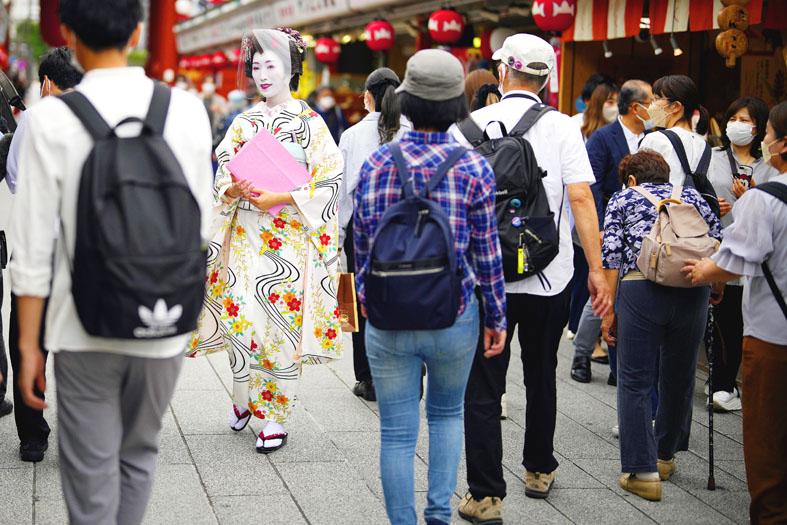
Photo: AP
“People used to wear kimonos every day, and now they don’t because it’s uncomfortable’’ said Duni Park, whose Tokyo-based Gallery Shili transforms garments from Japan and her native South Korea into jumpsuits, shirts and scarves. “If things are to be continued to be used, they must evolve with lifestyles.”
Park, who has for the past few years been selling her clothing online and in pop-up shops in Tokyo department stores such as Takashimaya, is part of a circular economy movement that aims to extend the life of products.
It is a trend that even some major retailers support, as they use worn garment resales to limit their impact on climate and appeal to younger buyers.
Fifty to 60 percent of the 140,000 tonnes of textiles gathered through collection services at H&M stores have been directed to reuse and rewear purposes.
The Swedish fashion giant is also a majority shareholder in the secondhand online clothing retailer Sellpy.
US outdoor clothing retailer Patagonia allows customers to buy or trade in used clothing and gear through its Worn Wear Web site, and encourages repairs through its shops.
Fabric quality is a key factor in the ability to reuse or repurpose clothing, and many of the garments that are produced in the “fast fashion kind of retail” have a much shorter life trajectory, said Bryony Collins, an editor at BloombergNEF.
Historically, kimonos were made from materials including silk, cotton or wool, although newer versions also come in synthetics.
Kimonos used to have a life cycle that benefited entire families and communities, and lasted decades or longer. After the garments were too worn out to be used as clothing, they could be used as cushion covers and then rags or baby diapers before finally being burned and spread over fields as fertilizer, said Eisaku Hida, founder of Kimonoya Japan, an online marketplace.
“Kimonos are extremely eco-friendly,” said Hida, who often buys his secondhand supplies at auctions. “There’s no waste.”

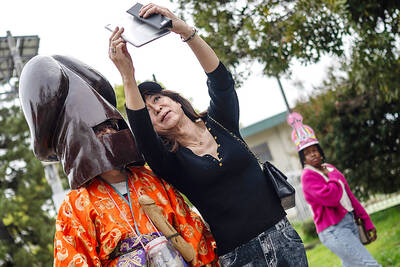
Showcasing phallus-shaped portable shrines and pink penis candies, Japan’s annual fertility festival yesterday teemed with tourists, couples and families elated by its open display of sex. The spring Kanamara Matsuri near Tokyo features colorfully dressed worshipers carrying a trio of giant phallic-shaped objects as they parade through the street with glee. The festival, as legend has it, honors a local blacksmith in the Edo Period (1603-1868) who forged an iron dildo to break the teeth of a sharp-toothed demon inhabiting a woman’s vagina that had been castrating young men on their wedding nights. A 1m black steel phallus sits in the courtyard of

JAN. 1 CLAUSE: As military service is voluntary, applications for permission to stay abroad for over three months for men up to age 45 must, in principle, be granted A little-noticed clause in sweeping changes to Germany’s military service policy has triggered an uproar after it emerged that the law requires men aged up to 45 to get permission from the armed forces before any significant stay abroad, even in peacetime. The legislation, which went into effect on Jan. 1 aims to bolster the military and demands all 18-year-old men fill out a questionnaire to gauge their suitability to serve in the armed forces, but stops short of conscription. If the “modernized” model fails to pull in enough recruits, parliament will be compelled to discuss the reintroduction of compulsory service, German
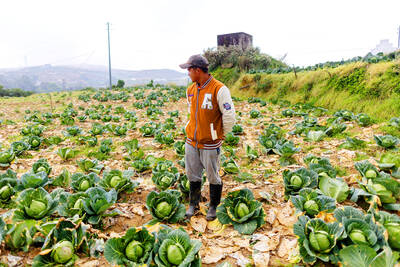
Filipino farmers like Romeo Wagayan have been left with little choice but to let their vegetables rot in the field rather than sell them at a loss, as rising oil prices linked to the Iran war drive up the cost of harvesting, labor and transport. “There’s nothing we can do,” said Wagayan, a 57-year old vegetable farmer in the northern Philippine province of Benguet. “If we harvest it, our losses only increase because of labor, transportation and packing costs. We don’t earn anything from it. That’s why we decided not to harvest at all,” he said. Soaring costs caused by the Middle East

Hungarian Prime Minister Viktor Orban’s officially declared wealth is fairly modest: some savings and a jointly owned villa in Budapest. However, voters in what Transparency International deems the EU’s most corrupt country believe otherwise — and they might make Orban pay in a general election this Sunday that could spell an end to his 16-year rule. The wealth amassed by Orban’s inner circle is fueling the increasingly palpable frustration of a population grappling with sluggish growth, high inflation and worsening public services. “The government’s communication machine worked well as long as our economic situation remained relatively good,” said Zoltan Ranschburg, a political analyst


 RSS
RSS