


California lawmakers on Thursday unanimously allowed the return of prime beachfront property to descendants of a black couple who were stripped of their resort for African Americans amid racist harassment a century ago.
What was known as Bruce’s Beach in the city of Manhattan Beach was purchased in 1912 by Willa and Charles Bruce.
They built the first resort for black people on the US west coast during an era when racial segregation barred them from many beaches. The couple built a lodge, cafe, dance hall and dressing tents with bathing suits for rent.

Photo: AFP
“Bruce’s Beach became a place where black families traveled from far and wide to be able to enjoy the simple pleasure of a day at the beach,” Los Angeles County Supervisor Janice Hahn said in April when the county announced plans to return the property.
Manhattan Beach used eminent domain to seize the land in 1924, ostensibly for use as a park.
During its 12 years of operation, the Ku Klux Klan tried to burn it down, and white neighbors harassed the couple and their customers.
Bogus “10 minutes only” parking signs were posted and beachgoers often returned to find the air had been let out of their tires, a legislative analysis showed.
The property languished until it was transferred to the state in 1948, then transferred to Los Angeles County in 1995.
Legislators sent the directive to California Governor Gavin Newsom to transfer the property to the couple’s descendants. The transfer would also have to be approved by county supervisors.
The bill would “finally do the right thing, to undo a wrong committed by the city of Manhattan Beach and aided by the state and the county,” California state Senator Steven Bradford said, adding that it “represents economic and historic justice and is a model of what reparations can truly look like.”
Council members in Manhattan Beach, a predominantly white and upscale city of about 35,000 people on the south shore of Santa Monica Bay, formally condemned the property seizure in April.

The Bolivian government on Friday struck a deal with protesting miners, but was still grappling with blockades and demonstrations by other workers across La Paz. Other groups are still blocking access roads into the city, which is also the seat of the government. Police on Thursday prevented the miners from entering the main square by using tear gas, while the demonstrators hurled stones and explosives with slingshots. Protests against the policies of Bolivian President Rodrigo Paz have convulsed the Andean nation since early this month, and roadblocks were choking routes into La Paz throughout Friday, the national road authority said. Miners demanded that Paz
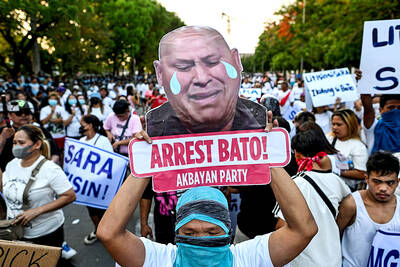
The Philippines said it has asked the country’s Supreme Court to allow it to arrest former Philippine president Rodrigo Duterte’s chief drug war enforcer to stand trial in an international tribunal. The International Criminal Court (ICC) last week unsealed an arrest warrant against Philippine Senator Ronald dela Rosa, accusing him along with Duterte and other “coperpetrators” of the “crime against humanity of murder.” Dela Rosa briefly sought refuge in the Philippine Senate last week while asking the Philippine Supreme Court to stop an ongoing attempt by government agents to arrest him. “By his own conduct, he has placed himself outside the protection of

A ship anchored off the United Arab Emirates (UAE) was seized and taken toward Iran and another — a cargo ship near Oman — sank after being attacked, authorities said on Thursday, as tensions escalated near the Strait of Hormuz. It was not immediately clear who was behind these incidents, but they happened as a senior Iranian official reiterated his country’s claim of control over the waterway and another said it had a right to seize oil tankers connected to the US. The turmoil in the strait has been a sticking point for weeks in talks between the US and Iran to

The researchers in Ireland looked at their computer screen, marveling at a medieval book tracked down in a Roman library. They flipped through its digitized pages and found their sought-after treasure: the oldest surviving English poem. “We were extremely surprised. We were speechless. We couldn’t believe our eyes when we first saw that,” said Elisabetta Magnanti, a visiting research fellow at Trinity College Dublin’s school of English. The poem was also within the main body of Latin text, she said, calling it “extraordinary.” Composed in Old English by a Northumbrian agricultural worker in the 7th century, Caedmon’s Hymn appears within some copies of


 RSS
RSS