


“Search for black Audi after attempt to blow up a cash machine,” “Neighbors hear loud bang, perpetrators flee in Audi,” “Car chase through three federal states”: Headlines like these have become commonplace around Germany as raids on cash machines have increased in number.
About 369 ATMs were destroyed by explosions last year, a 38 percent increase compared with 2017 and 10 times more than a decade ago, according to data from the Federal Criminal Police Office (BKA).
Most of the crimes follow the same pattern, with perpetrators using an electric detonator or fuse to set off a mixture of gases pumped into the machine — or more rarely a solid explosive.
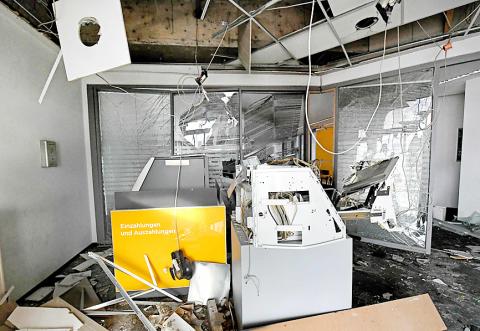
Photo: AFP
Carried out late at night, perpetrators often plan the attacks “months in advance,” Europol has said.
The crimes can be risky, with one man killed in October last year while attempting a similar attack on a ticket machine at a local train station in Halle, southwest of Berlin.
However, successful attacks on ATMs are highly lucrative.
In May, raiders who blasted open a Commerzbank cash machine in Eschborn, near Frankfurt, made off with 190,000 euros (US$215,000).
The police managed to grab one suspect who returned to the scene of the crime in the small hours, but his accomplices and the cash have disappeared without trace, Frankfurt Prosecutor Christian Hartwig said.
Many cash machine crackers come “from the Netherlands and central Europe” to Germany simply because of its favorable geography, he added.
Germany’s geographical position at the center of Europe and its dense web of motorways, much of which is not covered by a speed limit, means that criminals can more easily shake off police than elsewhere — driving German-made sports cars, naturally.
One particularly notorious group has plagued the state of North Rhine-Westphalia, which shares a border with the Netherlands and where the largest number of bank raids are carried out.
The press dubbed the group the “Audi gang” because their getaway car of choice tended to be rented or stolen vehicles of that particular high-end brand.
Three members of the gang were last month hauled before a court in state capital, Duesseldorf, accused of stealing more than 600,000 euros and causing 100,000 euros of damage in 2017 and last year.
Last year, a total of 128 suspects were arrested over cash machine robberies, most of them from the Netherlands, the BKA said.
Even so, Germany accounts for more than one-third of the attacks recorded across 11 large European countries surveyed by the European Association for Secure Transactions (EAST).
The nation’s 58,000 machines make up just 16 percent of the installed base across all the countries in the study.
While cash machine attacks have mounted in Germany, the number reported in the other 10 nations studied by EAST, including France and the UK, fell 15 percent to just under 700 altogether.
Such data highlight how banks can work together with government support to reduce the incentives to blast open ATMs.
In the Netherlands, lenders created the Geldmaat network, agreeing to hold less cash in each machine, but refill them more regularly to reduce the potential payoff for any one raid.
France ordered banks in 2015 to fit ATMs with systems that stain banknotes if they are forcibly removed.
Europol credits the move with sharply reducing the number of attacks in France, which fell from 304 in 2013 to 58 last year, according to French National Gendarmerie figures.
Even in Germany, criminals fail to secure any banknotes in 60 percent of cases thanks to well-protected machines, the BKA said.
On average, 130,000 euros are stolen in each German crime, compared with 17,100 euros across the 11 countries surveyed by EAST.


When a hiker fell from a 55m waterfall in wild New Zealand bush, rescuers were forced to evacuate the badly hurt woman without her dog, which could not be found. After strangers raised thousands of dollars for a search, border collie Molly was flown to safety by a helicopter pilot who was determined to reunite the pet and the owner. A week earlier, an emergency rescue helicopter found the woman with bruises and lacerations after a fall at a rocky spot at the waterfall on the South Island’s West Coast. She was airlifted on March 24, but they were forced to
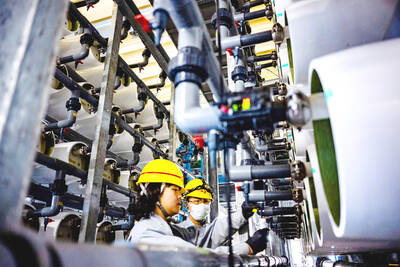
HIGH HOPES: The power source is expected to have a future, as it is not dependent on the weather or light, and could be useful for places with large desalination facilities A Japanese water plant is harnessing the natural process of osmosis to generate renewable energy that could one day become a common power source. The possibility of generating power from osmosis — when water molecules pass from a less salty solution to a more salty one — has long been known. However, actually generating energy from that has proved more complicated, in part due the difficulty of designing the membrane through which the molecules pass. Engineers in Fukuoka, Japan, and their private partners think they might have cracked it, and have opened what is only the world’s second osmotic power plant. It generates
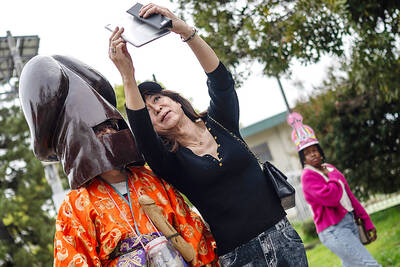
Showcasing phallus-shaped portable shrines and pink penis candies, Japan’s annual fertility festival yesterday teemed with tourists, couples and families elated by its open display of sex. The spring Kanamara Matsuri near Tokyo features colorfully dressed worshipers carrying a trio of giant phallic-shaped objects as they parade through the street with glee. The festival, as legend has it, honors a local blacksmith in the Edo Period (1603-1868) who forged an iron dildo to break the teeth of a sharp-toothed demon inhabiting a woman’s vagina that had been castrating young men on their wedding nights. A 1m black steel phallus sits in the courtyard of

Hundreds of Filipinos and tourists flocked to a sun-bleached field north of Manila yesterday, on Good Friday, to witness one of the country’s most blood-soaked displays of religious fervor, undeterred by rising fuel prices. Scores of bare-chested flagellants with covered faces walked barefoot through the dusty streets of Pampanga Province’s San Fernando as they flogged their backs with bamboo whips in the scorching heat. Agence France-Presse (AFP) journalists said they saw devotees deliberately puncturing their skin with glass shards attached to a small wooden paddle to ensure their bleeding during the ritual, a way to atone for sins and seek miracles from


 RSS
RSS