


New Zealand is in the grip of an egg shortage as the industry undergoes a massive period of disruption while it transitions to free-range farming.
The shortage has also been caused by an increased appetite for eggs, with New Zealanders consuming 230 eggs per person last year, compared with 200 per person a decade ago.
However, the main issue is farmers struggling to modify their operations and maintain output as the industry moves from cage to barn and free-range egg production.
Over the past few years all of New Zealand’s major supermarket brands have committed to stop selling caged eggs by 2027, as have a number of major food service providers and fast-food chains, including McDonalds and Burger King.
The increased demand for barn and free-range eggs has caused occasional shortages in egg supply, Nikhil Sawant, a Countdown supermarket spokesperson, told Radio New Zealand.
“We’re working closely with our egg farmers as we all adjust to this increased demand, but there are unfortunately going to be shortages from time to time. We’re trying our best to keep shortages to a minimum and are expecting supply to improve in the coming few months,” Sawant said.
New Zealand Poultry Association executive director Michael Brooks said that supermarkets were struggling to get the volumes of eggs they required as the nation’s hen flock had decreased from 4.2 million birds last year to about 3.6 million this year.
The decrease comes as farmers search for new land and infrastructure to build much larger free-range farming operations.
Some farmers were experiencing high levels of stress and anxiety at the rapid pace of the change, with others quitting the industry for good, Brooks said.
“If you are looking at moving to free-range or even barn, you are basically looking at an entirely new farm, there’s a huge amount of pressures on farmers right now,” he said.
“Supermarkets are maybe struggling to get the volumes they’d like,” he added.
Brooks said farming free-range was more complex for farmers as they had to deal with issues such as weather, contamination of feed supply, diseases and a higher mortality rate among birds — which all contributed to a minimum 50 percent higher egg cost for consumers.
A dozen free-range eggs cost NZ$7 (US$4.73) and up at most supermarkets, while 30 caged eggs sell for NZ$9.5.
Antoinette Laird, head of external relations for Foodstuffs New Zealand, said in a statement that while they were not facing any imminent shortages, “there is a definite increase in demand for cage-free eggs as customers become increasingly concerned about animal welfare.”
According to Consumer New Zealand, at least three quarters of New Zealanders buy cage-free “at least some of the time,” while more than a quarter purchase free-range exclusively.
In the EU battery cages began to be phased out in 2012, while Switzerland was the first nation in the world to ban them outright in 1992.
Companies selling free-range eggs have doubled since 2010, but there are concerns there is still no standard definition of what free-range means.
In 2017, an investigation by Newsroom found millions of free-range eggs sold at Countdown supermarket actually came from caged hens.


Showcasing phallus-shaped portable shrines and pink penis candies, Japan’s annual fertility festival yesterday teemed with tourists, couples and families elated by its open display of sex. The spring Kanamara Matsuri near Tokyo features colorfully dressed worshipers carrying a trio of giant phallic-shaped objects as they parade through the street with glee. The festival, as legend has it, honors a local blacksmith in the Edo Period (1603-1868) who forged an iron dildo to break the teeth of a sharp-toothed demon inhabiting a woman’s vagina that had been castrating young men on their wedding nights. A 1m black steel phallus sits in the courtyard of

JAN. 1 CLAUSE: As military service is voluntary, applications for permission to stay abroad for over three months for men up to age 45 must, in principle, be granted A little-noticed clause in sweeping changes to Germany’s military service policy has triggered an uproar after it emerged that the law requires men aged up to 45 to get permission from the armed forces before any significant stay abroad, even in peacetime. The legislation, which went into effect on Jan. 1 aims to bolster the military and demands all 18-year-old men fill out a questionnaire to gauge their suitability to serve in the armed forces, but stops short of conscription. If the “modernized” model fails to pull in enough recruits, parliament will be compelled to discuss the reintroduction of compulsory service, German
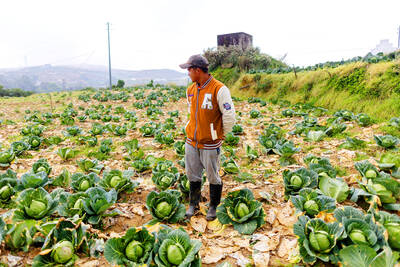
Filipino farmers like Romeo Wagayan have been left with little choice but to let their vegetables rot in the field rather than sell them at a loss, as rising oil prices linked to the Iran war drive up the cost of harvesting, labor and transport. “There’s nothing we can do,” said Wagayan, a 57-year old vegetable farmer in the northern Philippine province of Benguet. “If we harvest it, our losses only increase because of labor, transportation and packing costs. We don’t earn anything from it. That’s why we decided not to harvest at all,” he said. Soaring costs caused by the Middle East

Hungarian Prime Minister Viktor Orban’s officially declared wealth is fairly modest: some savings and a jointly owned villa in Budapest. However, voters in what Transparency International deems the EU’s most corrupt country believe otherwise — and they might make Orban pay in a general election this Sunday that could spell an end to his 16-year rule. The wealth amassed by Orban’s inner circle is fueling the increasingly palpable frustration of a population grappling with sluggish growth, high inflation and worsening public services. “The government’s communication machine worked well as long as our economic situation remained relatively good,” said Zoltan Ranschburg, a political analyst


 RSS
RSS