


In a shift of tactics that has alarmed US officials, the anti-secrecy organization WikiLeaks has published on the Web nearly 134,000 leaked diplomatic cables in recent days, more than six times the total disclosed publicly since the posting of the leaked US Department of State documents began in November.
A sampling of the documents showed that the newly published cables included the names of some people who had spoken confidentially to US diplomats and whose identities were marked in the cables with the warning “strictly protect.”
US Department of State officials and human rights activists have been concerned that such diplomatic sources, including activists, journalists and academics in authoritarian countries, could face reprisals, including dismissal from their jobs, prosecution or violence.
Since late last year, the New York Times and several other news organizations have had access to more than 250,000 State Department cables originally obtained by WikiLeaks, citing them in news articles and publishing a relatively small number of cables deemed newsworthy. However, the Times and other publications that had access to the documents removed the names of people judged vulnerable to retaliation.
WikiLeaks published some cables on its own Web site, but until the latest release, the group had also provided versions of the cables that had been edited to protect low-level diplomatic sources.
Government officials and journalists were poring over the newly released cables on Monday to assess whether people named in them might face repercussions. A quick sampling found at least one cable posted on Monday, from the US embassy in Australia, had a name removed, but several others left in the identities of people whom diplomats had flagged for protection.
Among those named, despite diplomats’ warnings, were a UN official in West Africa and a foreign human rights activist working in Cambodia. They had spoken candidly to US embassy officials on the understanding that they would not be publicly identified.
The new disclosures are likely to reignite a debate over the virtues and perils of making public the confidential views of US diplomats, some of whom have complained that the leaks have made their work more difficult. The disclosures take place as a federal grand jury in Alexandria, Virginia, continues to hear evidence in a criminal investigation of WikiLeaks for disclosing classified information.
WikiLeaks said in a statement on Monday that the acceleration in disclosing the cables was “in accordance with WikiLeaks’ commitment to maximizing impact and making information available to all.”
The statement suggested that it was intended to counter the “misperception” that the organization “has been less active in recent months.”
The statement said that “crowdsourcing” the documents by posting them will allow people of different backgrounds and nationalities to interpret the cables. It was unsigned, but WikiLeaks -editor-in-chief Julian Assange generally drafts or approves the group’s statements.
Even as WikiLeaks made its new postings, a German publication reported that an encrypted file containing all of the 251,287 diplomatic cables obtained by WikiLeaks last year had been posted months ago on the Web, and that the password was also available on the Internet. It was unclear on Monday whether anyone had cracked the encrypted file described by the publication, Der Freitag, a small Berlin-based, left-leaning weekly, and had made public previously unpublished material.
A State Department spokesman, Michael Hammer, said the department would not comment on the authenticity of the documents released.
He said the US “strongly condemns any illegal disclosure of classified information.”
Last year, WikiLeaks was sharply criticized by human rights activists for disclosing the names of Afghan citizens who had provided information on the Taliban to the US military. It was far more cautious in subsequent releases, using software to strip proper names out of Iraq war documents and publishing versions of the cables after they had been edited by the New York Times and other publications.
The publication of cables began slowly last year, with only 2,500 made public by year’s end, often with redactions. As of last week, the total had reached about 20,000.
However, the State Department has always acted on the assumption that all 250,000 cables might become public. A department task force worked with US embassies to review all the leaked cables, quietly warning people named in the cables that they might be in jeopardy. Some especially vulnerable people were given help to move, usually outside their home countries.
Steven Aftergood, an expert on government secrecy at the Federation of American Scientists, said he had reviewed several dozen cables from the new batch — all among those classified “secret” by the State Department — and found only one redaction. He said the volume of the new release made it unlikely that all the information that might endanger diplomatic sources had been removed.
“If these cables have not been carefully reviewed, it’s likely to be problematic for any number of people named in the cables,” Aftergood said.
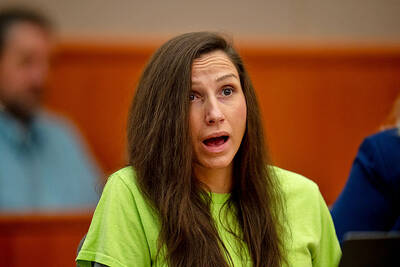
Kouri Richins, a Utah mother who published a children’s book about grief after the death of her husband is to serve a life sentence for his murder without the possibility of parole, a judge ruled on Wednesday. Richins was convicted in March of aggravated murder for lacing a cocktail given to her husband, Eric Richins, with five times the lethal dose of fentanyl at their home near Park City in 2022. A jury also found her guilty of four other felonies, including insurance fraud, forgery and attempted murder for trying to poison her husband weeks earlier on Feb. 14, 2022, with a
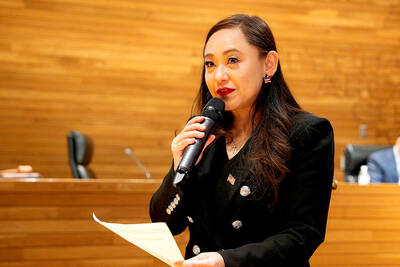
‘PERSONAL MISTAKES’: Eileen Wang has agreed to plead guilty to the felony, which comes with a maximum sentence of 10 years in federal prison A southern California mayor has agreed to plead guilty to acting as an illegal agent for the Chinese government and has resigned from her city position, officials said on Monday. Eileen Wang (王愛琳), mayor of Arcadia, was charged last month with one count of acting in the US as an illegal agent of a foreign government. She was accused of doing the bidding of Chinese officials, such as sharing articles favorable to Beijing, without prior notification to the US government as required by law. The 58-year-old was elected in November 2022 to a five-person city council, from which the mayor is selected
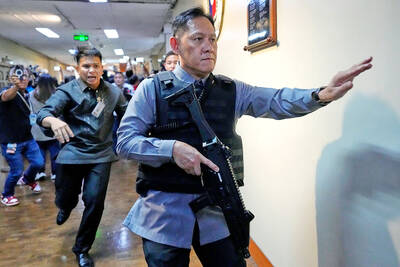
DELA ROSA CASE: The whereabouts of the senator, who is wanted by the ICC, was unclear, while President Marcos faces a political test over the senate situation Philippine authorities yesterday were seeking confirmation of reports that a top politician wanted by the International Criminal Court (ICC) had fled, a day after gunfire rang out at the Philippine Senate where he had taken refuge fearing his arrest. Senator Ronald “Bato” dela Rosa, the former national police chief and top enforcer of former Philippine president Rodrigo Duterte’s “war on drugs,” has been under Senate protection and is wanted for crimes against humanity, the same charges Duterte is accused of. “Several sources confirmed that the senator, Senator Bato, is no longer in the Senate premises, but we are still getting confirmation,” Presidential
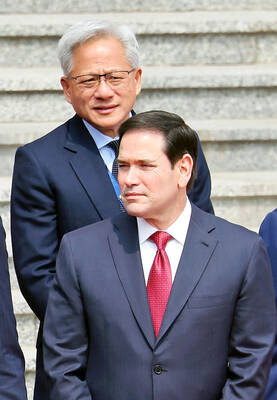
HELP DENIED? The US Department of State said that the Cuban leadership refuses to allow the US to provide aid to Cubans, ‘who are in desperate need of assistance’ US Secretary of State Marco Rubio on Wednesday said that Cuba’s leadership must change, as Washington renewed an offer of US$100 million in aid if the communist nation agrees to cooperate. Cuba has been suffering severe economic tumult led by an energy shortage that plunged 65 percent of the country into darkness on Tuesday. Cuba’s leaders have blamed US sanctions, but Rubio, a Cuban American and critic of the government established by Fidel Castro, said the system was to blame, including corruption by the military. “It’s a broken, nonfunctional economy, and it’s impossible to change it. I wish it were different,” he told


 RSS
RSS