

Members of a Yemeni tribe attacked an oil pipeline with rocket-propelled grenades to avenge the death of a provincial official killed by mistake in an anti-al-Qaeda raid, a tribal source said yesterday.
Members of the al-Shabwan tribe attacked the pipeline passing over their land in Marib province, east of the capital Sana’a, “to avenge the death of the secretary general of Marib provincial council, Jaber Ali al-Shabwani,” the source said.
The 450km pipeline connects the Safer oil field in Marib with the port of al-Salif on the Red Sea.
Shabwani and four of his bodyguards were killed in the Yemeni air strike which targeted a wanted al-Qaeda suspect on Monday night, a security source said.
The suspect — Mohammed Said bin Jardan — was wounded but was able to escape, the source said.
According to a local official, Shabwani had been negotiating for the past week for bin Jardan’s surrender and had gone to the farm which was hit in the air strike for talks.
Yemen is the ancestral homeland of al-Qaeda leader Osama bin Laden and has been the scene of several attacks claimed by the group on foreign missions, tourist sites and oil installations.
Marib is one of al-Qaeda’s Yemeni strongholds.
The group has suffered setbacks amid US pressure on Sana’a to crack down but its presence threatens to turn Yemen into a base for training and plotting attacks, a top US counterterrorism official said in September.
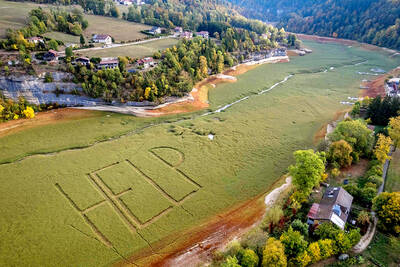
The picturesque Lac des Brenets between France and Switzerland has dried up after a record-breaking hot summer, leaving locals crying out for help to save the lake. Indeed, the words “HELP” and “SOS” have been scratched out in the weeds now flourishing on the exposed lake bed. The drought has ruined pleasure boat tourism, while some question whether the lake will ever return to enduring full health. “It’s absolutely heartbreaking,” said historian David Favre, who lives in Les Brenets. “As children, we used to spend all our summers swimming at the beach, having fun by the water, diving, jumping in and sometimes even

STRAIN ON TIES: The police arrested a 20-year-old man who matched the description of a suspect caught on CCTV leaving a hotel in Naha with the victim’s belongings A US Marine stationed on Japan’s southern island of Okinawa was arrested on suspicion of the murder of a Japanese woman, police said yesterday. The suspect “killed the 39-year-old woman at a hotel in Naha and stole her wallet on Saturday,” a local police spokesman said. US Ambassador George Glass posted on social media that he had spoken with Japan’s foreign ministry and Okinawa’s governor to offer “our sincere condolences and pledging full cooperation as the investigation continues.” Japanese Prime Minister Sanae Takaichi called the crime “exceptionally brutal and vicious” on X. The government has urged the US “to provide maximum cooperation

A US lawmaker has called on Starbucks to close its first stores in Xinjiang, China, calling it a “morally bankrupt decision” to do business in a region where Uighurs face repression. China denies widespread accusations about abuses of the Uighurs, a mainly Muslim people, saying its policies there were aimed at combating terrorism, separatism and religious extremism. Starbucks opened its first two stores this week in Xinjiang’s capital, Urumqi, including one at the city centre’s grand bazaar and a second at its international airport. John Moolenaar, chairman of the Select Committee on China of the House of Representatives, called on Starbucks to “immediately
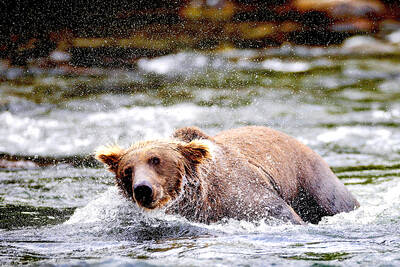
The winner of this year’s Fat Bear Week has been crowned after a nail-biting final — and it’s the son of a former champion. Backpack, a 20-year-old male beloved by rangers in Alaska for his quiet determination, edged out female fellow finalist Dancing Queen in the annual ursine eating competition at Katmai National Park. More than 2.3 million people voted in the week-long competition that sees bears unwittingly jostle in a series of head-to-head contests to decide which one of them has most impressively piled on the pounds ahead of hibernation. Viewers watch a livestream of the enormous animals as they scoop salmon


 RSS
RSS