


Studies suggest that a new lineage of the mpox virus discovered in the Democratic Republic of the Congo (DR Congo) in September last year is more efficient at human-to-human transmission, the Centers for Disease Control (CDC) said yesterday, urging high-risk groups to get fully vaccinated for better protection.
Surveillance data from the WHO and other countries showed that mpox continues to spread globally, the centers said.
Clade I mpox is endemic to Central Africa, while Clade II, from West Africa, causes infections that are less severe, and has two subclades — Clade IIa and Clade IIb, the latter of which caused a global outbreak that started in 2022 and was found in local cases in Taiwan, the CDC said.
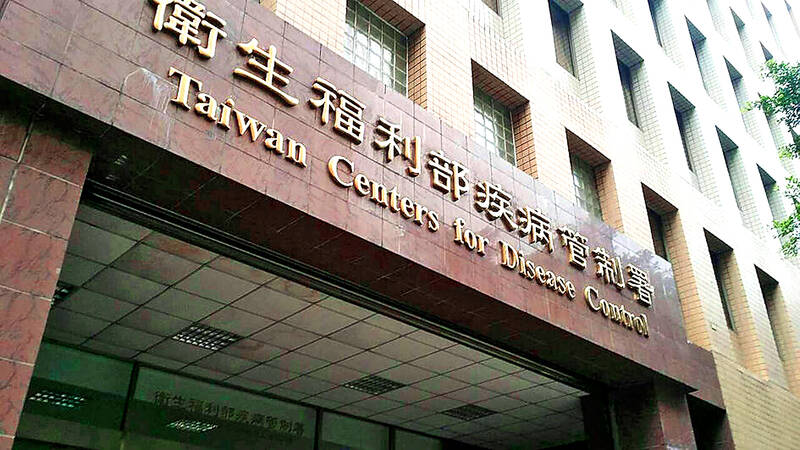
Photo: Lin Hui-chin, Taipei Times
Clade I mpox causes more severe illness and deaths, it said, adding that the DR Congo has reported more than 19,000 suspected mpox cases and more than 900 deaths since January last year.
CDC Deputy Director-General Tseng Shu-hui (曾淑慧) said a study by an international group of researchers published last month identified a new and distinct lineage of Clade I — Clade Ib, which emerged in September last year and appears to be better at spreading between people.
A WHO report published in November last year says that human-to-human transmission of mpox through close contact has been reported in the DR Congo since the 1970s, presumed to be primarily due to zoonotic transmission.
However, as the dynamics of Clade I mpox transmission in the DR Congo over the past few years are not well understood, the new features of sexual and unknown modes of transmission among people have raised additional concerns over the continuing rapid expansion of the outbreak in the country, the report said.
Clade I mpox has not yet been detected in Taiwan, but infection risks are possible with frequent international travel, so getting vaccinated is the best method to prevent the virus, the CDC said.
Studies suggest that the infection risk among unvaccinated people is about twice that of those who have received a dose of a vaccine, and five times that of those who are fully vaccinated with two shots, Tseng said.
The CDC urges eligible recipients of the mpox vaccine, including those who have engaged in risky sexual practices — having more than one sexual partner, or sex at a commercial sex venue or with sex workers — in the past year; those who have had sexually transmitted diseases; or those who have had sexual or intimate contact with a person who is engaged in high-risk sexual activities, to get fully vaccinated.
A total of 77,981 people in Taiwan have been vaccinated against mpox, as of Wednesday last week, but only 50,740 people are fully vaccinated with two doses, so it urges people to complete their vaccination for better protection, the centers said.
Since the CDC listed mpox as a category 2 notifiable communicable disease on June 23, 2022, a total of 367 cases (346 local and 21 imported cases) had been reported, as of Sunday, the centers said.
Eight of those cases were reported this year, including six local and two imported cases, it said, adding that risk of local infections remains.
Additional reporting by CNA

FUKUOKA SITUATION: Japanese media reported that the pathogen is expected to be identified by the summer, while the CDC downplayed the idea that it was hMPV A “mysterious cold-like illness” reported in Japan’s Fukuoka Prefecture does not seem to be a new disease, but Japanese authorities have been asked about the situation, the Centers for Disease Control (CDC) said yesterday. The Fukuoka Prefectural Medical Association on Wednesday told a news conference that a “mystery cold” that has become a hot topic on social media is “highly likely to be caused by some kind of viral infection,” Japan’s KBC News reported. “Many people are experiencing symptoms starting with a sore throat, followed by a runny nose, phlegm and a severe cough,” KBC News reported, citing association officials. Health authorities are

Nvidia Corp CEO Jensen Huang (黃仁勳) arrived in Taiwan yesterday ahead of upcoming AI and technology events, saying he plans to meet with clients and Taiwan Semiconductor Manufacturing Co Chairman C.C. Wei (魏哲家) during his visit. After landing at Taipei Songshan Airport, Huang posed for photos with fans and handed out Yakult drinks to reporters and supporters waiting at the scene, saying he has “a lot to do” during the trip. Asked about reports that Nvidia’s planned headquarters site in Taipei’s Beitou Shilin Technology Park could break ground on May 27, Huang said that if the company holds an event, he would

Carrefour Taiwan is to begin using a new name from the start of July, but it cannot divulge the name until then, the chairman of the supermarket chain's parent company said today. President Chain Store Co chairman Lo Chih-hsien (羅智先) was asked by reporters after a shareholders' meeting to confirm whether the company has settled on a new name for the supermarket brand. In March, the government-registered name of two Carrefour Taiwan branches was quietly changed to "Le Chia Kang" (樂家康) in Chinese, raising speculation that has been selected as the name. Lo said that because of local regulations and contractual obligations, the

The Philippines would likely be involved in any conflict over Taiwan due to its proximity to the democracy claimed by China, President Ferdinand Marcos Jr said, reiterating a stance that risks angering Beijing. “In the Philippines, we do not have a choice because Taiwan is so close to the Philippines and we have almost 200,000 Filipino nationals living and working in Taiwan,” Marcos said in an interview with Japanese media in Manila on Monday. The Philippine leader’s comments come ahead of a state visit to Japan next week, where he is to meet with Japanese Prime Minister Sanae Takaichi to discuss security


 RSS
RSS