


The US wants to be a partner of Taiwan and help it succeed, former acting US secretary of the army John Whitley said in a media interview on Thursday.
Whitley, a senior fellow at the US-based think tank Institute for Defense Analyses, spoke to reporters in Taipei after presenting a speech, “An Economist Goes to the Army,” at National Taiwan University.
The economist-turned-military official is visiting Taiwan for the first time at the invitation of the university’s Department of Economics.

Photo courtesy of the Taiwan Academy of Banking and Finance
Visiting Taiwan has provided him with valuable first-hand knowledge about the situation “on the ground,” which he can provide to the US government, Whitley said.
“The US wants to be a partner here. The US wants to help Taiwan succeed,” he said, but added that there are not many experts on Taiwan in the US.
A trip like this can help the US assess its strategy and impact in Taiwan, and adjust them accordingly “to be helpful,” he said.
Very few US officials have visited Taiwan and only have “a sense” of how the Taiwanese government operates, its defense budget allocation process and military training, he said.
“But until you’re actually here and you actually talk to the people doing that, you actually see it, you really don’t know,” he added.
The US “is going through an evolution” regarding its policy toward China compared with 25 years ago, he said.
At the time, the dominant view in the US was the best way to make China a responsible global citizen was to closely engage with it economically, Whitley said.
“The US has now come to the conclusion that that was wrong and that that did not work,” he said.
The US “encapsulated that lesson learned in the 2018 National Defense Strategy,” a new course of plans formed after recognizing China’s increased aggressiveness, he said.
Asked whether the US would be willing to come to Taiwan’s aid in the event of a Chinese invasion, Whitley said how Taiwan and the US would react to such an event is unknowable until it actually occurs.
“What I can tell you is that the US military ... they are working very hard right now so that they can, if they are directed, provide support,” he said.
However, the West’s experience from Russia’s invasion of Ukraine serves as a warning, he said.
Although US intelligence had served notice that a Russian military buildup would likely lead to an invasion, only minor sanctions were imposed on Moscow, he said.
The US wants to help, but the commission of military requires domestic political decisionmaking and coordination with allies and partners, he said.
“Taiwanese have to have a clear-eyed realization about what a timeline might actually look like” and plan accordingly, he said, adding that the Taiwanese forces “got to be able to last.”
He reiterated the stance he took at a panel discussion at the Atlantic Council last month, when he urged the US to learn from the invasion of Ukraine and consider how it could help Taiwan hold on until the US and its allies arrive after overcoming logistical challenges.
Hopefully, cross-strait tensions can be resolved without military aggression, but no one knows how to make the Chinese government become a better global citizen to achieve that, he said.
The US does not want “war in any way, shape or form, which everybody’s going to lose in that situation,” he said.
To deter Chinese aggression against Taiwan, “economic sanctions always have been and always will be a tool,” along with military preparedness and diplomacy, he said.
However, the key lies in how Taiwan, Japan, the US and other partners “work together to combine all instruments of power to achieve a peaceful resolution and de-escalation of tensions,” he said.
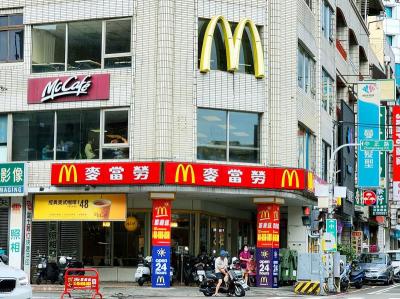
Fast food chain McDonald's is to raise prices by up to NT$5 on some products at its restaurants across Taiwan, starting on Wednesday next week, the company announced today. The prices of all extra value meals and sharing boxes are to increase by NT$5, while breakfast combos and creamy corn soup would go up by NT$3, the company said in a statement. The price of the main items of those meals, if ordered individually, would remain the same. Meanwhile, the price of a medium-sized lemon iced tea and hot cappuccino would rise by NT$3, extra dipping sauces for chicken nuggets would go up
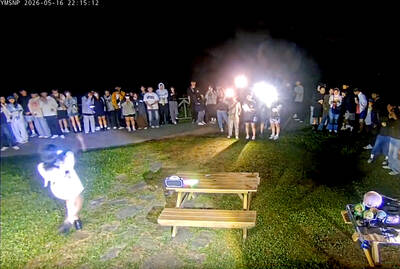
Yangmingshan National Park’s Qingtiangang (擎天崗) nature area has gone viral after a park livestream camera observed a couple in the throes of intimate congress, which was broadcast live on YouTube, drawing large late-night crowds and sparking a backlash over noise, bright lights and disruption to wildlife habitat. The area’s livestream footage appeared to show a couple engaging in sexual activity on a picnic table in the park on Friday last week, with the uncensored footage streamed publicly online. The footage quickly spread across social media, prompting a tide of visitors to travel to the site to “check in” and recreate the

Minister of Digital Affairs Lin Yi-ching (林宜敬) yesterday cited regulatory issues and national security concerns as an expert said that Taiwan is among the few Asian regions without Starlink. Lin made the remarks on Facebook after funP Innovation Group chief executive officer Nathan Chiu (邱繼弘) on Friday said Taiwan and four other countries in Asia — China, North Korea, Afghanistan and Syria — have no access to Starlink. Starlink has become available in 166 countries worldwide, including Ukraine, Malaysia, the Philippines and Vietnam, in the six years since it became commercial, he said. While China and North Korea block Starlink, Syria is not
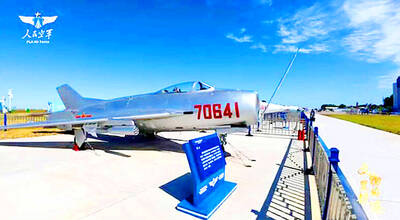
GROUNDED: A KMT lawmaker proposed eliminating drone development programs and freezing funding for counterdrone systems, despite China’s adoption of the technology China has deployed attack drones at air bases near the Taiwan Strait in a strategy aimed at overwhelming Taiwan’s air defense systems through saturation attacks, the Mainland Affairs Council (MAC) said. The council’s latest quarterly report on China said that satellite imagery and open-source intelligence indicate that the Chinese People’s Liberation Army (PLA) had converted retired J-6 fighter jets into J-6W drones, which the PLA has stationed at six air bases near Taiwan, five in China’s Fujian Province and one in Guangdong Province. The report cited J. Michael Dahm, a senior fellow at the US-based Mitchell Institute, as saying that China has


 RSS
RSS