


The Taipei Department of Health yesterday said it would study the feasibility of subsidizing oocyte cryopreservation — the extraction and freezing of egg cells — after city councilors proposed the idea to help boost the city’s birthrate.
Several councilors at a Taipei City Council committee hearing proposed providing subsidies to women aged 25 to 40 to freeze their eggs to improve their chances of conceiving later in life.
Women are having children later on average, but egg freezing is prohibitively expensive for most, Taipei City Councilor Chen E-jun (陳怡君) said.
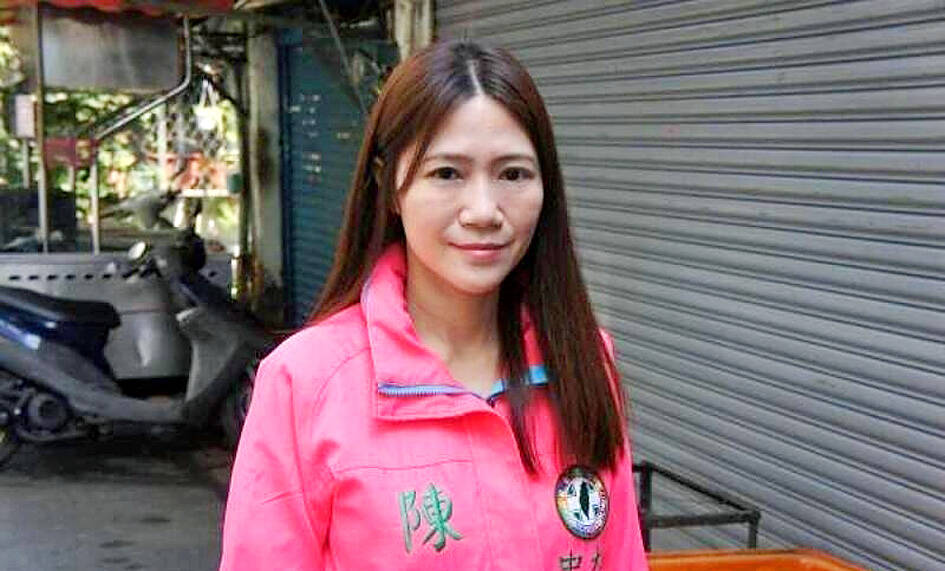
Photo: Yang Hsin-hui, Taipei Times
Chen suggested requiring a doctor’s consultation and proof of the procedure to receive a one-time subsidy of NT$30,000, followed by NT$5,000 for each of the following three years to pay for storage.
The funds would only be the “tip of the iceberg,” as the procedure typically costs NT$30,000 to NT$100,000, Chen said.
GIVING BIRTH LATER
In 2021, 30 percent of all births were by women aged 35 or older, Taipei City Councilor Yen Juo-fang (顏若芳) said, citing Ministry of the Interior data.
In Taipei, the figure was higher than 40 percent, she said.
The average age a woman has her first child has risen by 1.68 years over the past decade to 33.34 in 2021, Taipei City Councilor Liu Tsai-wei (柳采葳) said.
As egg quality gradually declines with age, in vitro fertilization tends to be more successful with younger eggs, Taipei Fertility Center physician Jason Ho (何彥秉) said.
In addition, the egg recovery rate with modern fast-freezing technology exceeds 90 percent, making it a low-risk procedure, he added.
Taipei City Councilor Miao Po-ya (苗博雅) said that marriage should not be a requirement to qualify for the subsidy, as it would exclude unmarried people and same-sex couples.
Taoyuan is already offering the subsidy, she said, asking why Taipei, as the nation’s largest city, is not doing the same.
Taipei City Councilor Lee Yen-chang (李彥昌) proposed studying the results of similar policies in other municipalities before Taipei issues subsidies.
The city should also encourage women to use the eggs later on, he said, adding that people might take the money and never use the service.
The city’s health department is to convene a meeting of experts to discuss the possibility of offering a subsidy, Taipei Department of Health Commissioner Chen Yen-yuan (陳彥元) told the councilors.

NATIONAL SECURITY: Authorities are working to confirm the identities of the military personnel involved and investigating possible illegal conduct and regulatory violations Authorities are probing possible national security implications after Kinmen police and immigration officers on Sunday found a Chinese woman allegedly posing as a tourist while engaging in prostitution involving more than 10 military personnel. The woman, surnamed Chen (陳), has since been deported, authorities said, adding that investigators are still working to confirm the identities of those implicated, as the records only listed code names and aliases. The case stemmed from a report received by the Kinmen District Prosecutors’ Office on Friday last week from the Jinhu Precinct of the Kinmen County Police Bureau. On Sunday, police, along with the National Immigration

REASONS FOR TRAVEL: An assistant professor said that proposed amendments to penalize drivers if they used drugs overseas would not deter people from traveling People who operate a motor vehicle under the influence of marijuana would have their driver’s license revoked, even if they used the substance while overseas, the Ministry of Transportation and Communications said yesterday, citing proposed amendments to the Road Traffic Management and Penalty Act (道路交通管理處罰條例). The amendments would also authorize the government to revoke the licenses of people determined to have used Category 1 or Category 2 narcotics, even if they were not operating a vehicle while under the influence of drugs, as well as ban them from taking the license test for three years, the ministry said. People aged 18 or

GLOBALGIVING: ‘ Caving to external pressure is not acceptable for an organization that has cultivated justice reform and human rights for 30 years,’ one NGO said A slew of non-government organizations (NGOs) have withdrawn from the GlobalGiving fundraising platform after it announced it would use “Chinese Taipei” instead of “Taiwan” from next month. The Taiwan Good Rice Association wrote on Facebook on Friday that it was informed on April 28 via a teleconference call of the change, which was made because the platform wanted to operate in China. Taiwan Good Rice is to terminate all cooperative relationships with GlobalGiving in response to the platform’s “unilateral and non-negotiable” decision to remove references to Taiwan, the NGO said. “Taiwan is in the official name of Taiwan Good Rice Association and the

HEAVY WEATHER: Typhoon Jangmi is due to crash straight into the Ryukyus as airlines look to shift flights to larger aircraft or cancel flights to Okinawa entirely Taiwan’s international air carriers announced flight adjustments over the weekend as Typhoon Jangmi is forecast to hit the Ryukyu Islands today and tomorrow. The Central Weather Administration (CWA) upgraded Jangmi from a tropical storm to a typhoon at 8am yesterday, with the eye located 580km south of Naha city. It was moving north at 19kph. Today, China Airlines’ CI-120, CI-121, CI-122 and CI-123 flights between Taoyuan and Naha, Okinawa, have been canceled as well as CI-132 and CI-133 between Kaohsiung and Naha. EVA Air’s BR-112, BR-113, BR-186 and BR-185 flights between Taoyuan and Naha are also canceled. Low-cost carrier Tigerair Taiwan canceled IT-230,


 RSS
RSS