


Taiwanese attendants of an event in South Korea to mark the 75th anniversary of the Jeju Uprising said they hope their presence would raise awareness of the incident in Taiwan and help facilitate Taiwan-South Korea collaboration on human rights education.
The event was attended by total 31 Taiwanese participants, including officials from the Ministry of Education’s Human Rights Education Center of K-12 Education Administration, who traveled to South Korea in their private capacity, 14 students, 2 professors from University, as well as other educators from 10 high schools at different corners of Taiwan.
The group was headed by Chengchi University Department of Korean Language and Culture professors Chu Li-shi (朱立熙) and Kwo Chiu-wen (郭秋雯), and National Tainan Girls’ Senior High School principal Hung Ching Tsai (洪慶在).
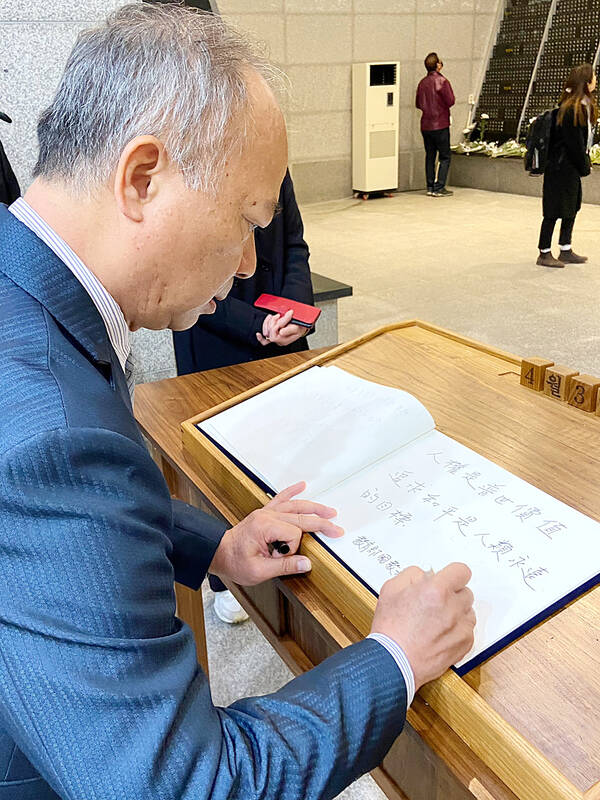
Photo: Hung Jui-chin, Taipei Times
The Jeju Uprising occurred at a time when the situation in South Korea was similar to that in Taiwan, the high school said in a statement.
The 13 months-long uprising began about a year after the 228 Massacre in Taiwan, and both events involved police and the military cracking down on civilians, resulting in the death of many innocent people, it said.
Talking about the incident had been taboo in South Korea for many years, it said.
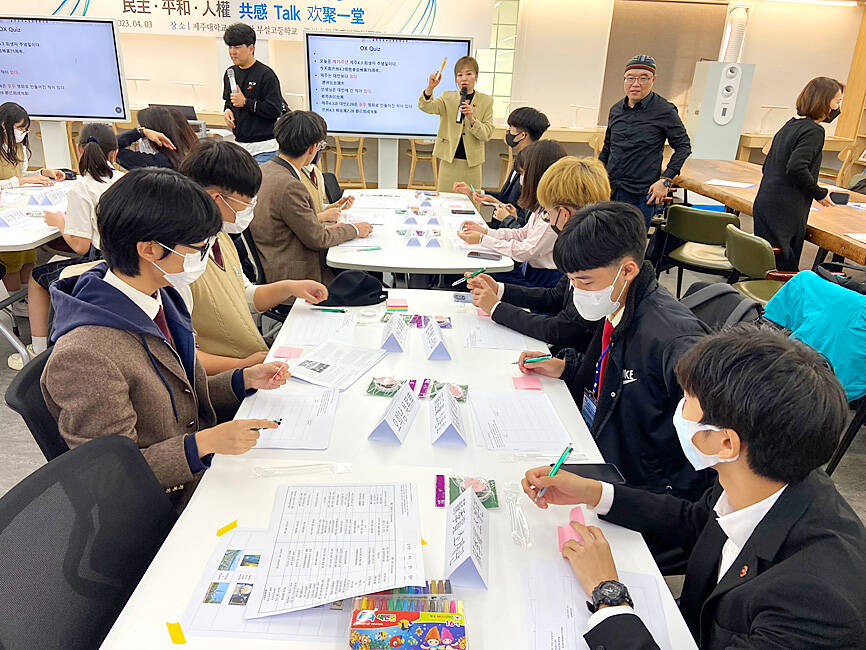
Photo courtesy of National Tainan Girls’ Senior High School
However, since the enactment of the Jeju 4.3 Special Law in 1999, the South Korean government and local authorities in Jeju Island have taken steps to reveal the truth, leading to the designation of April 3 as a national holiday, it said.
The high school said it sent student representatives to the commemoration as part of its curriculum’s emphasis on transitional justice, fairness and justice, which has been in place since 2019.
The high school said it hopes that interaction between Taiwanese and South Korean students would help instill in them the values of human rights.
A string quartet from the high school’s music specialty class played two pieces, one adapted from the song “Sleepless South Island” commemorating the incident and a suite named "Flower in the Korean Night" (韓夜之花) adapted from the 1934 song by Taiwanese composer Teng Yu-hsien (鄧雨賢) "Flowers in the Rainy Night" (雨夜花) and the renowned Korean folk song "Arirang" (阿里郎).
The commemoration was also attended by Jeju Governor Oh Young-hun, National Museum of Korean Contemporary History curator Chu Chin-oh and South Korean author Hyun Ki-young, who published extensively on the uprising.
The organizers said the commemoration should not only focus on the crackdown of the protests, but also on promoting human rights, democracy and reconciliation.
Hung said he hopes that respect for human rights can be passed on to the younger generation.
Human Rights Education Center officials said they established a channel of communication with the Jeju Education Office.
A delegation of teachers and students from the island would visit Taiwan in June, they said.
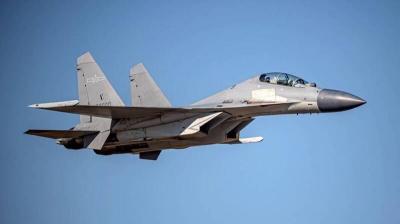
Eight Chinese naval vessels and 24 military aircraft were detected crossing the median line of the Taiwan Strait between 6am yesterday and 6am today, the Ministry of National Defense said this morning. The aircraft entered Taiwan’s northern, central, southwestern and eastern air defense identification zones, the ministry said. The armed forces responded with mission aircraft, naval vessels and shore-based missile systems to closely monitor the situation, it added. Eight naval vessels, one official ship and 36 aircraft sorties were spotted in total, the ministry said.
The Ministry of Foreign Affairs (MOFA) today said that if South Korea does not reply appropriately to its request to correct Taiwan’s name on its e-Arrival card system before March 31, it would take corresponding measures to alter how South Korea is labeled on the online Taiwan Arrival Card system. South Korea’s e-Arrival card system lists Taiwan as “China (Taiwan)” in the “point of departure” and “next destination” fields. The ministry said that it changed the nationality for South Koreans on Taiwan’s Alien Resident Certificates from “Korea” to “South Korea” on March 1, in a gesture of goodwill and based on the
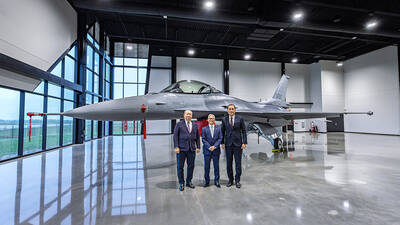
Taiwanese officials were shown the first of 66 F-16V fighter jets purchased by Taiwan from the United States, the Ministry of National Defense said yesterday, adding the aircraft has completed an initial flight test and is expected to be delivered later this year. A delegation led by Deputy Minister of National Defense Hsu Szu-chien (徐斯儉) visited Lockheed Martin’s F-16 C/D Block 70 (also known as F-16V) assembly line in South Carolina on March 16 to view the aircraft. The jet will undergo a final acceptance flight in the US before being delivered to Taiwan, the
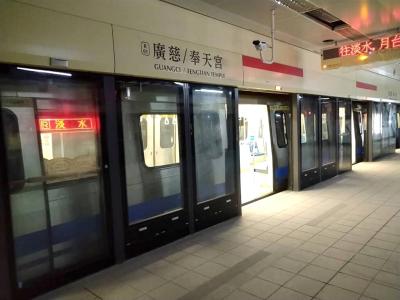
The New Taipei Metro's Sanyin Line and the eastern extension of the Taipei Metro's Tamsui-Xinyi Line (Red Line) are scheduled to begin operations in June, the National Development Council said today. The Red Line, which terminates at Xiangshan Station, would be connected by the 1.4km extension to a new eastern terminal, Guangci/Fengtian Temple Station, while the Sanyin Line would link New Taipei City's Tucheng and Yingge stations via Sanxia District (三峽). The council gave the updates at a council meeting reviewing progress on public construction projects for this year. Taiwan's annual public infrastructure budget would remain at NT$800 billion (US$25.08 billion), with NT$97.3


 RSS
RSS