


After a nine-year effort by more than 700 educational experts at home and abroad, Taiwan's first official version of a reference work on education has finally been completed.
Directed by the National Institute for Compilation and Translation (
The Chinese entries in the 12 volumes are arranged according to stroke order.
The main text is presented in 10 volumes, and the other two volumes contain a chronicle of events in the history of education at home and abroad, as well as four indices under the heading "Chinese," "Foreign languages," "Classification" and "Foreigners' names."
In the "Classification" index, the entries are divided into 37 groups based on their content. Cross references are included to help the reader locate other entries.
The 37 groups cover Chinese educational history, western educational history, the philosophy of education, educational psychology, educational economy, high school education, college education, adult education, famous schools in the world and education in China.
A VCD has also been produced for readers to find the specific volumes and page numbers of key words. Readers can use different methods to search for the entries based on their personal needs.
Director of the institute Lan Shun-te (藍順德) said the nature of the education reference book is something in-between a dictionary and an encyclopedia.
The work covers both common sense information relating to education and academic knowledge.
All important educational terms, concepts, events and issues from throughout the world's history can be found in the 12 volumes.
With the new work, "the world can acquire an understanding of the people, events, regulations, concepts and facilities in Taiwan today," Minister of Education Ovid Tzeng (曾志朗) said.
Tzeng also paid tribute to the academics who participated in the enormous project of compiling the work.
The 80-year-old Liu Chen (
Liu said that in order to keep up with the quickly changing educational developments, theories, goals, institutions, methods and instruments, and to satisfy those who research into and are concerned about education, the society needs a set of educational dictionaries that are rich in content.
In view of the drastic social changes and rapid developments in education, Liu suggested that the institute release a supplementary volume every three to five years.
He said that a new edition would be published after eight or 10 years.
In addition to Liu, Tzeng Chi-chun (
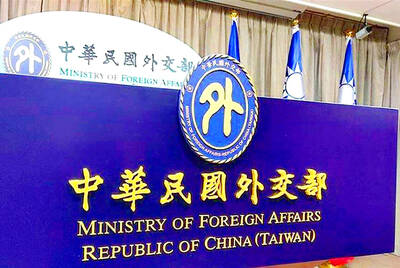
The Ministry of Foreign Affairs (MOFA) yesterday said it is closely monitoring developments in Venezuela, and would continue to cooperate with democratic allies and work together for regional and global security, stability, and prosperity. The remarks came after the US on Saturday launched a series of airstrikes in Venezuela and kidnapped Venezuelan President Nicolas Maduro, who was later flown to New York along with his wife. The pair face US charges related to drug trafficking and alleged cooperation with gangs designated as terrorist organizations. Maduro has denied the allegations. The ministry said that it is closely monitoring the political and economic situation

UNRELENTING: China attempted cyberattacks on Taiwan’s critical infrastructure 2.63 million times per day last year, up from 1.23 million in 2023, the NSB said China’s cyberarmy has long engaged in cyberattacks against Taiwan’s critical infrastructure, employing diverse and evolving tactics, the National Security Bureau (NSB) said yesterday, adding that cyberattacks on critical energy infrastructure last year increased 10-fold compared with the previous year. The NSB yesterday released a report titled Analysis on China’s Cyber Threats to Taiwan’s Critical Infrastructure in 2025, outlining the number of cyberattacks, major tactics and hacker groups. Taiwan’s national intelligence community identified a large number of cybersecurity incidents last year, the bureau said in a statement. China’s cyberarmy last year launched an average of 2.63 million intrusion attempts per day targeting Taiwan’s critical
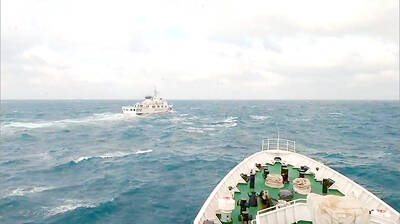
‘SLICING METHOD’: In the event of a blockade, the China Coast Guard would intercept Taiwanese ships while its navy would seek to deter foreign intervention China’s military drills around Taiwan this week signaled potential strategies to cut the nation off from energy supplies and foreign military assistance, a US think tank report said. The Chinese People’s Liberation Army (PLA) conducted what it called “Justice Mission 2025” exercises from Monday to Tuesday in five maritime zones and airspace around Taiwan, calling them a warning to “Taiwanese independence” forces. In a report released on Wednesday, the Institute for the Study of War said the exercises effectively simulated blocking shipping routes to major port cities, including Kaohsiung, Keelung and Hualien. Taiwan would be highly vulnerable under such a blockade, because it
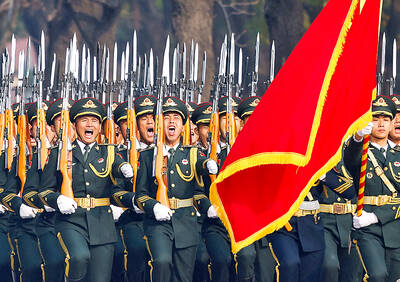
Conflict with Taiwan could leave China with “massive economic disruption, catastrophic military losses, significant social unrest, and devastating sanctions,” a US think tank said in a report released on Monday. The German Marshall Fund released a report titled If China Attacks Taiwan: The Consequences for China of “Minor Conflict” and “Major War” Scenarios. The report details the “massive” economic, military, social and international costs to China in the event of a minor conflict or major war with Taiwan, estimating that the Chinese People’s Liberation Army (PLA) could sustain losses of more than half of its active-duty ground forces, including 100,000 troops. Understanding Chinese


 RSS
RSS