


Cameras are everywhere — in our pockets, on our walls and even in space. They capture emotions, preserve history and reflect culture. Through these devices, photography is now essential to modern life, influencing how we perceive ourselves and the world. To understand the root of their power, let’s explore the camera’s remarkable journey.
The story begins with the camera obscura, a dark room with a tiny hole. Light passing through the opening projected an inverted image on the opposite wall. Renaissance artists used this principle to paint accurate scenes. However, these images couldn’t be preserved as photographs. That changed in the 1820s, when Joseph Nicephore Niepce used a camera obscura and light-sensitive chemicals to generate the first lasting photograph after an eight-hour exposure.
A major breakthrough came in 1839 with Louis Daguerre’s daguerreotype. Using silver-coated plates and chemical processing, he produced images with shorter exposures and striking clarity. The silver-based method later became the foundation for film photography. Another milestone followed in 1888, when George Eastman launched Kodak. The roll-film camera made shooting and processing easier. Its promise was clear: “You press the button, we do the rest.” Suddenly, photography was no longer reserved for specialists. Ordinary people could take pictures without a darkroom or advanced skills.
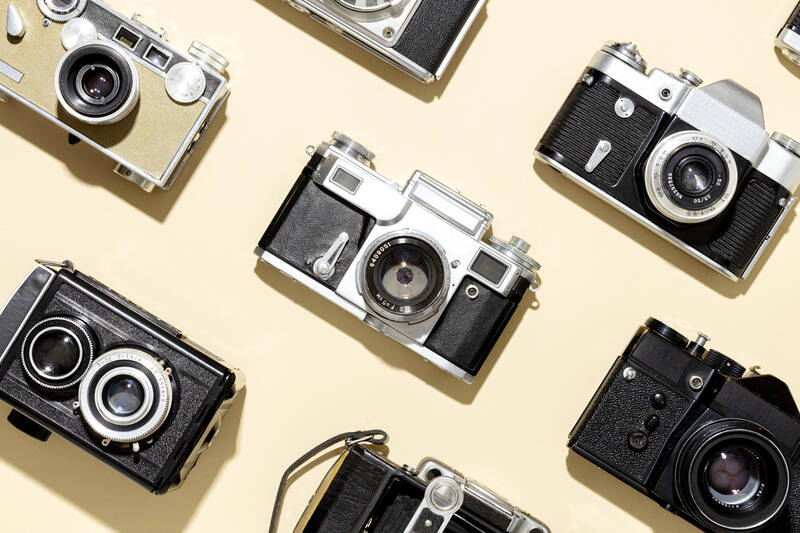
Photo: Freepik / 照片:Freepik
Throughout the 20th century, innovation accelerated and diversified the hobby. By the 1930s, color photography had evolved from an expensive novelty into an accessible option for everyday photographers. Later, Polaroid cameras amazed people with instant prints. During the 1990s, the digital revolution transformed photography again. Cameras were now able to store images on memory cards, so users could review and delete them immediately. What once demanded patience now happens in seconds.
This technology of photography reshapes how people record life and share perspectives. Understanding their history helps us appreciate how far we’ve come and how much further we might go.
相機無所不在——在我們的口袋裡、牆上,甚至太空中。它們捕捉情感、保存歷史,並反映文化。透過這些裝置,攝影如今已成為現代生活不可或缺的一部分,影響著我們如何看待自己與世界。要理解其力量的根源,就讓我們一起探索相機的非凡旅程。
故事始於暗箱,一個帶有小孔的暗室。光線穿過開口,在對面的牆上投射出倒立的影像。文藝復興時期的藝術家利用這個原理來繪製精確的場景。然而,這些圖像無法以照片的形式保存下來。這種情況在西元 1820 年代有了改變,約瑟夫尼塞福爾涅普斯使用暗箱與感光化學物質,在八小時曝光後,產出了第一張可永久保存的照片。
西元 1839 年,路易達蓋爾的銀版攝影法帶來了重大突破。他使用鍍銀板與化學處理,以更短的曝光時間製作出具有驚人清晰度的影像。這種以銀為基底的方法後來成為底片攝影的根基。西元 1888 年又迎來另一個里程碑,當時喬治.伊士曼創立了柯達。底片相機讓拍攝與相片處理變得更加容易。它的承諾很明確:「你按下快門,其餘的交給我們。」突然間,攝影不再是專業人士的專利。普通人無需暗房或高超技巧就能拍照。
整個西元 20 世紀,創新速度加快,使攝影這項嗜好更加多元。到了西元 1930 年代,彩色攝影已從昂貴的新奇事物變成日常攝影者也能負擔的選擇。之後,拍立得相機以即時成像功能令世人驚嘆。西元 1990 年代,數位革命再次改變了攝影。相機當時已經能將影像儲存在記憶卡中,使用者可以立即檢視並刪除照片。曾經需要耐心等待的事情,如今只需幾秒鐘便能完成。
攝影技術重新塑造了人們記錄生活與分享觀點的方式。了解這段歷史有助於我們體會已經取得的成就,並想像未來可能的發展。
MORE INFORMATION
snapshot n. 照片;簡要情況
camera obscura 暗箱
invert vt. 使顛倒;使倒置
Renaissance adj. 文藝復興的
daguerreotype n. 銀版照相法
(以發明者達蓋爾的名字命名的攝影法,曝光時間約為 30 分鐘)
darkroom n. 暗房(
專門用來沖洗與顯影傳統底片照片的空間,能控制光線以避免曝光)
diversify v. 使多樣化
novelty n. 新奇的事物
Polaroid n. 拍立得
(原為寶麗來公司的品牌名稱,後多泛指拍立得相機或是拍立得照片)
Key Vocabulary
1. essential adj. 必要的;不可或缺的
Drinking enough water every day is essential for keeping your body healthy.
每天喝足夠的水對保持身體健康是必要的。
2. generate vt.
生成;產生
The machine generates heat as it operates, so be careful when touching it.
這台機器運作時會產生熱能,所以觸摸時要小心。
3. exposure n. 曝光(時間);暴露;揭發
This camera app lets users control light and exposure for better results.
這款相機應用程式讓使用者可以控制光線與曝光效果,以獲得更佳成像。
4. breakthrough n. 突破;重大進展
After months of hard work, the team finally made a breakthrough in the project.
經過數月的努力,團隊終於在這個專案中取得突破。
5. striking adj. 驚人的;引人注目的
The photographer captured a striking image of lightning cutting across the night sky.
攝影師捕捉到一道閃電劃破夜空的驚人畫面。
6. clarity n. 清晰;清楚明瞭
The new TV has amazing image clarity, so even tiny details look sharp.
這款新電視擁有驚人的影像清晰度,所以即使是微小的細節也清晰可見。
7. foundation n. 基礎;地基;基金會
Barbara studied hard to build a strong foundation before entering medical school.
芭芭拉亞努力讀書,在進醫學院之前打下了堅實的基礎。
8. revolution n. 革命;變革
The country went through a political revolution that ended years of unfair leadership.
該國經歷了一場政治革命,結束多年來不公的統治。
9. perspective n. 觀點;想法
After hearing both sides, Dorothy shared her own perspective on the situation.
聽完雙方意見後,桃樂西分享了自己對這個情況的看法。
空中美語APP+︰全新AI學習,限時免費!(學習音檔) https://www.english4u.net/qr/app.html
文章由AMC空中美語授權使用: https://www.english4u.net
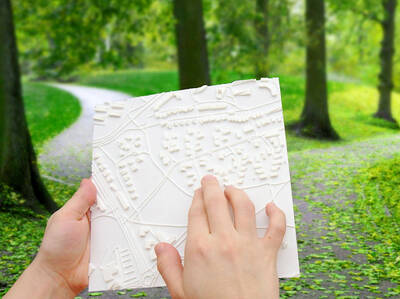
Have you ever wondered how people navigate the world when they can’t see a map? For individuals with visual impairments, conventional maps are nearly impossible to use. This is where tactile maps come in — essential tools that allow people to “see” the world through touch. A tactile map is specially designed with raised lines, textures, and symbols to represent geographical features such as roads, rivers, and buildings. Users explore it with their fingertips. However, these maps are not exclusively for people with visual disabilities. They serve as valuable multisensory learning tools that enhance spatial understanding for everyone, making

The debate surrounding Taipower’s recent corporate identity reboot has gone well beyond the design community. The controversy began after Taipower replaced the familiar “Taiwan Power Company” wording — widely regarded as the calligraphy of Yu You-ren (1879-1964), former Control Yuan president and master calligrapher — with a modern logotype by designer Aaron Nieh’s team, Aaron Nieh Workshop. Taipower said the change was not a wholesale replacement of old signage, but an “optimization of its identity system,” aimed at meeting the needs of digital media, electronic bills, apps, social media graphics and various small-format applications. Existing physical markings, such as building

Since 2005, the third Monday in January has come to be known as “Blue Monday.” In other words, that day is believed to be the most depressing day of the year. This concept seems logical at first. After all, Monday marks the start of the school or workweek after two days of rest and fun. Also, blue is a color that is often associated with sadness. Furthermore, in many parts of the world, January is a time when the weather is cold, rainy, and gloomy. But is there any scientific proof that this January day is truly sadder than any of

Continued from yesterday(延續自昨日) https://www.taipeitimes.com/News/lang For the most part, the idea of “Blue Monday” has been rejected as a myth. Some mental health experts also say there is a danger in labeling a certain day as the most depressing time of the entire year. Some argue that if people expect to feel sadder on the third Monday in January, this belief alone may increase their anxiety. One group that is worried about the negative effect of believing in Blue Monday is Samaritans. A mental health charity based in the UK, Samaritans is working to turn Blue Monday into “Brew Monday.” In this


 RSS
RSS