


Floods that killed more than 200 people in eastern Spain last week were caused by a storm that dumped a year’s worth of rainfall in less than 24 hours.
The tragedy has raised questions about whether earlier warnings could have prevented so many deaths, while the widespread damage shows how many cities are not adapted to withstand rainfall amplified by climate change.
An extremely hot Mediterranean and warmer air temperatures exacerbated a type of storm system becoming more common in the Iberian peninsula due to global warming. Experts said that a building boom in the region in recent decades might have put people in harm’s way and reduced stormwater drainage.
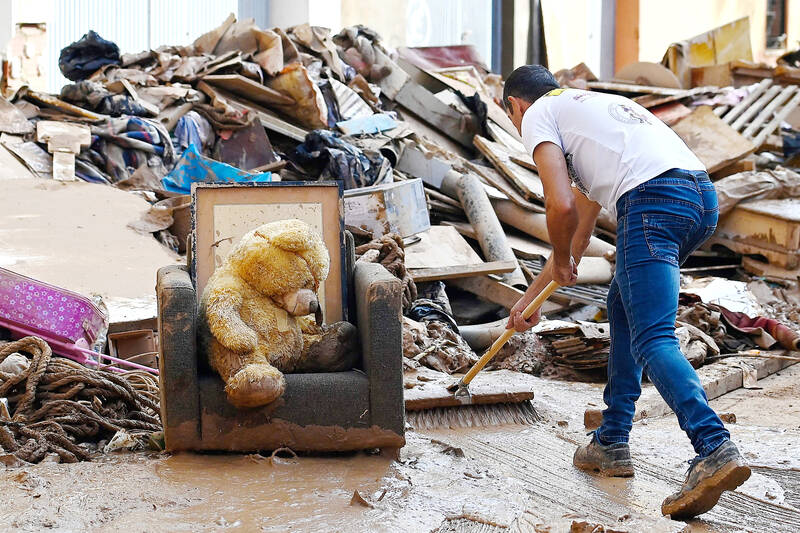
Photo: AFP 照片:美聯社
The storm was a particularly intense example of a “dana” storm, a common phenomenon in the area at this time of year. Danas (short for “depresion aislada en niveles altos”) develop when cold autumn air moving south meets warm, moist air typically flowing from the Mediterranean, creating high-altitude storm clouds. These can dump very large amounts of rainfall in a short space of time. This year, the Mediterranean reached a mean temperature of 28.5C in mid-August. It has remained anomalously warm, making this type of intense storm more likely to develop.
The system moved inland and dumped rainfall over higher ground, inundating settlements downhill and overwhelming urban areas with flash floods. As the storm stalled, it dropped more than 48cm of rainfall in just eight hours in the mountainous area west of the city of Valencia, inundating areas as far inland as 80km from the coast. The town’s position in a natural basin and close to several small rivers made it vulnerable to flooding.
The recent extreme rainfall in Spain was around 12 percent heavier and twice as likely as it would have been in a pre-industrial climate. One-day bursts of rain in the region are increasing as fossil fuel emissions warm up the planet.
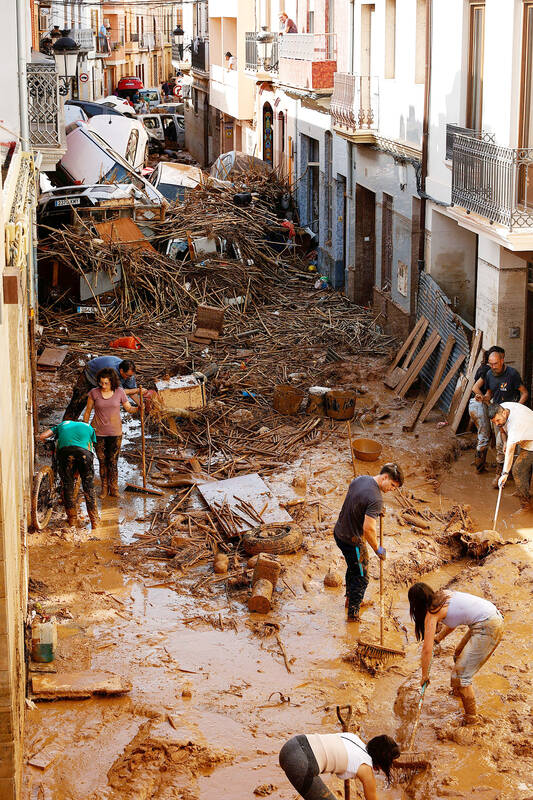
Photo: Reuters 照片:路透
The shockingly high toll has turned attention toward Spain’s flood warning systems. While weather services said on Monday last week that big storms were on the way, the main emergency alert was not issued until last Tuesday evening, when the rain was already falling in earnest.
(Bloomberg)
上週在西班牙東部造成兩百多人死亡的暴風雨,在不到24小時內就傾瀉了一年的降雨量,釀成洪災。
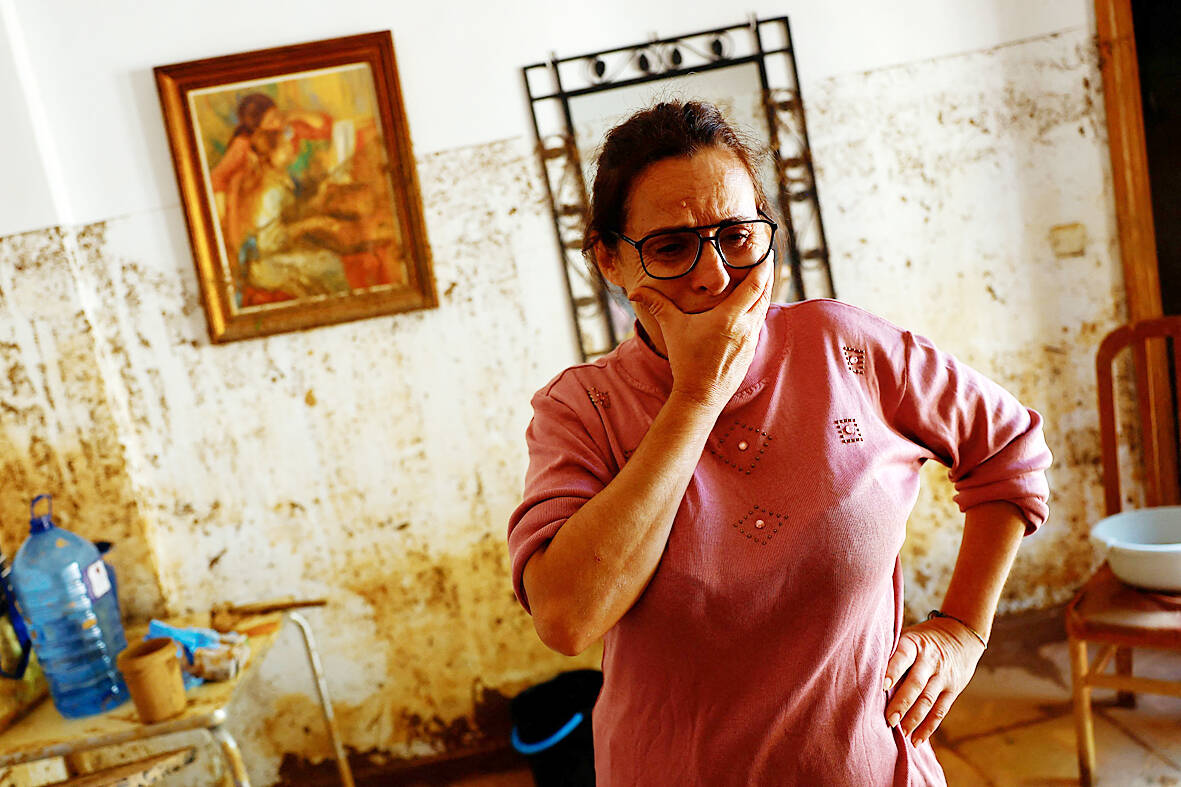
Photo: Reuters 照片:路透
這場悲劇引發人們質疑:若提早發出預警,是否就可避免如此嚴重的傷亡;其破壞範圍之廣,也顯示有多少城市無法適應氣候變化所帶來的降雨量。
由於全球暖化,變得極熱的地中海和變暖的空氣加劇了一種風暴系統,在伊比利半島變得更為常見。專家表示,該地區近數十年來的建築熱潮可能將人置於險境,且縮減了疏通雨水的排水系統。
這是「達納」風暴的一個特別強烈的例子,「達納」(DANA)是 depresion aislada en niveles altos 的縮寫,意為孤立高空低氣壓,是該地區每年這時節常見的現象,這是秋季向南移動的冷空氣與通常來自地中海的溫暖潮濕空氣相遇,而形成高空風暴雲。這些風暴雲可在短時間造成大量降雨。今年8月中旬,地中海平均氣溫達到攝氏28.5度。天氣仍異常溫暖,讓這種強烈的風暴更有可能產生。
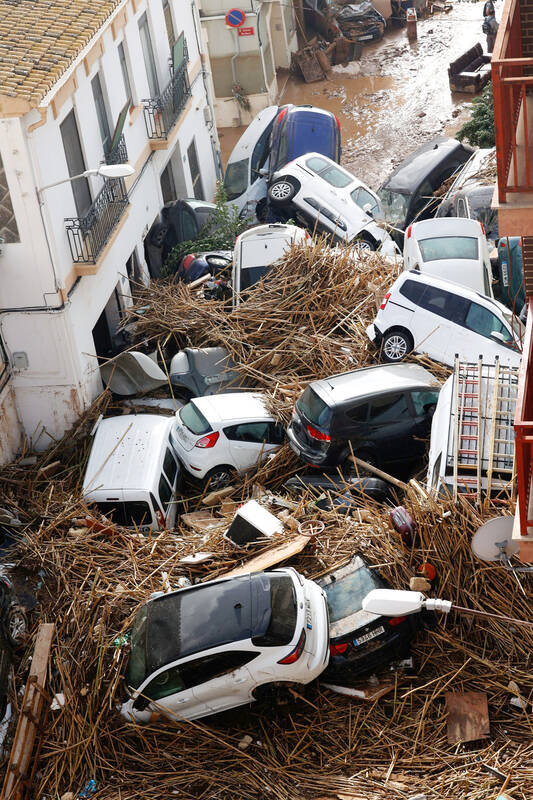
Photo: Reuters 照片:路透
該雲系向內陸移動,將傾盆大雨降在地勢較高的地方,淹沒了山下的聚落,洪水暴發淹沒了城市地區。風暴稍歇,瓦倫西亞市西部山區在短短8小時內降雨量就超過了480毫米,淹沒了距離海岸80公里遠的內陸地區。瓦倫西亞位於天然盆地中,鄰近數條小河,因此容易遭受洪水侵襲。
西班牙最近的極端降雨量比工業化前氣候下的降雨量增加了約12%,降雨機率是工業化前氣候的兩倍。隨著化石燃料排放使地球暖化,該地區的單日降雨量正在增加。
高得驚人的死亡人數將人們的注意力轉向了西班牙的洪水預警系統。雖然氣象部門上週一表示將有大風暴來襲,但主要的緊急警報直到上週二晚上才發布,當時雨勢已非常猛烈。
(台北時報林俐凱編譯)
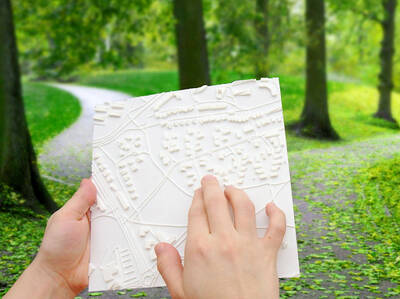
Have you ever wondered how people navigate the world when they can’t see a map? For individuals with visual impairments, conventional maps are nearly impossible to use. This is where tactile maps come in — essential tools that allow people to “see” the world through touch. A tactile map is specially designed with raised lines, textures, and symbols to represent geographical features such as roads, rivers, and buildings. Users explore it with their fingertips. However, these maps are not exclusively for people with visual disabilities. They serve as valuable multisensory learning tools that enhance spatial understanding for everyone, making

The debate surrounding Taipower’s recent corporate identity reboot has gone well beyond the design community. The controversy began after Taipower replaced the familiar “Taiwan Power Company” wording — widely regarded as the calligraphy of Yu You-ren (1879-1964), former Control Yuan president and master calligrapher — with a modern logotype by designer Aaron Nieh’s team, Aaron Nieh Workshop. Taipower said the change was not a wholesale replacement of old signage, but an “optimization of its identity system,” aimed at meeting the needs of digital media, electronic bills, apps, social media graphics and various small-format applications. Existing physical markings, such as building

Since 2005, the third Monday in January has come to be known as “Blue Monday.” In other words, that day is believed to be the most depressing day of the year. This concept seems logical at first. After all, Monday marks the start of the school or workweek after two days of rest and fun. Also, blue is a color that is often associated with sadness. Furthermore, in many parts of the world, January is a time when the weather is cold, rainy, and gloomy. But is there any scientific proof that this January day is truly sadder than any of

Continued from yesterday(延續自昨日) https://www.taipeitimes.com/News/lang For the most part, the idea of “Blue Monday” has been rejected as a myth. Some mental health experts also say there is a danger in labeling a certain day as the most depressing time of the entire year. Some argue that if people expect to feel sadder on the third Monday in January, this belief alone may increase their anxiety. One group that is worried about the negative effect of believing in Blue Monday is Samaritans. A mental health charity based in the UK, Samaritans is working to turn Blue Monday into “Brew Monday.” In this


 RSS
RSS