


Hsinchu boasts the highest salaries of any city in Taiwan, thanks to the large concentration of technology talent clustered in the city. A woman who works at the Hsinchu Science Park published a revealing post on Monday in the WomenTalk chatroom on Professional Technology Temple (PTT), the nation’s largest online bulletin board. The post’s author wrote that six months ago she changed career and began working for a technology company at the park. During a recent conversation with a 30-something colleague who is 20 weeks pregnant, the colleague mentioned that she had intended to join a fairly well-known mothers’ group called “Hsinchu Science Park Mothers.” However, she discovered that she was ineligible to join because the group vets the employment and education history of aspiring members to “prevent low-class people from joining” and “create a high-quality group.”
The post went into detail about the group’s stringent requirements: at least one parent must hold a minimum of a bachelor’s degree from one of the four best universities or a masters’ degree from another top university, have been employed at a publicly listed company for at least five years or be a medical doctor, lawyer or civil servant. If neither parent has a glittering academic record, not to worry, so long as one of the parents has an entrepreneurial background and can provide proof that they own at least three real-estate properties.
The author of the post went on to write that the mothers often form sub-groups to provide English lessons, swimming classes and music tuition, an “integrated curriculum,” “whole-brain development” and even horse-riding lessons for their precious darlings, adding that the fees are eye-watering. Furthermore, the mothers also form sub-groups to enrich their lives, such as flower arranging, baking and yoga: “As a conservative estimate, a month’s fees covering classes for both the mother and child will start at between NT$20,000 and NT$30,000.“

Photo: Wikimedia Commons 照片:維基共享資源
The post triggered a lively debate among netizens, with some commenting below the post: “Each to their own. I won’t be joining but I won’t criticize them either.” Another commented: “This is just how upper-class society works. Don’t let poverty get in the way of your imagination.” “This is completely normal. What a load of fuss about nothing. Class difference is real,” wrote another.
However, other commentators were less forgiving: “The threshold is actually not that high, but it comes across as really contrived,” with another writing: “I wouldn’t want to join a mothers’ group of priggish upper-class posers that excludes the less well-off.” “This mothers’ group has no class,” wrote another.
(Liberty Times, translated by Edward Jones)
聚集不少高科技人才的新竹,是全台薪資最高的城市,有一名「竹科」女三日在PTT「女孩板」(WomenTalk)發文透露,半年前跳槽到新竹科技業的她,近日與一名三十多歲、已懷孕二十週的同事閒聊,對方提到想要加入新竹一個相當知名的「竹科媽媽群組」,但該群組以「不想讓低端人口加入」、「打造有質感的媽媽群組」為由,要求審核父母的學經歷,想進入沒那麼簡單。
原PO指出,條件要求「父母雙方至少有一方必須要是四大學士以上或中字輩以上碩士,或至少有待過上市上櫃公司五年以上,或至少有一方為醫生、律師、公務員」,若沒有亮眼學經歷也沒關係,但必須是家裡自己創業、持有不動產三間以上,還要拿出所有權狀來證明。
原PO說,該群組的媽媽們常常揪團讓小朋友上英文課程、寶寶游泳、寶寶音樂課、統合課程、全腦潛能開發、馬術等課程,費用都不便宜。就連媽媽們為了充實自己,也會揪團一起上花藝課、烘焙課或瑜珈課,「保守估計光是媽媽跟小孩加起來學費一個月至少就要兩、三萬起跳……」。
文章曝光引發網友熱議,紛紛留言「青菜蘿蔔各有所好,不想加入,也不會批判」、「上流社會階層就是這樣,不要被貧窮限制住想像力了」、「很正常啊,大驚小怪,果然階級有差」、「認真覺得篩選同溫層成員真的很重要……」。
但也有人不以為然,認為「這門檻不高,不過蠻假掰的」、「看到排除低端人口就不會想加入 自以為高端喔」、「這種群組看起來就沒什麼質感」。
(自由時報)
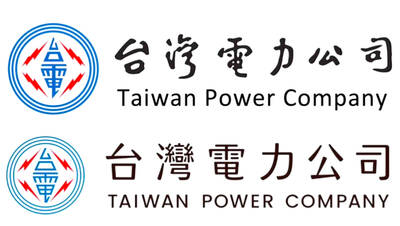
The debate surrounding Taipower’s recent corporate identity reboot has gone well beyond the design community. The controversy began after Taipower replaced the familiar “Taiwan Power Company” wording — widely regarded as the calligraphy of Yu You-ren (1879-1964), former Control Yuan president and master calligrapher — with a modern logotype by designer Aaron Nieh’s team, Aaron Nieh Workshop. Taipower said the change was not a wholesale replacement of old signage, but an “optimization of its identity system,” aimed at meeting the needs of digital media, electronic bills, apps, social media graphics and various small-format applications. Existing physical markings, such as building

Since 2005, the third Monday in January has come to be known as “Blue Monday.” In other words, that day is believed to be the most depressing day of the year. This concept seems logical at first. After all, Monday marks the start of the school or workweek after two days of rest and fun. Also, blue is a color that is often associated with sadness. Furthermore, in many parts of the world, January is a time when the weather is cold, rainy, and gloomy. But is there any scientific proof that this January day is truly sadder than any of

Continued from yesterday(延續自昨日) https://www.taipeitimes.com/News/lang For the most part, the idea of “Blue Monday” has been rejected as a myth. Some mental health experts also say there is a danger in labeling a certain day as the most depressing time of the entire year. Some argue that if people expect to feel sadder on the third Monday in January, this belief alone may increase their anxiety. One group that is worried about the negative effect of believing in Blue Monday is Samaritans. A mental health charity based in the UK, Samaritans is working to turn Blue Monday into “Brew Monday.” In this
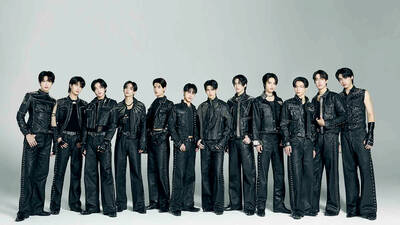
A: In early May, there were concerts by Icyball, Chyi Yu, Korea’s EXO and Japan’s Anisama, but I missed them all. What a shame. B: That’s OK. There are shows coming up by various artists, including Power Station, Accusefive, Japanese singer Mika Nakashima, Chinese-Icelandic jazzer Laufey, and even Singaporean diva Stefanie Sun. A: After a 12-year hiatus, Stefanie is finally returning to Taipei again. B: In late May, there will be more shows by Crowd Lu, WeiBird, Korea’s Donghae, 2AM, EXID, and Thailand’s BUS. A: The Thai boyband is so popular. It looks like “T-pop” is catching up with J-pop


 RSS
RSS