


Penglai Waterfall in Yunlin County’s Caoling is part of the Jhugao River in the Jhuoshuei River Basin. In the summer months, the river crashes 200 meters down from 1,200 meters above sea level, forming the majestic Penglai Waterfall among a rocky landscape. With the path to the waterfall even and pleasant to walk, lined with a wealth of flora and fauna and dispersed along the way with smaller waterfalls cascading down the cliffs and over caves and occasionally splashing you, it is perfect for a family outing in the cool air.
There is a brick paved path to Penglai Waterfall, and a five-minute stroll leads you over a small bridge and then across the Penglai suspension bridge. Here, the landscape changes to precipitous cliffs, and you can see the Jhugao River as it burbles by. To either side you will occasionally see small streams following the path of the river emerging from between the cliffs, sometimes forming mini waterfalls as the water cascades over boulders obstructing the flow of the river.
At this point the air will start to turn cooler, and you will see tadpoles and frogs in the pools to the sides of the path. Around five minutes past model dinosaurs is a balmy viewing platform affording views of the river down below. It is at the end of the path that you get a sense of the splendor of the Penglai Waterfall and the power of the water, with smaller waterfalls creating whirlpools in the river among the rocks.
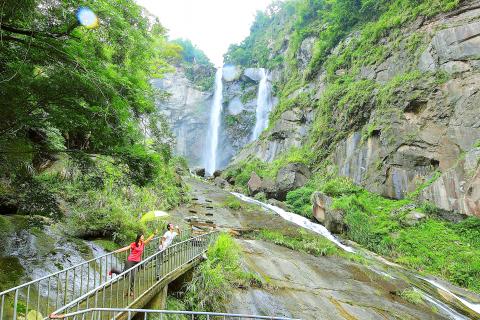
Photo: Lee Hui-chou, Liberty Times
照片:自由時報記者李惠洲
(Liberty Times, translated by Paul Cooper)
雲林草嶺的蓬萊瀑布屬濁水溪流域的竹篙水溪,特殊的石壁地質景觀,使得夏季的溪水從海拔一千兩百公尺處垂降到一千公尺處,形成壯闊的蓬萊瀑布。前往瀑布的步道由於路線平整好走,沿途有眾多動植物生態可以近距離觀賞,且一路上小瀑布散布於石壁與山洞間,不時溪水飛濺,十分涼快,適合一家大小一起來。
蓬萊瀑布的步道鋪有石磚,行走約五分鐘,走上小橋再穿越蓬萊吊橋後,景色轉為石壁地形,可見竹篙水溪淙淙流水,兩旁不時可見流水從上游沿著河道與石壁中間竄出,溪水中的水流經過大石子的阻擋也成了小瀑布。
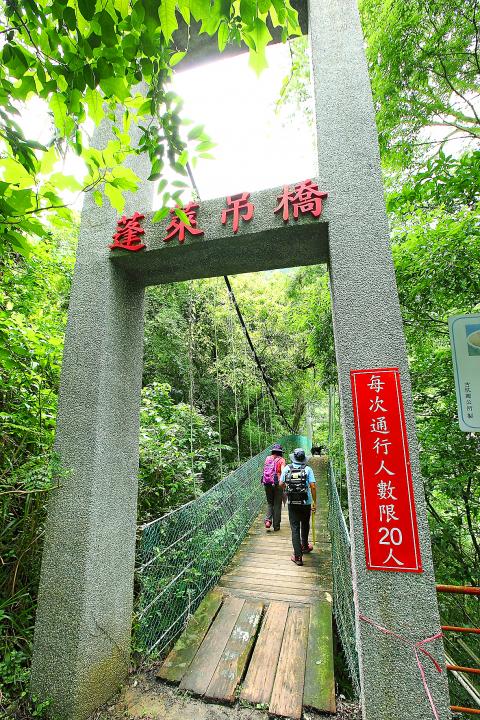
Photo: Lee Hui-chou, Liberty Times
照片:自由時報記者李惠洲
此區開始感覺到氣溫降低,路旁水坑也可見蝌蚪與青蛙;當經過了一恐龍造景約莫五分鐘後,即可來到觀賞平台,往下觀看溪中景致,如同處在天然的冷氣中,抵達步道終點,可感受到蓬萊瀑布的壯觀與水勢的磅礡,接續著的小瀑布也在石子形間成了漩渦。
(自由時報)

A: Taiwan legalized same-sex marriage on May 24, 2019, so this week marks the seventh anniversary of that milestone. By the end of 2024, a total of 32,126 LGBT couples had tied the knot. B: How many of them got married to foreign partners? A: In 2024, there were 504 cross-border same-sex marriages. By the end of that year, there were 130 cross-strait same-sex marriages between Taiwanese and Chinese — accounting for only about 0.4 percent of the total. B: I’ve heard that a seven-year marriage brings the “seven-year itch.” I bet some couples regret their decisions now. A:

A: While Taiwan is celebrating the 7th anniversary of legalizing same-sex marriage, a poll shows that the support rate for same-sex marriage rose sharply from 37.4 percent seven years ago to 69.9 percent last year. B: Actually, I’m a bit curious about the size of Taiwan’s LGBT population. A: I’m not sure. But if we take a Gallup poll in the US as an example, 9.3 percent of American adults identified as LGBT in 2024. B: Wow, is it because the Americans are relatively open? In many other countries, the figures hover around 5 percent. A: Based on this,

Taiwan Travelogue, the novel by Taiwanese author Yang Shuang-zi and translated into English by Lin King, won the prestigious International Booker Prize in London on May 19. It marks the first time a Taiwanese literary work has received the International Booker Prize, setting a historic milestone both for Taiwanese literature and for the award itself. Prior to this achievement, Taiwan had only once appeared on the Booker radar, when Taiwanese author Wu Ming-yi was longlisted for the Booker Prize in 2018 with The Stolen Bicycle. The International Booker Prize honors works of fiction translated into English and published in the UK or Ireland.
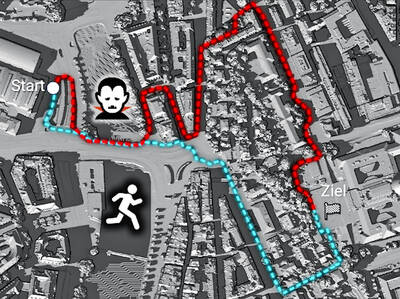
As climate change and urbanization push city temperatures higher, walking outdoors is becoming increasingly uncomfortable in many parts of the world, especially when prolonged time spent in sunlight is involved. As a result, outdoor lovers are now seeking cooler, shaded walking routes. However, most mainstream map apps still do not __1__ shaded footpaths. Enter routing.osm.ch — a Swiss web-based route planner that introduces a novel solution to this problem. Its “Vampire mode,” named after the legendary creatures’ fear of being __2__ natural light, was developed by a Swiss research team led by Professor Stefan Keller. The platform combines open data from


 RSS
RSS