


A: In addition to Teng Kai-wei, Taiwanese infielder Cheng Tsung-che was called up temporarily to play for the Pittsburgh Pirates in early April.
B: Yeah, Cheng is the 18th player in Taiwan’s baseball history to be moved up to the majors.
A: Back in 2002, Chen Chin-feng became the first Taiwanese to play in the Major League Baseball (MLB), followed by Tsao Chin-hui, Wang Chien-ming, Kuo Hung-chih, Hu Chin-lung and Lin Che-hsuan.

Photo: Reuters 照片:路透
B: Those pioneers were later joined by Lo Chia-jen, C.C. Lee, Ni Fu-te, Chen Wei-yin, Wang Wei-chung, Hu Chih-wei, Tseng Jen-ho, Lin Tzu-wei, Huang Wei-chieh, Yu Chang, and now Teng and Cheng.
A: I hope that more outstanding Taiwanese players, like my favorite Oakland Athletics’ Sha Tzu-chen, can break into the majors soon.
A: 除了鄧愷威外,美職匹茲堡海盜隊4月初曾將鄭宗哲短暫升上大聯盟!
B: 對啊,他是台灣棒球史上第18位打進大聯盟球員。
A: 當年台灣首位大聯盟球員是2002年的陳金鋒,接著是曹錦輝、王建民、郭泓志、胡金龍、林哲瑄。
B: 隨後是羅嘉仁、李振昌、倪福德、陳偉殷、王維中、胡智為、曾仁和、林子偉、黃暐傑、張育成、鄧愷威、鄭宗哲。
A: 希望更多選手,像是我最愛的奧克蘭運動家隊小鮮肉沙子宸,都能加入MLB台灣「18銅人」的行列。
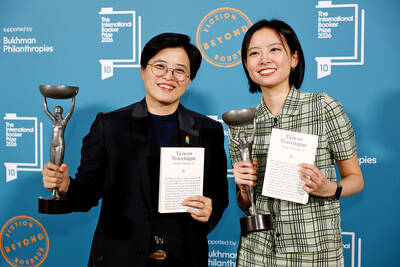
Taiwan Travelogue, the novel by Taiwanese author Yang Shuang-zi and translated into English by Lin King, won the prestigious International Booker Prize in London on May 19. It marks the first time a Taiwanese literary work has received the International Booker Prize, setting a historic milestone both for Taiwanese literature and for the award itself. Prior to this achievement, Taiwan had only once appeared on the Booker radar, when Taiwanese author Wu Ming-yi was longlisted for the Booker Prize in 2018 with The Stolen Bicycle. The International Booker Prize honors works of fiction translated into English and published in the UK or Ireland.
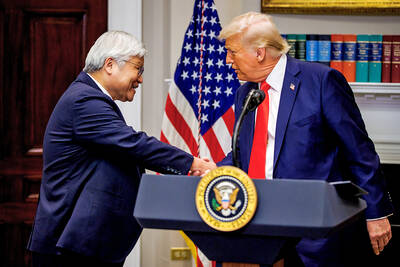
A: Time magazine recently released its list of “The 100 Most Influential People of 2026.” It’s categorized into six groups: Artists, Pioneers, Titans, Icons, Leaders and Innovators. B: TSMC chairman C.C. Wei made the list this year. Which category is he in? A: Wei is actually among the Pioneers, with figures including Disney CEO Josh D’Amaro and MrBeast — the first YouTuber ever to surpass 400 million subscribers. B: Led by Wei, Taiwan’s “silicon shield” TSMC is the sixth-largest company in the world. A: As Nvidia founder Jensen Huang wrote in his introduction, “C.C. Wei is truly one of the
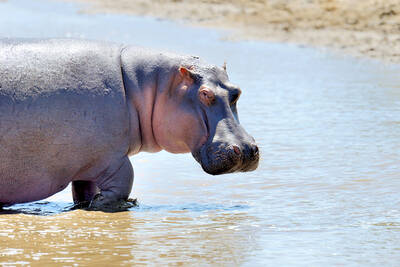
The animal kingdom is full of surprises that challenge our understanding of biology. From remarkable feeding mechanisms to extreme defense strategies, some creatures possess traits so unusual that they seem like pure fiction. Here are four fascinating examples that show nature’s endless creativity. The humble snail may appear simple, but its mouth tells a different story. Snails possess a ribbon-like tongue called a radula, densely covered with anywhere from 1,000 to 12,000 tiny teeth. This structure works like a cheese grater, allowing them to scrape and grind food with surprising efficiency. Far from being passive creatures, snails are actually
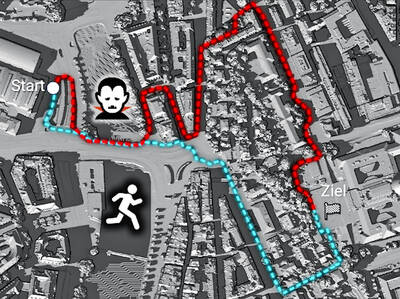
As climate change and urbanization push city temperatures higher, walking outdoors is becoming increasingly uncomfortable in many parts of the world, especially when prolonged time spent in sunlight is involved. As a result, outdoor lovers are now seeking cooler, shaded walking routes. However, most mainstream map apps still do not __1__ shaded footpaths. Enter routing.osm.ch — a Swiss web-based route planner that introduces a novel solution to this problem. Its “Vampire mode,” named after the legendary creatures’ fear of being __2__ natural light, was developed by a Swiss research team led by Professor Stefan Keller. The platform combines open data from


 RSS
RSS