


A Shih Chien University survey of the satisfaction among Chinese tourists visiting Greater Kaohsiung commissioned by the city government shows that Liuhe Night Market is their favorite tourist site, and that they spend little money in the city, mostly less than NT$5,000.
Chinese tourists have become one of the main factors behind Kao-hsiung’s tourism development. According to the survey, made by Shih Chien University’s Department of Tourism Management, most Chinese visitors to Kaohsiung — 94 percent — go there mainly for tourism and recreation. Most of them get there with a tour group.
Over 90 percent of their activities in Kaohsiung are focused in four activities — visiting night markets, sightseeing, eating local specialties, and shopping.
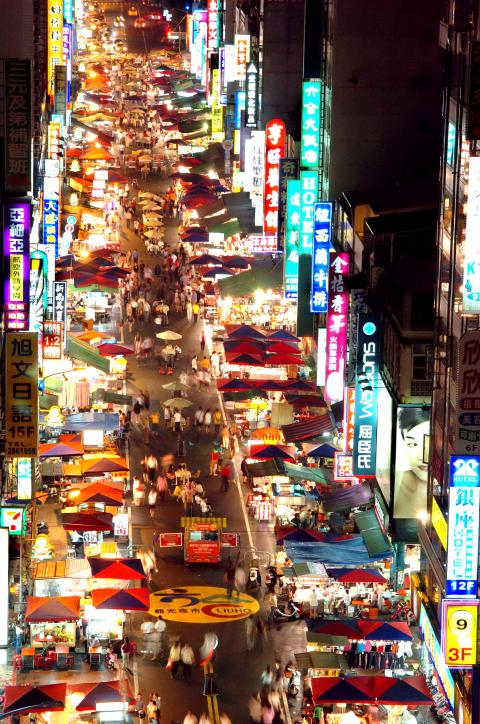
Photo: Chang Chung-i, Liberty Times
照片:自由時報記者張忠義
Among all the tourist sites in Kao-hsiung, the most popular among Chinese visitors is the Liuhe Night Market. The former British Consulate at Dagou ranks second, followed by Love, or Ai, River. Fourth is the Teresa Teng Memorial Museum.
More than 60 percent of the Chinese tourists spend less than NT$5,000 in Kaohsiung, and about 10 percent even spend less than NT$500. It is obvious that Kaohsiung isn’t interesting when it comes to shopping.
More than half of all Chinese visitors said they felt “satisfied” or “very satisfied” with Kaohsiung, a harbor city, while as many as 60 percent would recommend that friends and family members visit. However, only 44 percent said they would be willing to come back.
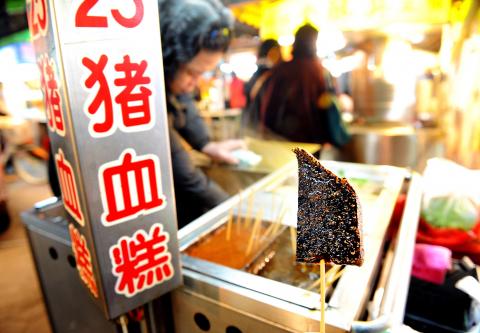
Photo: Fang Pin-chao, Liberty Times
照片:自由時報記者方賓照
The report said Chinese tourist spending in Kaohsiung is on the low side, which may be connected to the relatively short stay. It is suggested that their stay in future should be extended by a few days and that tourism marketing be strengthened to create a stronger economic impact.
(LIBERTY TIMES, TRANSLATED BY TAIJING WU)
高市府委託實踐大學針對中國觀光客到高雄市的觀光滿意度調查,中國觀光客最喜歡的景點是六合夜市,在高雄市的消費金額偏低,以新台幣五千元以下居多。
中國觀光客逐漸成為高雄發展觀光的主要因素之一。根據實踐大學觀光系的調查,中國旅客到高雄市主要以觀光休閒最多,高達九成四,多數都是以旅行團的方式到高雄。
至於中國觀光客在高雄的活動,以逛夜市、參觀景點、吃美食、購物等四項比例最高,佔活動的九成以上。
在高雄所有景點中,最受中國觀光客喜愛的是六合夜市,第二名的打狗英國領事館、第三名的愛河、第四名的鄧麗君文物館。
六成以上的中國觀光客在高雄消費金額低於新台幣五千元,其中低於新台幣五百元的比例甚至高達一成。顯見高雄市的購物吸引力較低。
超過半數的中國觀光客對於港都都感到「滿意」、「非常滿意」,有六成的遊客會推薦其他親友到高雄,但自己願意再到高雄的比例則只有四成四。
報告指出,中國觀光客在高雄市的消費金額偏低,可能與停留天數較短有關,未來應該爭取中國觀光客在高雄停留天數增加,並強化觀光行銷,才能創造更大的經濟效益。
(自由時報記者侯承旭)
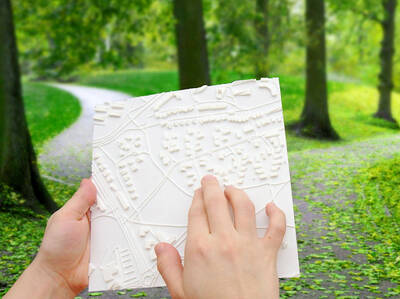
Have you ever wondered how people navigate the world when they can’t see a map? For individuals with visual impairments, conventional maps are nearly impossible to use. This is where tactile maps come in — essential tools that allow people to “see” the world through touch. A tactile map is specially designed with raised lines, textures, and symbols to represent geographical features such as roads, rivers, and buildings. Users explore it with their fingertips. However, these maps are not exclusively for people with visual disabilities. They serve as valuable multisensory learning tools that enhance spatial understanding for everyone, making

The debate surrounding Taipower’s recent corporate identity reboot has gone well beyond the design community. The controversy began after Taipower replaced the familiar “Taiwan Power Company” wording — widely regarded as the calligraphy of Yu You-ren (1879-1964), former Control Yuan president and master calligrapher — with a modern logotype by designer Aaron Nieh’s team, Aaron Nieh Workshop. Taipower said the change was not a wholesale replacement of old signage, but an “optimization of its identity system,” aimed at meeting the needs of digital media, electronic bills, apps, social media graphics and various small-format applications. Existing physical markings, such as building

Since 2005, the third Monday in January has come to be known as “Blue Monday.” In other words, that day is believed to be the most depressing day of the year. This concept seems logical at first. After all, Monday marks the start of the school or workweek after two days of rest and fun. Also, blue is a color that is often associated with sadness. Furthermore, in many parts of the world, January is a time when the weather is cold, rainy, and gloomy. But is there any scientific proof that this January day is truly sadder than any of

Continued from yesterday(延續自昨日) https://www.taipeitimes.com/News/lang For the most part, the idea of “Blue Monday” has been rejected as a myth. Some mental health experts also say there is a danger in labeling a certain day as the most depressing time of the entire year. Some argue that if people expect to feel sadder on the third Monday in January, this belief alone may increase their anxiety. One group that is worried about the negative effect of believing in Blue Monday is Samaritans. A mental health charity based in the UK, Samaritans is working to turn Blue Monday into “Brew Monday.” In this


 RSS
RSS