


Have you ever wondered why a dartboard looks the way it does?
A long time ago, people used to use stumps of trees as their dartboards. When you cut down a tree and look at the stump, you can see that the wood has lots of dark rings in it. Long ago, the wood dried out and people kept throwing darts at the stump, the wood started to crack from the center to the sides. That is why modern dartboards have rings and lines.
The very center of a dartboard has a small red dot. This dot is called the bull's-eye. When you play darts, you want to hit the bull's-eye because you get a lot of points. You can also say that you "hit the bull's-eye" whenever you make the best choice or do something exactly right. For example, if you buy your mom exactly what she wanted for her birthday, you could say that you "hit the bull's-eye." (Marc Langer, staff writer)
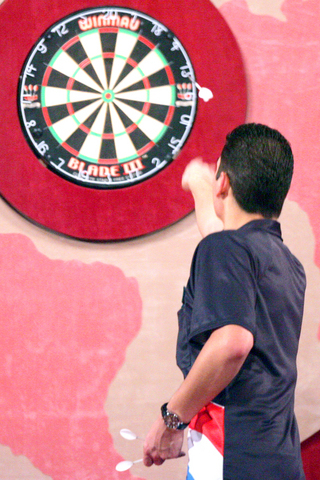
PHOTO : AP
你可曾想過為何標靶長這樣?
很久以前,人們曾用樹樁當標靶。當你把一棵樹砍倒後,看看樹樁,就可以看到為數眾多的深色圓環,當時木頭乾掉,人們持續朝樹樁射飛鏢,木頭就會從中間向旁邊裂開,這就是為何現代標靶有圓環和線條。
標靶的正中心有個小紅點,這個點叫做「bull's-eye」,射飛鏢時要射中紅心才能得很多分。當你做出最佳選擇或是把一件事做到完全正確時,也能說「hit the bull's-eye」,例如,假如你買給母親的生日禮物正是她想要的東西,也能說「hit the bull's-eye」。 (翻譯:鄭湘儀)
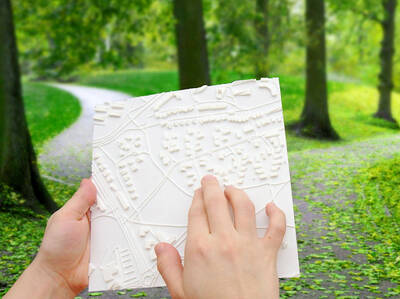
Have you ever wondered how people navigate the world when they can’t see a map? For individuals with visual impairments, conventional maps are nearly impossible to use. This is where tactile maps come in — essential tools that allow people to “see” the world through touch. A tactile map is specially designed with raised lines, textures, and symbols to represent geographical features such as roads, rivers, and buildings. Users explore it with their fingertips. However, these maps are not exclusively for people with visual disabilities. They serve as valuable multisensory learning tools that enhance spatial understanding for everyone, making
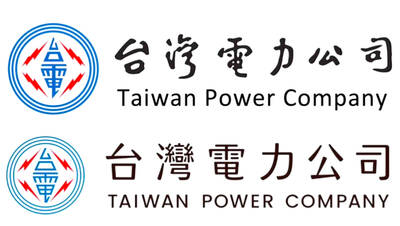
The debate surrounding Taipower’s recent corporate identity reboot has gone well beyond the design community. The controversy began after Taipower replaced the familiar “Taiwan Power Company” wording — widely regarded as the calligraphy of Yu You-ren (1879-1964), former Control Yuan president and master calligrapher — with a modern logotype by designer Aaron Nieh’s team, Aaron Nieh Workshop. Taipower said the change was not a wholesale replacement of old signage, but an “optimization of its identity system,” aimed at meeting the needs of digital media, electronic bills, apps, social media graphics and various small-format applications. Existing physical markings, such as building

Since 2005, the third Monday in January has come to be known as “Blue Monday.” In other words, that day is believed to be the most depressing day of the year. This concept seems logical at first. After all, Monday marks the start of the school or workweek after two days of rest and fun. Also, blue is a color that is often associated with sadness. Furthermore, in many parts of the world, January is a time when the weather is cold, rainy, and gloomy. But is there any scientific proof that this January day is truly sadder than any of

Continued from yesterday(延續自昨日) https://www.taipeitimes.com/News/lang For the most part, the idea of “Blue Monday” has been rejected as a myth. Some mental health experts also say there is a danger in labeling a certain day as the most depressing time of the entire year. Some argue that if people expect to feel sadder on the third Monday in January, this belief alone may increase their anxiety. One group that is worried about the negative effect of believing in Blue Monday is Samaritans. A mental health charity based in the UK, Samaritans is working to turn Blue Monday into “Brew Monday.” In this


 RSS
RSS