


The president of Iran, Mahmoud Ahmadinejad, has called for an Iranian dress code for men and women alike, the Iranian Students' News Agency (ISNA) has reported.
Ahmadinejad made the announcement earlier this month while he was on a visit to an Iranian textile exhibition. The ISNA quoted Ahmadinejad as saying that Iran should get experts to create a national dress code. The president said that the new outfits should have a variety of forms and colors, but should not be expensive.
"When we say 'Iranian dress code,' we do not only refer to women, but also to men," the president was quoted as saying.
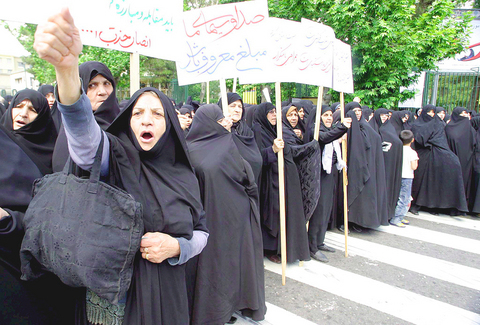
PHOTO: EPA
The Iranian parliament has raised the issue of a national dress code several times. It is intended to help replace the current Western-style clothes that some people prefer with more traditional Islamic-style clothing.
Iran plans to make women wear Pakistani- or Indian-style gowns, but it is still unclear what the national outfit for men might look like.
Since 1979, Iran has had a law that all women must have their bodies and hair covered while out of the house. Women who do not obey that rule can be arrested.
In April, the police hinted that they would step up their efforts to enforce the rule, but Ahmadinejad rejected that as unnecessary, saying that women already respected Islamic dress. (DPA)
伊朗學生新聞社(ISNA)報導,伊朗總統艾馬丹加呼籲伊朗男女同樣都應遵循服裝準則。
艾馬丹加本月初參觀伊朗紡織展時宣布服裝準則規定。伊朗學生新聞社引述艾馬丹加說,伊朗應該請專家來打造全國性的服裝準則。總統表示,新的服飾應該款式色彩多元,但價格不應昂貴。
報導引述總統的話:「當我們談到『伊朗服裝準則』時,我們不只指女性,也指男性。」
伊朗國會已數度提出全國性服裝準則的議題,意圖用較傳統的伊斯蘭風服飾來取代現今部分民眾較偏好的西方服飾。
伊朗計畫讓女性穿著巴基斯坦或印度風的長袍,但仍不清楚全國性的男性服飾會是什麼模樣。
伊朗自一九七九年法律就明定,所有出門在外的女性必須將自己的身體與頭髮遮蓋住。不遵守這項法令的女性可被逮捕。
警方在四月時暗指,他們會努力加強執法,不過艾馬丹加則認為沒這個必要,伊朗女性已相當尊重伊斯蘭服飾。 (德通社/翻譯:賴美君)
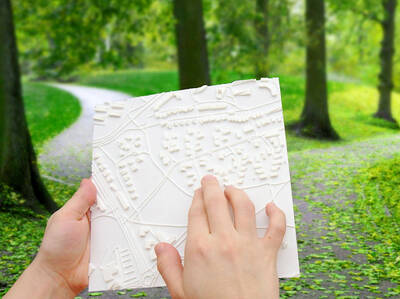
Have you ever wondered how people navigate the world when they can’t see a map? For individuals with visual impairments, conventional maps are nearly impossible to use. This is where tactile maps come in — essential tools that allow people to “see” the world through touch. A tactile map is specially designed with raised lines, textures, and symbols to represent geographical features such as roads, rivers, and buildings. Users explore it with their fingertips. However, these maps are not exclusively for people with visual disabilities. They serve as valuable multisensory learning tools that enhance spatial understanding for everyone, making
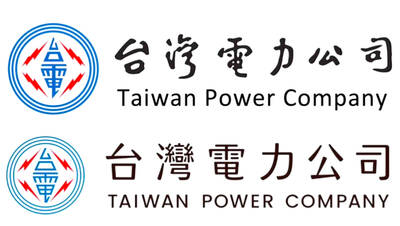
The debate surrounding Taipower’s recent corporate identity reboot has gone well beyond the design community. The controversy began after Taipower replaced the familiar “Taiwan Power Company” wording — widely regarded as the calligraphy of Yu You-ren (1879-1964), former Control Yuan president and master calligrapher — with a modern logotype by designer Aaron Nieh’s team, Aaron Nieh Workshop. Taipower said the change was not a wholesale replacement of old signage, but an “optimization of its identity system,” aimed at meeting the needs of digital media, electronic bills, apps, social media graphics and various small-format applications. Existing physical markings, such as building

Since 2005, the third Monday in January has come to be known as “Blue Monday.” In other words, that day is believed to be the most depressing day of the year. This concept seems logical at first. After all, Monday marks the start of the school or workweek after two days of rest and fun. Also, blue is a color that is often associated with sadness. Furthermore, in many parts of the world, January is a time when the weather is cold, rainy, and gloomy. But is there any scientific proof that this January day is truly sadder than any of
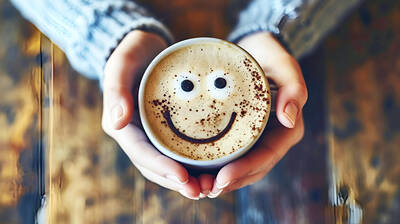
Continued from yesterday(延續自昨日) https://www.taipeitimes.com/News/lang For the most part, the idea of “Blue Monday” has been rejected as a myth. Some mental health experts also say there is a danger in labeling a certain day as the most depressing time of the entire year. Some argue that if people expect to feel sadder on the third Monday in January, this belief alone may increase their anxiety. One group that is worried about the negative effect of believing in Blue Monday is Samaritans. A mental health charity based in the UK, Samaritans is working to turn Blue Monday into “Brew Monday.” In this


 RSS
RSS