


The number of active military personnel in Taiwan has increased to nearly 230,000, up by about 10,000 from 2021, the first increase since the military underwent downsizing under the administration of former president Ma Ying-jeou (馬英九), the Ministry of National Defense said in a report.
The military, which peaked at about 700,000 active personnel, dropped to 600,000 in the 1980s, 400,000 between 1997 and 2001, 265,000 in 2002 and 215,000 after 2014, said the report, which is to be presented to the legislature today.
The Ma administration intended to implement another downsizing project that would have reduced the number of active military personnel to between 170,000 and 190,000, but the proposal failed due to opposition from lawmakers.
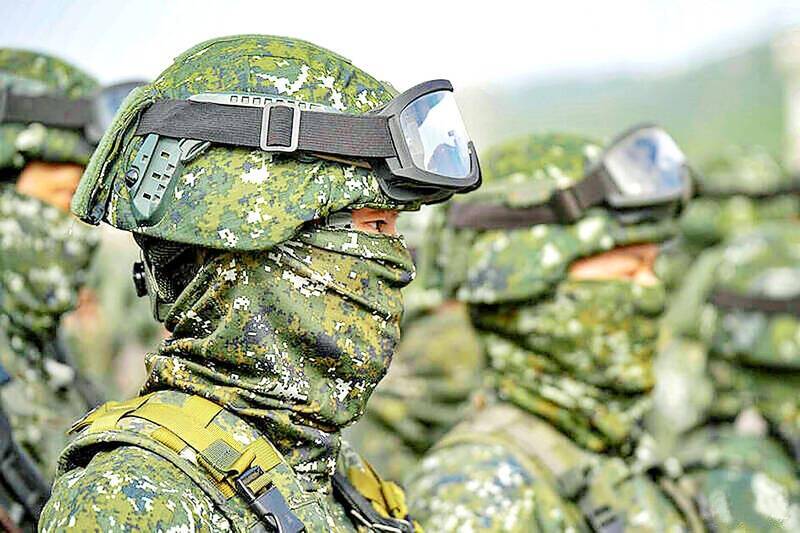
Photo: Taipei Times
The number of active-duty personnel has increased by 3,000 since 2023, while volunteer numbers have increased by 2,000 since last year, the ministry said.
As of the start of this month, 651 non-commissioned officers, 3,820 officers and 10,407 regular soldiers had been added this year, or 102.2 percent of the target, it said.
Its standard for retention is 76 percent, but retention rates from 2022 onward have exceeded that, averaging 86.5 percent so far this year, up 4.5 percentage points from last year, it said.
Moreover, the number of unsuitable officers and soldiers is on the decline, dropping to 2,900 as of this month from 5,509 in 2022, it said.
Minister of National Defense Wellington Koo (顧立雄) is expected to brief the legislature today on plans to ensure that military units are up to strength, with the report sent to lawmakers yesterday.
The report focuses on measures to consolidate basic combat capabilities among general troops, as well as reduce personnel outflow, increase willingness to continue service and step up recruitment, the ministry said.
Relaxed regulations over young people serving are also being considered, it said.
The military this year to date is 20.8 percent understrength, with volunteers comprising 76.9 percent of active-duty personnel and those serving their one-year mandatory service accounting for 2.3 percent, the report said.
The ministry expects the figure to drop to 20 percent by the end of the year, it said.
Ministry of the Interior data showed that 9,127 people were expected to serve their mandatory military service last year, but only 6,956 began it, or 2.5 percent of active military personnel, the report said.
The data showed that 15,205 people were to commence their one-year service this year, but only 8,291 — 2.9 percent of active military personnel — did, it said.
However, the number of active-duty personnel across next year and 2027 is expected to increase, meaning the personnel shortage would ease, it said.
The defense ministry said that the interior ministry’s estimates of the number of eligible males scheduled to serve their mandatory time in the military have declined since 2021, with the 2027 prediction for fewer than 80,000, highlighting the danger of declining birthrates to national defense.
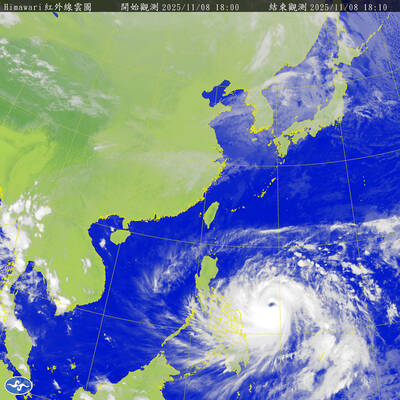
The Central Weather Administration (CWA) yesterday said it expected to issue a sea warning for Typhoon Fung-Wong tomorrow, which it said would possibly make landfall near central Taiwan. As of 2am yesterday, Fung-Wong was about 1,760km southeast of Oluanpi (鵝鑾鼻), Taiwan’s southernmost point, moving west-northwest at 26kph. It is forecast to reach Luzon in the northern Philippines by tomorrow, the CWA said. After entering the South China Sea, Typhoon Fung-Wong is likely to turn northward toward Taiwan, CWA forecaster Chang Chun-yao (張峻堯) said, adding that it would likely make landfall near central Taiwan. The CWA expects to issue a land
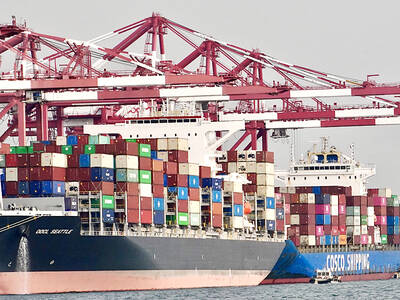
Taiwan’s exports soared to an all-time high of US$61.8 billion last month, surging 49.7 percent from a year earlier, as the global frenzy for artificial intelligence (AI) applications and new consumer electronics powered shipments of high-tech goods, the Ministry of Finance said yesterday. It was the first time exports had exceeded the US$60 billion mark, fueled by the global boom in AI development that has significantly boosted Taiwanese companies across the international supply chain, Department of Statistics Director-General Beatrice Tsai (蔡美娜) told a media briefing. “There is a consensus among major AI players that the upcycle is still in its early stage,”
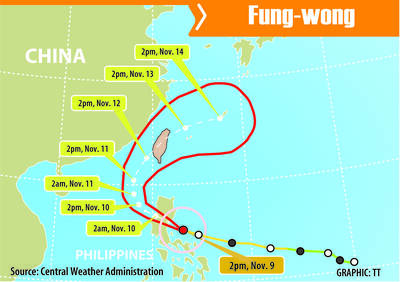
The Central Weather Administration (CWA) yesterday said it is expected to issue a sea warning for Typhoon Fung-wong this afternoon and a land warning tomorrow. As of 1pm, the storm was about 1,070km southeast of Oluanpi (鵝鑾鼻), Taiwan’s southernmost point, and was moving west-northwest at 28 to 32kph, according to CWA data. The storm had a radius of 250km, with maximum sustained winds of 173kph and gusts reaching 209kph, the CWA added. The storm is forecast to pass near Luzon in the Philippines before entering the South China Sea and potentially turning northward toward Taiwan, the CWA said. CWA forecaster Chang Chun-yao (張峻堯) said

Japanese Prime Minister Sanae Takaichi yesterday said that China using armed force against Taiwan could constitute a "survival-threatening situation" for Japan, allowing the country to mobilize the Japanese armed forces under its security laws. Takaichi made the remarks during a parliamentary session while responding to a question about whether a "Taiwan contingency" involving a Chinese naval blockade would qualify as a "survival-threatening situation" for Japan, according to a report by Japan’s Asahi Shimbun. "If warships are used and other armed actions are involved, I believe this could constitute a survival-threatening situation," Takaichi was quoted as saying in the report. Under Japan’s security legislation,


 RSS
RSS