


The government is considering expanding free cancer screenings and providing publicly funded health checkups to people as young as 30, the Health Promotion Administration (HPA) said yesterday.
The agency is assessing the viability of President William Lai’s (賴清德) “Healthy Taiwan” plan, which could include the expansion of publicly funded screenings to more people, HPA Director-General Wu Chao-chun (吳昭軍) said.
“However, nothing has been concluded, and everything is still being discussed,” Wu added.
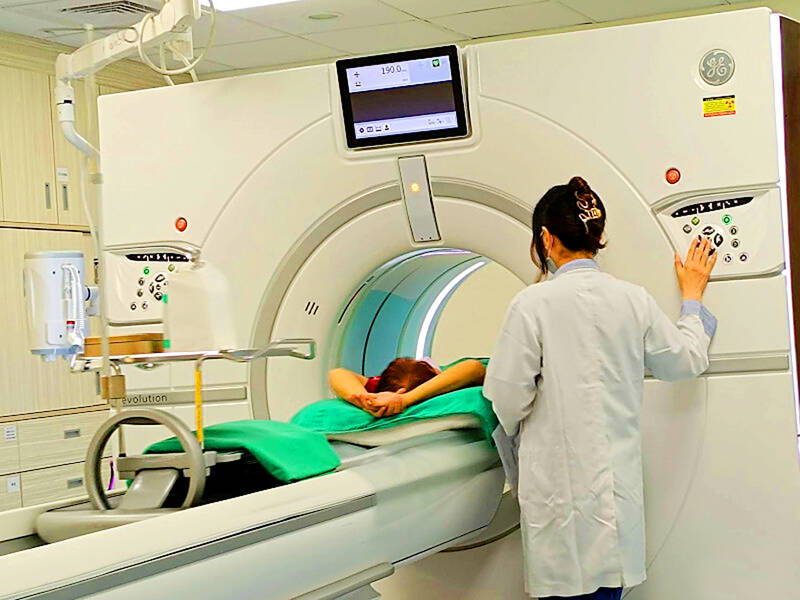
Photo: Taipei Times
Lai announced the policy late last month, saying that the Presidential Office would establish a Healthy Taiwan Promotion Committee with himself as convener.
The committee is expected to hold its first meeting next month.
The agency is still in talks with experts regarding suggestions that the age requirement for publicly funded screening of the five most common cancers would be adjusted, Wu said.
The agency’s proposals must go through the Executive Yuan for approval and funding reviews, he said.
The HPA hopes to ameliorate procedures for preventive screening, clinical diagnoses and treatment processes before forwarding the proposal to the Ministry of Health and Welfare, he added.
Publicly funded checkups for those aged 30 or older are also being discussed, he said.
Helicobacter pylori, a common cause of gastritis or peptic ulcer disease, is one of the risk factors that can lead to gastric cancer, he said, adding that the government is to launch a trial for gastric cancer screening — the sixth type of cancer screening that is publicly funded.
The agency is also mulling the possibility of having a seventh type of cancer added to the list, as well as expanding the age range for free breast cancer screenings to 40 to 75, Wu said.
Separately, Executive Yuan officials said on the condition of anonymity that the planned committee would also be involved in other programs such as low-dose computed tomography thorax exams to screen for lung cancer.
The Executive Yuan is to fund all policies from the presidential committee, while the Ministry of Health and Welfare is expected to execute them, the source said.
The president hopes to bring down the average bed-ridden time for elderly people — which is seven to nine years — and intends to do so by lowering cancer death rates, the source said.
Measures include early screening and relaxing age requirements for cancer screenings, and expanding the list of possible factors that would lead to diagnoses of cancer, such as environmental factors on top of family history and heavy smoking for lung cancer screening, the source said.
Hospitals are expected to promote greater awareness of cancer treatment and symptoms, they added.
The source also said the committee would promote food safety and is considering drafting a “healthy diet for citizens act,” which would increase nutritionists’ role in public health.
The government would also introduce new concepts, such as regenerative medicine, and allow Taiwan’s medical industry to be autonomous and self-reliant, they added.

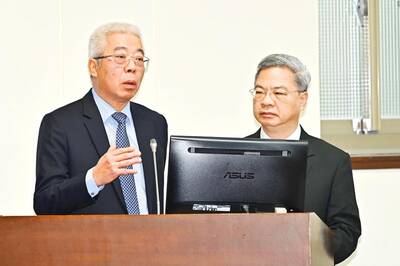
Taiwan has arranged for about 8 million barrels of crude oil, or about one-third of its monthly needs, to be shipped from the Red Sea this month to bypass the Strait of Hormuz and ease domestic supply pressures, CPC Corp, Taiwan (CPC, 台灣中油) said yesterday. The state-run oil company has worked with Middle Eastern suppliers to secure routes other than the Strait of Hormuz, through which about 20 percent of the world’s oil and liquefied natural gas typically passes, CPC chairman Fang Jeng-zen (方振仁) said at a meeting of the legislature’s Economics Committee in Taipei. Suppliers in Saudi Arabia have indicated they
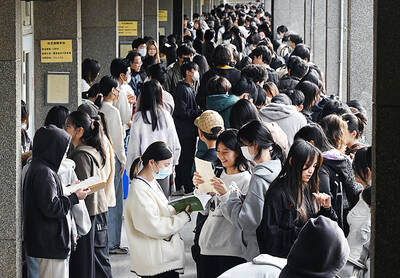
A global survey showed that 60 percent of Taiwanese had attained higher education, second only to Canada, the Ministry of the Interior said. Taiwan easily surpassed the global average of 43 percent and ranked ahead of major economies, including Japan, South Korea and the US, data from the Organisation for Economic Co-operation and Development (OECD) for 2024 showed. Taiwan has a high literacy rate, data released by the ministry showed. As of the end of last year, Taiwan had 20.617 million people aged 15 or older, accounting for 88.5 percent of the total population, with a literacy rate of 99.4 percent, the data

CCP ‘PAWN’? Beijing could use the KMT chairwoman’s visit to signal to the world that many people in Taiwan support the ‘one China’ principle, an academic said Chinese Nationalist Party (KMT) Chairwoman Cheng Li-wun (鄭麗文) yesterday arrived in China for a “peace” mission and potential meeting with Chinese President Xi Jinping (習近平), while a Taiwanese minister detailed the number of Chinese warships currently deployed around the nation. Cheng is visiting at a time of increased Chinese military pressure on Taiwan, as the opposition-dominated Legislative Yuan stalls a government plan for US$40 billion in extra defense spending. Speaking to reporters before going to the airport, Cheng said she was going on a “historic journey for peace,” but added that some people felt uneasy about her trip. “If you truly love Taiwan,

NEW LOW: The council in 2024 based predictions on a pessimistic estimate for the nation’s total fertility rate of 0.84, but last year that rate was 0.69, 17 percent lower An expected National Development Council (NDC) report expects the nation’s population to drop below 12 million by 2065, with the old-age dependency ratio to top 100 percent sooner than 2070, sources said yesterday. The council is slated to release its latest population projections in August, using an ultra-low fertility model, the sources said. The previous report projected that Taiwan’s population would fall to 14.37 million by 2070, but based on a new estimate of the total fertility rate (TFR) — the average number of children born to a woman over her lifetime — the population is expected to reach 12 million by


 RSS
RSS