

Academia Sinica researchers have developed a series of next-generation COVID-19 vaccines that, according to early results, could be highly effective against the Omicron variant of SARS-CoV-2.
Biomedical Translation Research Center researcher Tao Mi-hua (陶秘華) on Friday said that an Omicron-specific vaccine developed by the center produced 37 times as many neutralizing antibodies as other COVID-19 vaccines.
It was one of four vaccines created during the world-leading research project, together with Delta-specific, Omicron-Delta hybrid-specific and half-dose bivalent types.
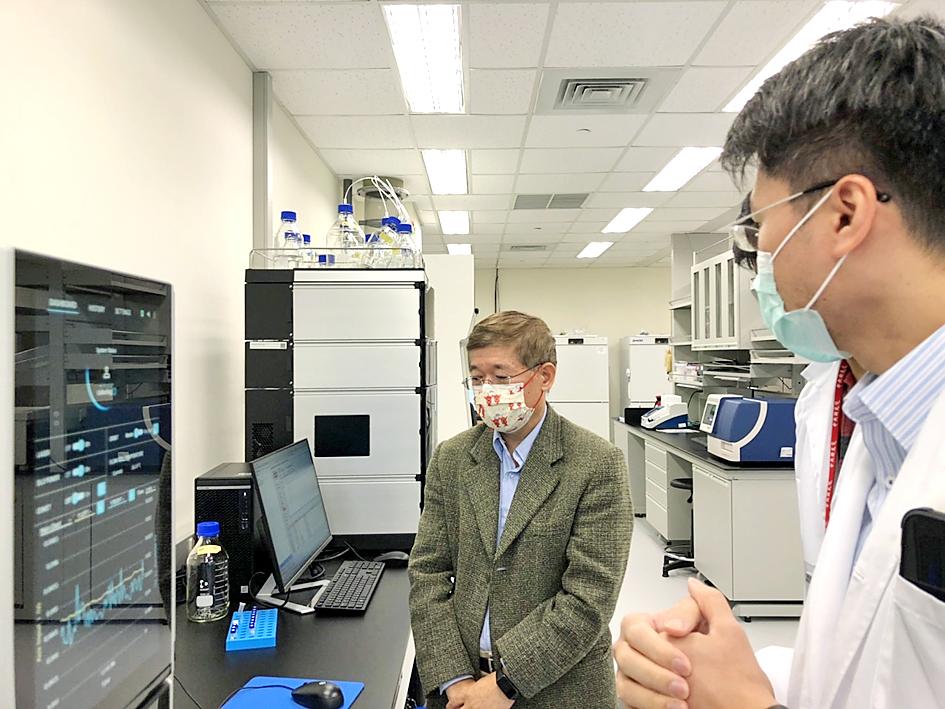
Photo: Yang Yuan-ting, Taipei Times
While the initial findings showed the Omicron vaccine to be effective in tackling the highly transmissible variant, it was weaker against other strains of the disease.
The Delta-specific and half-dose bivalent types proved most capable of producing neutralizing antibodies for a broad spectrum of mutations.
The early results led the researchers to say that such vaccine types might be the foundation for the next generation of COVID-19 jabs amid increasing concerns over breakthrough infections and immune escape.
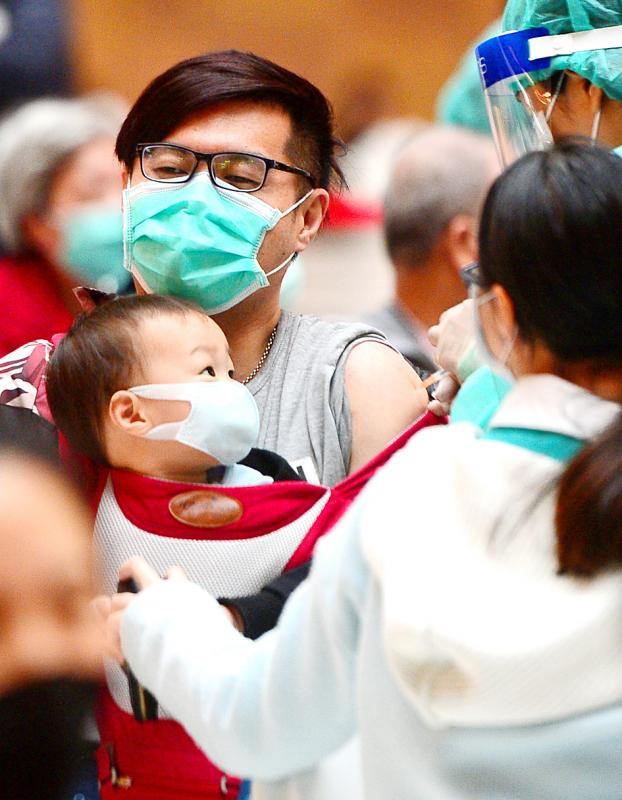
Photo: Wang Yi-sung, Taipei Times
The inception of the project, focused on messenger ribonucleic acid vaccines, came after Taiwan detected its first cases of COVID-19 in early 2020, Tao said.
The researchers shifted their focus to include the Omicron variant after the WHO declared it the dominant strain worldwide in November last year, he said.
Within two weeks, the team had developed a framework for the research, and it took them another week to produce a vaccine sample, he said.
All four types were tested on mice that had been fully vaccinated with an existing COVID-19 vaccine within the past year, Tao said.
The findings might be used in other applications, such as tackling viruses like Zika and avian flu, as well as in adaptable vaccines for cancer, allergies and gene therapy, he said.
However, the process of getting such vaccines into mass production is long and arduous, involving lab work, clinical trials and manufacturing, he said.
Work on the four COVID-19 vaccines is at the lab stage, Tao said, adding that after publishing initial results on Jan. 31, he expects to have more complete results by the middle of this month as the team prepares its findings for peer review and publication.

SOFT TENNIS: Yu Kai-wen and Huang Shih-yuan narrowly defeated their Japanese rivals to capture Taiwan’s first gold at the Asian Games in Nagoya Yu Kai-wen (余凱文) and Huang Shih-yuan (黃詩媛) won Taiwan’s first gold of this year’s Asian Games, defeating a Japanese duo in a nail-biter in the soft tennis mixed doubles final in Nagoya, Japan, while Johnny Sun (孫家閎) won silver in wushu and Shih Cheng-chung (石政中) won bronze in men’s kumite. Yu and Huang narrowly defeated Japan’s Toshiki Uematsu and Rena Temma 5-4 (2-4, 5-3, 4-2, 1-4, 1-4, 4-0, 1-4, 4-1, 7-5) to give Taiwan its first gold in soft tennis mixed doubles at an Asian Games since 2018. Sun secured Taiwan’s first wushu medal at this year’s game, with a combined score
UNITY: Lai thanked the nations who spoke up for Taiwan, saying that democracies must stand together to face global authoritarian expansion Taiwan yesterday thanked eight European and Indo-Pacific countries for opposing unilateral changes to the “status quo” in the Taiwan Strait in a joint statement earlier this week, as well as three of Taiwan’s allies for speaking up for the nation’s participation in the UN at the body’s General Assembly in New York. Minister of Foreign Affairs Lin Chia-lung (林佳龍) welcomed the support and expressed his appreciation for the countries’ stance, the Ministry of Foreign Affairs said in a statement. Foreign ministers and senior representatives of Australia, France, Germany, Japan, New Zealand, Poland, South Korea and the UK issued a statement on Tuesday
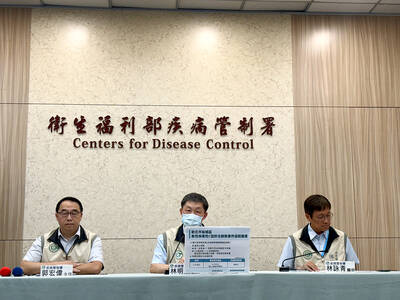
AT-RISK GROUPS: Of the accumulated 1,586 severe cases and 304 related deaths in this flu season, 65.8% were older people and 83.2% had chronic diseases, an official said The Centers for Disease Control (CDC) yesterday said that 165 severe flu cases and 30 flu-related deaths were reported last week, the highest weekly numbers in this flu season, and that cases might continue to increase, urging people to take precautions. Medical visits for flu-like illnesses increased by 1.4 percent to 141,374 last week, with 11.8 percent being emergency visits, showing that the seasonal flu is still in its epidemic period, CDC Epidemic Intelligence Center Director Guo Hung-wei (郭宏偉) said. From Tuesday last week to Monday, 165 severe flu cases and 30 flu-related deaths were confirmed, the highest weekly numbers
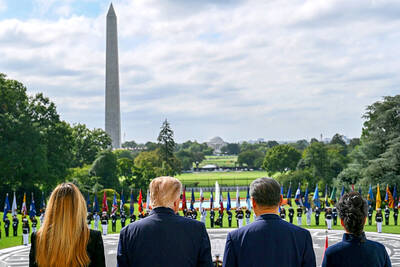
FACTS DISTORTION: The MAC rejected Xi’s remarks that the US and ‘China’ fought side-by-side during WWII, saying the ROC was Washington’s true ally during the war Taiwan yesterday denounced Chinese President Xi Jinping’s (習近平) comments to US President Donald Trump on the nation’s future, after Xi appeared to push Trump for a subtle change in stance that could erode US support for Taiwan. Xi told Trump in Washington on Thursday that he hoped the US would adhere to the “correct position” of opposing Taiwanese independence, according to a Chinese readout of the talks. That would be a tougher version of Washington’s long-standing formulation that it does not “support” independence. There was no immediate White House readout of the exchange. Xi’s remarks represent “the consistent Chinese approach of distorting facts


 RSS
RSS