


The Control Yuan yesterday censured the Ministry of Economic Affairs and Taiwan Power Co (Taipower, 台電) for misleading the public about the safety of the mothballed Fourth Nuclear Power Plant in New Taipei City’s Gongliao District (貢寮).
At a news conference in Taipei, Control Yuan members Tien Chiu-chin (田秋堇), Tsai Chung-yi (蔡崇義) and Lai Cheng-chang (賴振昌) disclosed the findings of a two-year investigation into a legal dispute between Taipower and the plant’s builder, GE-Hitachi Nuclear Energy International.
While critics said the report was publicized to sway public opinion about a referendum in favor of the ruling Democratic Progressive Party, which opposes activation of the nuclear power plant, Tien said that the timing of the release of the report had nothing to do with a referendum on Dec. 18 about the plant.
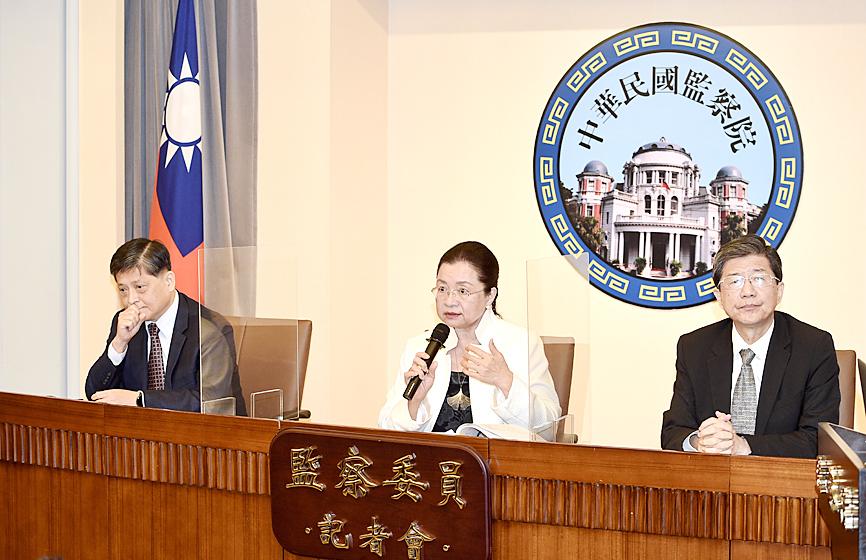
Photo: Peter Lo, Taipei Times
The report had to be published, as it had already passed the deadline for the investigation set by the Control Yuan, she said.
The report addresses the nuclear power plant’s safety issues, not its political implications, Tsai said.
“We were scheduled to release the findings last month. However, each committee at the Control Yuan convenes only once a month and the Finance Committee did not approve the report until Wednesday last week. As such, we decided to hold a media briefing on the report this week, and we would be accused of politicking if we did not,” he said.
The report said that on July 30, 2014, then-minister of economic affairs Chang Chia-juch (張家祝) told the public that the nuclear power plant was safe and ready for installation of fuel rods, although the Atomic Energy Council had yet to approve the results of a trial at the plant.
The distributed control information system (DCIS), which is considered the nervous system of the plant, had plenty of problems as well, the Control Yuan members said, adding that all these showed that the ministry was at fault for misleading the public and causing confusion.
In September 2015, GE-Hitachi sought US$166 million in compensation from Taipower through an arbitration filed at the International Court of Arbitration, they said.
In December 2015, state-run Taipower submitted to the arbitration court a counter-request based on the 43 problems that it said GE-Hitachi had failed to resolve to fulfill its contract.
Taipower told the three Control Yuan members that 23 of the 43 problems in the counter-request remain unresolved, and nearly 70 percent of the unresolved problems were identified before Chang told the public that the nuclear power plant was safe.
Chang did not inform the public about these problems, they said.
Of the 43 issues, radiation qualification and boot seal problems showed that Taipower was incapable of effectively supervising the work of its contractor, allowing the firm to do whatever it wanted, they said.
The report also showed that Taipower’s original specifications for the nuclear power plant stipulated that personnel inside the plant should be able to withstand a cumulative radiation dose of 180 days, but the equipment provided by GE-Hitachi did not meet such specifications.
Following the contractor’s advice, Taipower modified the specifications to allow cumulative radiation of 100 days, but the council officials did not agree with such a change.
After the Control Yuan launched the investigation, the power company found 1,292 devices at the plant that did not meet its original specifications, the report said.
Taipower had ordered materials to boot seal 2,318 penetration holes of the fuel pools, but it later found that it only needed to seal 114 holes, the report showed, adding that the order was nonrefundable.
Taipower has also identified 897 smaller issues with the nuclear power plant, about 92 percent of which are design flaws and about 40 percent are related to the DCIS, the report said.
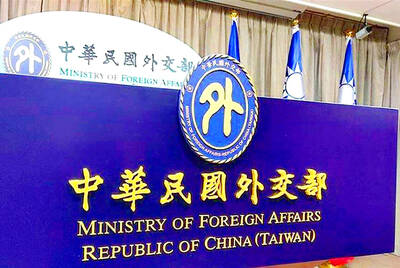
The Ministry of Foreign Affairs (MOFA) yesterday said it is closely monitoring developments in Venezuela, and would continue to cooperate with democratic allies and work together for regional and global security, stability, and prosperity. The remarks came after the US on Saturday launched a series of airstrikes in Venezuela and kidnapped Venezuelan President Nicolas Maduro, who was later flown to New York along with his wife. The pair face US charges related to drug trafficking and alleged cooperation with gangs designated as terrorist organizations. Maduro has denied the allegations. The ministry said that it is closely monitoring the political and economic situation

UNRELENTING: China attempted cyberattacks on Taiwan’s critical infrastructure 2.63 million times per day last year, up from 1.23 million in 2023, the NSB said China’s cyberarmy has long engaged in cyberattacks against Taiwan’s critical infrastructure, employing diverse and evolving tactics, the National Security Bureau (NSB) said yesterday, adding that cyberattacks on critical energy infrastructure last year increased 10-fold compared with the previous year. The NSB yesterday released a report titled Analysis on China’s Cyber Threats to Taiwan’s Critical Infrastructure in 2025, outlining the number of cyberattacks, major tactics and hacker groups. Taiwan’s national intelligence community identified a large number of cybersecurity incidents last year, the bureau said in a statement. China’s cyberarmy last year launched an average of 2.63 million intrusion attempts per day targeting Taiwan’s critical
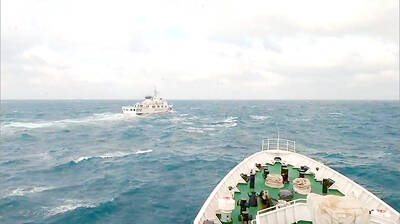
‘SLICING METHOD’: In the event of a blockade, the China Coast Guard would intercept Taiwanese ships while its navy would seek to deter foreign intervention China’s military drills around Taiwan this week signaled potential strategies to cut the nation off from energy supplies and foreign military assistance, a US think tank report said. The Chinese People’s Liberation Army (PLA) conducted what it called “Justice Mission 2025” exercises from Monday to Tuesday in five maritime zones and airspace around Taiwan, calling them a warning to “Taiwanese independence” forces. In a report released on Wednesday, the Institute for the Study of War said the exercises effectively simulated blocking shipping routes to major port cities, including Kaohsiung, Keelung and Hualien. Taiwan would be highly vulnerable under such a blockade, because it
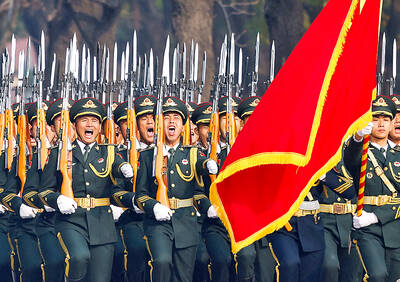
Conflict with Taiwan could leave China with “massive economic disruption, catastrophic military losses, significant social unrest, and devastating sanctions,” a US think tank said in a report released on Monday. The German Marshall Fund released a report titled If China Attacks Taiwan: The Consequences for China of “Minor Conflict” and “Major War” Scenarios. The report details the “massive” economic, military, social and international costs to China in the event of a minor conflict or major war with Taiwan, estimating that the Chinese People’s Liberation Army (PLA) could sustain losses of more than half of its active-duty ground forces, including 100,000 troops. Understanding Chinese


 RSS
RSS