


Taiwan might form a “travel bubble” with Singapore after reaching a similar deal with Palau, although the government has not seen a proposal from the Singaporean government, Minister of Health and Welfare Chen Shih-chung (陳時中) said yesterday.
Chen, who heads the Central Epidemic Command Center (CECC), made the remarks on the sidelines of a meeting of the Social Welfare and Environmental Hygiene Committee at the Legislative Yuan in Taipei.
On Wednesday, the center announced that group tours would begin on April 1 as part of a “travel bubble” arrangement with Palau.
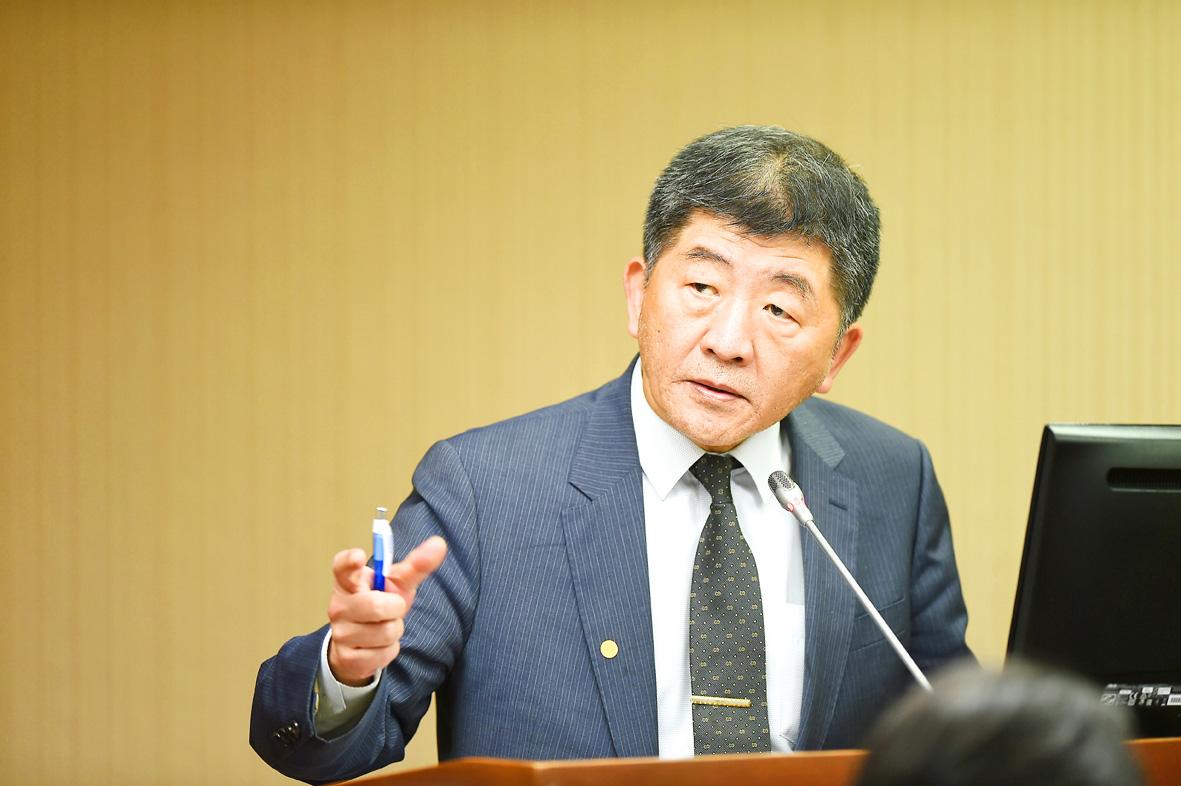
Photo: Tu Chien-jung, Taipei Times
China Airlines is to operate two flights to Palau per week during the first two weeks.
Last week, Minister of Transportation and Communications Lin Chia-lung (林佳龍) told lawmakers at a meeting of the legislature’s Transportation Committee that the nation is negotiating similar agreements with the governments of Japan, South Korea, Vietnam and Singapore, and that Singapore has been the most active in pursuing an arrangement.
Taipei has not received a proposal from any of the four countries, Chen said yesterday.
The Ministry of Foreign Affairs and the transportation ministry should have received requests for travel agreements by now, he said.
However, Singapore on Dec. 18 last year eased travel restrictions on Taiwanese, allowing them to enter the country without being vaccinated if they provide an air travel pass, Chen said.
“They [Singapore] hope that Taiwan will implement corresponding measures for Singaporean tourists as well,” he said. “We are still studying relevant issues, but we have not received any proposal from them yet.”
The CECC approved the Palau “travel bubble” swiftly, because the Micronesian nation has no confirmed COVID-19 cases, he said.
Lin did not comment when asked with which country Taiwan might next arrange a “travel bubble.”
“The whole world is watching the steps taken by Taiwan and Palau, and we will strictly follow disease-prevention guidelines to make sure that the green channel between the two countries created by the ‘travel bubble’ agreement will work,” Lin said.
“This would help Taiwan’s travel industry gradually return to normal,” he said.
Hopefully, tours to Palau would set an example for how similar arrangements could proceed, Lin said, adding that the CECC would study the results and the pandemic situation before deciding on an agreement with any other nation.
Travel agents said that the arrangement with Palau is a positive development for the nation’s travel industry, although it would not help improve their bottom lines.
“At the initial stage, the government would limit the number of people on the tours, which would not help to increase revenue,” Lion Travel Service Co (雄獅旅行社) president and spokesperson Andy Yu (游國珍) said. “However, the success of the first ‘bubble’ would help produce more such agreements and increase potential business opportunities.”
“Airlines, hotels and transportation service operators would see their service costs rise to comply with the disease-prevention guidelines,” but customers would accept the changes, as they would help prevent infections while on holiday, Yu said.
Tours to Palau are expected to cost NT$70,000 to NT$90,000 per person, depending on what days they cover, Yu said, adding that Lion Travel has received 400 reservations since last week.
An online survey conducted by the Chinese-language United Daily News showed that nearly 90 percent of respondents said they do not want to go to Palau even if tours begin next month, either because the cost of a four or five-day tour is too high, or they want to go elsewhere after the pandemic plateaus.

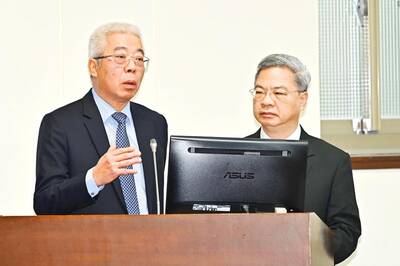
Taiwan has arranged for about 8 million barrels of crude oil, or about one-third of its monthly needs, to be shipped from the Red Sea this month to bypass the Strait of Hormuz and ease domestic supply pressures, CPC Corp, Taiwan (CPC, 台灣中油) said yesterday. The state-run oil company has worked with Middle Eastern suppliers to secure routes other than the Strait of Hormuz, through which about 20 percent of the world’s oil and liquefied natural gas typically passes, CPC chairman Fang Jeng-zen (方振仁) said at a meeting of the legislature’s Economics Committee in Taipei. Suppliers in Saudi Arabia have indicated they
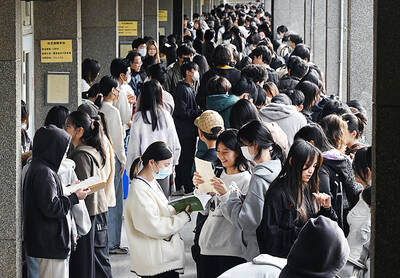
A global survey showed that 60 percent of Taiwanese had attained higher education, second only to Canada, the Ministry of the Interior said. Taiwan easily surpassed the global average of 43 percent and ranked ahead of major economies, including Japan, South Korea and the US, data from the Organisation for Economic Co-operation and Development (OECD) for 2024 showed. Taiwan has a high literacy rate, data released by the ministry showed. As of the end of last year, Taiwan had 20.617 million people aged 15 or older, accounting for 88.5 percent of the total population, with a literacy rate of 99.4 percent, the data
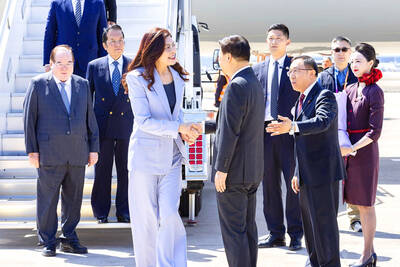
CCP ‘PAWN’? Beijing could use the KMT chairwoman’s visit to signal to the world that many people in Taiwan support the ‘one China’ principle, an academic said Chinese Nationalist Party (KMT) Chairwoman Cheng Li-wun (鄭麗文) yesterday arrived in China for a “peace” mission and potential meeting with Chinese President Xi Jinping (習近平), while a Taiwanese minister detailed the number of Chinese warships currently deployed around the nation. Cheng is visiting at a time of increased Chinese military pressure on Taiwan, as the opposition-dominated Legislative Yuan stalls a government plan for US$40 billion in extra defense spending. Speaking to reporters before going to the airport, Cheng said she was going on a “historic journey for peace,” but added that some people felt uneasy about her trip. “If you truly love Taiwan,

NEW LOW: The council in 2024 based predictions on a pessimistic estimate for the nation’s total fertility rate of 0.84, but last year that rate was 0.69, 17 percent lower An expected National Development Council (NDC) report expects the nation’s population to drop below 12 million by 2065, with the old-age dependency ratio to top 100 percent sooner than 2070, sources said yesterday. The council is slated to release its latest population projections in August, using an ultra-low fertility model, the sources said. The previous report projected that Taiwan’s population would fall to 14.37 million by 2070, but based on a new estimate of the total fertility rate (TFR) — the average number of children born to a woman over her lifetime — the population is expected to reach 12 million by


 RSS
RSS