


The Executive Yuan yesterday introduced amendments aimed at curbing the spread of disinformation, which proposed punishments for people who disrupt social order or threaten another person’s safety through false information.
A draft addendum to the Radio and Television Act (廣播電視法) says that news outlets and radio stations should establish self-discipline measures to ensure content accuracy.
TV stations found to have broken this rule would be fined between NT$200,000 and NT$1 million (US$6,483 and US$32,415), while radio stations would be fined between NT$9,000 and NT$90,000.
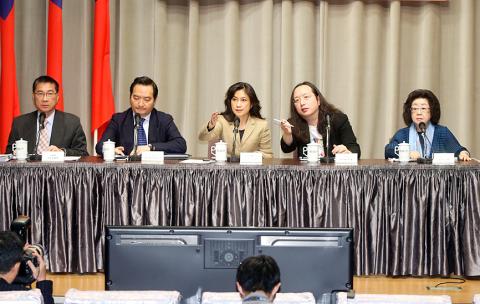
Photo: CNA
Those who contravene the rule could be subject to repeated fining until improvements are made, the addendum says.
An amendment to the Disaster Prevention and Protection Act (災害防救法) recommends fining people who report or spread false information about disasters.
According to the draft amendment, those who knowingly report incorrect information about disasters to authorities would be subject to a fine of between NT$300,000 and NT$500,000.
Those who inflict any harm on another person or cause someone else to incur losses a result of spreading such false information would face a prison term of up to three years or a fine of up to NT$1 million, it says.
If someone is grievously harmed as a result of such disinformation, the guilty person would face a prison term of three to 10 years.
In the extreme case that false information results in deaths, those responsible for spreading the disinformation could face life imprisonment, the draft says.
A proposed amendment to the Food Management Act (糧食管理法) seeks to introduce fines of between NT$60,000 and NT$300,000 for people who spread disinformation about food prices or government plans to reduce excess food.
A draft amendment to the Communicable Disease Control Act (傳染病防治法) seeks to raise the fine from NT$500,000 to NT$1 million for spreading any type of disinformation about communicable diseases that causes harm or losses to another person or the public.
Those who disseminate disinformation about food safety, causing harm or losses to the public or another person, would face a prison term of up to three years or a maximum fine of NT$1 million, a proposed amendment to the Act Governing Food Safety and Sanitation (食品安全衛生管理法) says.
A proposed addendum to the Nuclear Emergency Response Act (核子事故緊急應變法) says that those who spread disinformation about nuclear accidents that causes harm or losses would face a prison term of up to three years or a fine of up to NT$1 million.
If the action causes grievous bodily harm to another person, the culprit could face a prison term of three to 10 years, while disinformation that leads to deaths could incur a jail term of seven years to life.
A proposed addendum to a digital communications bill that reportedly seeks to require digital communications operators to remove disinformation within 24 hours or face a fine, was not on yesterday’s agenda.
The bill on Wednesday drew fire from the Asia Internet Coalition, which was formed by social media companies and online service providers, including Facebook, Google, Line and LinkedIn.
In an open letter to Premier William Lai (賴清德), the coalition expressed “grave concerns” over the bill, which was delivered to the Legislative Yuan for review in November last year.
It asked that the Executive Yuan withdraw the bill for revisions, even though it does not include any provision mandating that communications service providers pull any disinformation within a prescribed period.
The nation has been threatened by a host of fake news this year, Lai said during a weekly Cabinet-level meeting, citing fake reports in September about China’s consulate in Osaka sending shuttle buses to pick up Taiwanese tourists at Kansai International Airport during Typhoon Jebi, which led to the suicide of Su Chii-cherng (蘇啟誠), director-general of the Osaka branch of the Taipei Economic and Cultural Office.
Lai also cited a photograph from 11 years ago of a pile of discarded bananas, which sparked public outrage at rising fruit prices after it began circulating in June.
Freedom of speech forms the bedrock of Taiwan’s democracy, but the Internet and social media have exacerbated the spread of disinformation, he said.
The issue is unavoidable for all nations that guarantee freedom of speech, he said, adding that several nations have endeavored to tackle the issue through legislation.
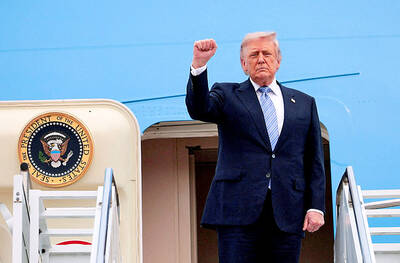
US-CHINA SUMMIT: MOFA welcomed US reassurance of no change in its Taiwan policy; Trump said he did not comment when Xi talked of opposing independence US President Donald Trump yesterday said he has not made a decision on whether to move forward with a major arms package for Taiwan after hearing concerns about it from Chinese President Xi Jinping (習近平). Trump’s comments on Taiwan came as he flew back to Washington after wrapping up critical talks in which both leaders said important progress was made in stabilizing US-China relations even as deep differences persist between the world’s two biggest powers on Iran and Taiwan. “I will make a determination,” Trump said, adding: “I’ll be making decisions. But, you know, I think the last thing we need right
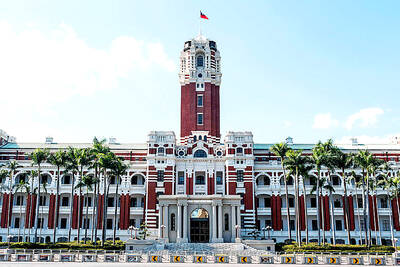
SECURITY: Taipei presses the US for arms supplies, saying the arms sales are not only a reflection of the US security commitment to Taiwan but also serve as a mutual deterrent against regional threats Taiwan is committed to preserving the cross-strait “status quo” and contributing to regional peace and stability, the Presidential Office said yesterday. “It is an undeniable fact that the Republic of China is a sovereign and independent democratic nation,” Presidential Office spokeswoman Karen Kuo (郭雅慧) reiterated, adding that Beijing has no right to claim sovereignty over Taiwan. The statements came after US President Donald Trump warned against Taiwanese independence. Trump wrapped up a state visit to Beijing on Friday, during which Chinese President Xi Jinping (習近平) had pressed him not to support Taiwan. Taiwan depends heavily on US security backing to deter China from carrying
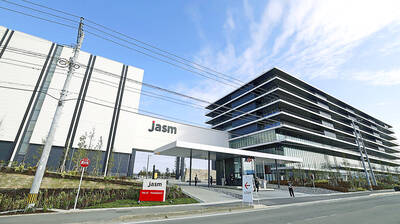
The subsidiary of Taiwan Semiconductor Manufacturing Co (TSMC, 台積電) in Kumamoto, Japan, turned a profit in the first quarter of this year, marking the first time the first fab of the unit has become profitable since mass production started at the end of 2024. According to the contract chipmaker’s financial statement released on Friday, Japan Advanced Semiconductor Manufacturing Inc (JASM), a joint venture running the fab in Kumamoto, posted NT$951 million (US$30.19 million) in profit in the January-to-March period, compared with a loss of NT$1.39 billion in the previous quarter, and a loss of NT$3.25 billion in the first quarter of
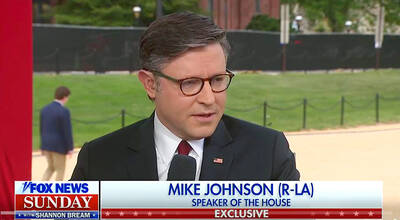
RESOLUTE BACKING: Two Republican senators are planning to introduce legislation that would impose immediate sanctions on China if it attempts to invade Taiwan US House of Representatives Speaker Mike Johnson on Sunday reaffirmed US congressional support for Taiwan, saying the US and “all freedom-loving people” have a stake in preventing China from seizing Taiwan by force. Johnson made the remarks in an interview with Fox News Sunday on US President Donald Trump’s summit with Chinese President Xi Jinping (習近平) last week. In an interview that aired on Friday on Fox News, just as Trump wrapped up a high-stakes visit to China, he said he has yet to green-light a new US$14 billion arms package to Taiwan and that it “depends on China.” “It’s a very good


 RSS
RSS