


A plan to bring Alien Resident Certificate (ARC) and Alien Permanent Resident Certificate (APRC) numbers in line with that of national ID cards is likely to take effect by the first half of next year, Minister of the Interior Hsu Kuo-yung (徐國勇) said on Monday.
To accommodate the new numbering system for the cards, data in government computer systems and drop-down menus on government Web sites would have to be modified, Hsu said by telephone.
“We have been talking to the Cabinet for approval to pay for the project from a reserve fund,” Hsu said. “We hope to get the project started by the end of this year.”
Hsu last week announced the plan in an interview with Taiwan Business Topics, a monthly magazine published by the American Chamber of Commerce in Taipei.
The change would affect more than 1 million ARC and APRC holders — 690,000 migrant workers, 30,000 foreign professionals and 300,000 foreign spouses of Taiwanese who have yet to obtain national IDs — the Ministry of the Interior said.
Hsu said that the measure is part of the government’s efforts to create a friendly living environment for foreign nationals, because it would make their lives easier and increase their sense of belonging.
However, the proposal has been met with mixed reactions, because cardholders would have to change the ID number they use to enroll in the health and labor insurance programs, open a bank account, subscribe to telephone and Internet plans, apply for a driver’s license and a work permit, and gain access to other services.
The national ID number currently consists of a letter and nine numbers, while ARCs and APRCs consist of two letters followed by an eight numbers, which is not always accepted by online registration or booking systems.
Asked how the program would be implemented, a National immigration Agency official said that the agency would try to “minimize any inconvenience caused to ARC or APRC holders.”
All ARC holders would be assigned a new number when they renew their card, which is valid for up to three years, said the official, who requested anonymity because she was not authorized to speak about the issue publicly.
ARC holders would also be allowed to get a card with a new number before their old card expires, she said.
APRC holders would not be required to change the number if they do not want to, because the card does not expire, the official said.
“I absolutely welcome the change,” Eiger Law public relations manager Lloyd Roberts said via e-mail.
“I’m not sure why they did this [used a different format] in the first place. They should have done this years ago,” he added.
A US citizen who has lived in Taiwan for more than 25 years, Roberts said he has encountered problems using his APRC number when booking hotel rooms and applying for banking and insurance services.
“For example, it is impossible to buy travel insurance online with several of the travel insurance companies. Usually, I have to call them and make a special request and then they fax me the forms to fill out,” Roberts said.
In another example, a credit card company might run a special promotion and require people to sign up online, but most of the time “you can’t enter in your APRC number,” Roberts said.

Taiwan Semiconductor Manufacturing Co (TSMC, 台積電), the world’s largest foundry service provider, yesterday said that global semiconductor revenue is projected to hit US$1.5 trillion in 2030, after the figure exceeds US$1 trillion this year, as artificial intelligence (AI) demand boosts consumption of token and compute power. “We are still at the beginning of the AI revolution, but we already see a significant impact across the whole semiconductor ecosystem,” TSMC deputy cochief operating officer Kevin Zhang (張曉強) said at the company’s annual technology symposium in Hsinchu City. “It is fair to say that in the past decade, smartphones and other mobile devices were
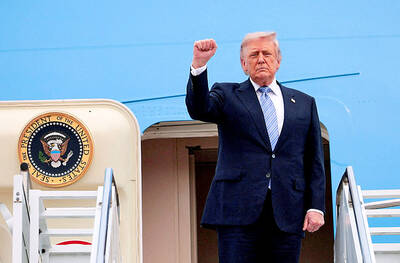
US-CHINA SUMMIT: MOFA welcomed US reassurance of no change in its Taiwan policy; Trump said he did not comment when Xi talked of opposing independence US President Donald Trump yesterday said he has not made a decision on whether to move forward with a major arms package for Taiwan after hearing concerns about it from Chinese President Xi Jinping (習近平). Trump’s comments on Taiwan came as he flew back to Washington after wrapping up critical talks in which both leaders said important progress was made in stabilizing US-China relations even as deep differences persist between the world’s two biggest powers on Iran and Taiwan. “I will make a determination,” Trump said, adding: “I’ll be making decisions. But, you know, I think the last thing we need right

TAIWAN ISSUE: US treasury secretary Scott Bessent said on the first day of meetings that ‘it wouldn’t be a US-China summit without the Taiwan issue coming up’ There were no surprises on the first day of the summit between US President Donald Trump and Chinese President Xi Jinping (習近平), the Mainland Affairs Council (MAC) said yesterday, as the government reiterated that cross-strait stability is crucial to the Asia-Pacific region, as well as the world. As the two presidents met for a highly anticipated summit yesterday, Chinese state media reported that Xi warned Trump that missteps regarding Taiwan could push their two countries into “conflict.” Trump arrived in China with accolades for his host, calling Xi a “great leader” and “friend,” and extending an invitation to visit the White House
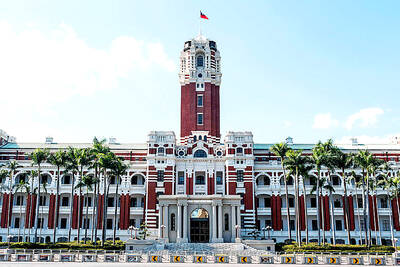
SECURITY: Taipei presses the US for arms supplies, saying the arms sales are not only a reflection of the US security commitment to Taiwan but also serve as a mutual deterrent against regional threats Taiwan is committed to preserving the cross-strait “status quo” and contributing to regional peace and stability, the Presidential Office said yesterday. “It is an undeniable fact that the Republic of China is a sovereign and independent democratic nation,” Presidential Office spokeswoman Karen Kuo (郭雅慧) reiterated, adding that Beijing has no right to claim sovereignty over Taiwan. The statements came after US President Donald Trump warned against Taiwanese independence. Trump wrapped up a state visit to Beijing on Friday, during which Chinese President Xi Jinping (習近平) had pressed him not to support Taiwan. Taiwan depends heavily on US security backing to deter China from carrying


 RSS
RSS