


US officials received intelligence that al-Qaeda operatives had been 45 days away from releasing a deadly gas into New York City subways when the plan was called off by Osama bin Laden's second-in-command in 2003, according to a book excerpt released yesterday on Time magazine's Web site.
According to the investigative report by Pulitzer-prize winning journalist Ron Suskind, an informant close to al-Qaeda management told US officials that Ayman al-Zawahri canceled the plan in January 2003, despite the likelihood that the strike would have killed as many people as the Sept. 11 attacks.
The informant said that operatives had planned to use a small, easily concealed delivery system to release hydrogen cyanide into multiple subway cars.
However, US officials had already discovered plans for the device in the computer of a Bahraini jihadist arrested in February 2003, and they had been able to construct a working model from the plans.
EASY TO MAKE
The easy-to-make device, called the "mubtakkar," meaning the "invention" or "initiative," represented a breakthrough in weapons technology that "was the equivalent of splitting the atom," Suskind writes.
All previous efforts to use the deadly gas, similar to that used in Holocaust-era gas chambers, in mass attacks had failed.
The FBI declined to confirm the details of Suskind's account.
Agency spokesman Bill Carter in Washington said on Saturday that the bureau would have no comment on the excerpted material.
A New York Police Department spokesman said authorities had known of the planned attack.
PRECAUTIONS TAKEN
"We were aware of the plot and took appropriate precaution," Paul Browne said on Saturday.
New York City Metropolitan Transportation Authority spokesman Tom Kelly also declined to comment.
According to the report, US President George W. Bush was shown a model of the weapon in March 2003 and ordered alerts sent through the US government.
When intelligence arrived that al-Zawahri had called off the attack, Bush worried that something worse was in the works, Suskind writes.
At least two of Suskind's sources remembered Bush saying, "This is bad enough. What does calling this off say about what else they're planning? ... What could be the bigger operation Zawahri didn't want to mess up?" the author said.
SECOND-WAVE DESTRUCTION
"What has been concluded for the most part is this: al-Qaeda's thinking is that a second-wave attack should be more destructive and more disruptive than 9/11," Suskind told Time.
The informant, who had become disgruntled with al-Qaeda's leadership, linked the organization's top agent on the Arabian peninsula to the attacks, Suskind writes.
The man was later killed in a violent standoff with authorities in Saudi Arabia.
The excerpt of Suskind's forthcoming book, The One Percent Doctrine, was to appear in today's print edition of Time.
Suskind is a former reporter for the Wall Street Journal.

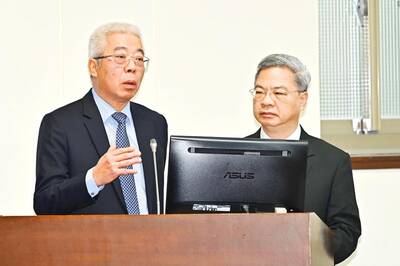
Taiwan has arranged for about 8 million barrels of crude oil, or about one-third of its monthly needs, to be shipped from the Red Sea this month to bypass the Strait of Hormuz and ease domestic supply pressures, CPC Corp, Taiwan (CPC, 台灣中油) said yesterday. The state-run oil company has worked with Middle Eastern suppliers to secure routes other than the Strait of Hormuz, through which about 20 percent of the world’s oil and liquefied natural gas typically passes, CPC chairman Fang Jeng-zen (方振仁) said at a meeting of the legislature’s Economics Committee in Taipei. Suppliers in Saudi Arabia have indicated they
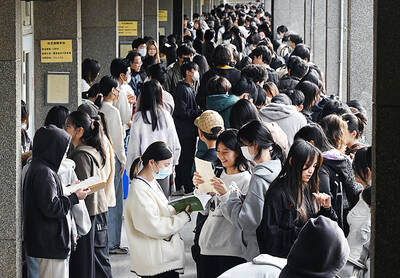
A global survey showed that 60 percent of Taiwanese had attained higher education, second only to Canada, the Ministry of the Interior said. Taiwan easily surpassed the global average of 43 percent and ranked ahead of major economies, including Japan, South Korea and the US, data from the Organisation for Economic Co-operation and Development (OECD) for 2024 showed. Taiwan has a high literacy rate, data released by the ministry showed. As of the end of last year, Taiwan had 20.617 million people aged 15 or older, accounting for 88.5 percent of the total population, with a literacy rate of 99.4 percent, the data

CCP ‘PAWN’? Beijing could use the KMT chairwoman’s visit to signal to the world that many people in Taiwan support the ‘one China’ principle, an academic said Chinese Nationalist Party (KMT) Chairwoman Cheng Li-wun (鄭麗文) yesterday arrived in China for a “peace” mission and potential meeting with Chinese President Xi Jinping (習近平), while a Taiwanese minister detailed the number of Chinese warships currently deployed around the nation. Cheng is visiting at a time of increased Chinese military pressure on Taiwan, as the opposition-dominated Legislative Yuan stalls a government plan for US$40 billion in extra defense spending. Speaking to reporters before going to the airport, Cheng said she was going on a “historic journey for peace,” but added that some people felt uneasy about her trip. “If you truly love Taiwan,

NEW LOW: The council in 2024 based predictions on a pessimistic estimate for the nation’s total fertility rate of 0.84, but last year that rate was 0.69, 17 percent lower An expected National Development Council (NDC) report expects the nation’s population to drop below 12 million by 2065, with the old-age dependency ratio to top 100 percent sooner than 2070, sources said yesterday. The council is slated to release its latest population projections in August, using an ultra-low fertility model, the sources said. The previous report projected that Taiwan’s population would fall to 14.37 million by 2070, but based on a new estimate of the total fertility rate (TFR) — the average number of children born to a woman over her lifetime — the population is expected to reach 12 million by


 RSS
RSS