


A currency trader suspected of defrauding Ireland's biggest bank of US$750 million voluntarily met with prosecutors and the FBI, his lawyer said, as bank executives expressed amazement that someone could pull off such a large scam.
John Rusnak, 37, was not charged and his lawyer said he is cooperating with authorities. Rusnak is in Baltimore, but avoiding his home because of the large contingent of media camped outside it, lawyer Bruce Lamdin said.
"My client is not a fugitive,'' he said. ``We hope that things will take their natural course from here. That's up to the US attorney's office."
Rusnak is suspected of defrauding Allfirst, the US subsidiary of Allied Irish Banks, in what could be the largest rogue-trading scam since the mid-1990s. The news sent Allied Irish and other European financial stocks tumbling amid security worries.
"We are hugely disappointed that our Allfirst control procedures failed to uncover this situation at an earlier stage," Allied Irish chief executive Michael Buckley said in Dublin. "The investigation now under way will determine not only how it arose but also how we can guard against any recurrence."
Officials at the US attorney's office said they were investigating Rusnak and the FBI confirmed that it was looking into missing money at Allfirst.
Middle managers had confronted the trader by telephone last weekend when the magnitude of the phony options deals was discovered after several weeks of investigation.
Allied Irish's director for finance and risk, Gary Kennedy, said "alarm bells went off" when the trader didn't return calls Sunday night, then didn't arrive for work Monday morning.
Buckley said it was not clear whether Rusnak pocketed some or all of the missing money.
Five treasury workers at the bank have been suspended, including Rusnak. Allied Irish said people outside the bank may also have been involved.
The bank said the scam involved forged purchasing records for options contracts, starting early last year and ending just after Christmas.
Currency dealers normally buy options contracts to hedge their bets on whether a specific currency will gain or lose value. If they buy a currency that loses value, the bank's losses would typically be offset by an option contract bet on a movement in the opposite direction.
But in this case, the bank said, Rusnak did not buy options contracts to hedge many of his foreign-exchange deals. It said he forged records of options purchases, either to conceal losses or skim the fees paid for the options.
Analysts said the amount of the missing funds suggested the trader had bought phony contracts with a value of at least 1,000 times that amount, or US$750 billion. This is a huge sum for a bank largely involved in retail banking, not capital markets.
"How could such a large volume of activity be missed to create such a large profit? I don't know. It does seem bizarre," said John Kelly, an analyst at NCB Stockbrokers in Dublin.
Bank officials described Rusnak as a married father of two who has worked at Allfirst since 1993. They said he was paid US$85,000 a year, a modest amount for a currency trader with his experience.
The case has stirred memories of Nick Leeson, the Singapore trader who destroyed Barings Bank by piling up US$1.4 billion in concealed losses. The case prompted banks worldwide to tighten internal checks and balances.
AIB's group treasurer, Pat Ryan, offered reassurances that the currency fraud won't affect customer deposits or the bank's financial health.
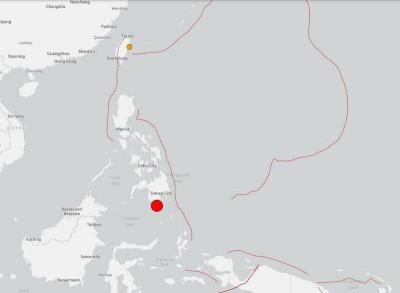
A magnitude 7.8 earthquake struck off the southern coast of Mindanao in the Philippines at 7:38am today, prompting the US Tsunami Warning System to issue an alert for neighboring countries, including Taiwan. The system issued a purple alert indicating a "tsunami threat." The potential threat zone includes Taiwan, the Philippines, Papua New Guinea, Yap and Palau. Philippine authorities were assessing the damage from the quake, with the office of civil defense seeking to verifying initial reports that 15 people had been killed and 129 injured in the region, mostly from falling debris. Arlene Hollero, disaster chief of Maasim town in the Philippines' Sarangani Province,
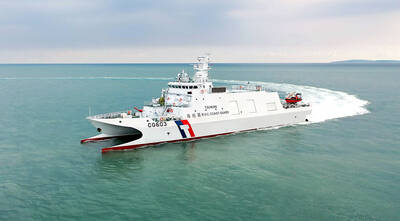
‘GRAY ZONE’ PRESSURE: Beijing’s activities are intended to create the deceitful impression that China has jurisdiction over the area around Taiwan, the CGA said Taiwan’s rights over its territorial waters and exclusive economic zone must not be violated by any country, the Mainland Affairs Council said yesterday, adding that it will not accept any unprovoked actions. The council issued the remarks in response to the China Coast Guard conducting maritime enforcement drills near eastern Taiwan and claiming to fully exercise China’s maritime administrative law enforcement authority. The Coast Guard Administration (CGA) has been closely monitoring the situation and is taking concrete steps to defend the nation’s sovereignty and secure its waters, the council said. China has no sovereign rights over the waters off eastern

RESILIENCE: Taiwan plays a key role in semiconductors, energy, information infrastructure and advanced manufacturing, AIT Director Raymond Greene said Taiwan’s continued investment in deterrence and resilience remains vital, especially in uncrewed systems and other emerging technologies, American Institute in Taiwan (AIT) Director Raymond Greene said yesterday. Greene made the remarks at the annual National Strategic Summit on Supply Chain Resilience held by the Research Institute for Democracy, Society and Emerging Technology (DSET), a government-backed think tank. As Taiwan last year became the US’ fourth-largest trading partner and supply chain security is becoming more important, cooperation in emerging technologies continues to deepen between the two countries, he said. The US is committed to accelerating innovation, building key infrastructure, strengthening cooperation

The National Chungshan Institute of Science and Technology yesterday showcased its locally developed variants of the Vision 60 robotic patrol dog, which it plans to deploy on the nation’s outlying territories in the South China Sea. The variants were produced under the Joint Lab project — created by the institute and domestic companies — and assembled with domestically produced motors, lenses and artificial intelligence (AI) systems alongside licensed tech from the US, Missile and Rocket Systems Research Division deputy director Jen Kuo-kang (任國光) told the media event at a military base in Taipei’s Dazhi (大直) area. Taiwan has built up its strengths


 RSS
RSS