


In a video posted to TikTok, where Katie Whitney has 2.5 million followers, she says to the camera, bluntly: “This video is for Cynthia Erivo. If you’re not Cynthia Erivo … you can keep on scrolling.” Her demeanor then shifts, her voice becomes softer; more the way a person might talk to their puppy: “Hi Cynthia. Hi baby. Hey baby. How are you?” It’s toe-curling — or, in modern parlance, cringe — to watch. “I feel traumatized,” says one commenter. Others post photos of a stunned-looking Erivo and imagine: “What if the Wicked star were to actually watch this video?” Cringe!
Now 25, but having started making this kind of content — “weird skits” — at 20, Whitney is part of what is known online as CringeTok, a subsection of the Internet that deals in content designed to make your toes curl. It’s in many ways a reaction to a fear of being “cringe,” which is seeping into all parts of life — from social media to classrooms to the workplace.
Embarrassment is nothing new, and comedy has been reveling in secondhand shame for decades, from Fawlty Towers to Curb Your Enthusiasm, The Office to Amandaland. But cringe has been identified by some working in mental health as a relatively new form of shame. It is now so prevalent that it has been studied by academics, discussed, lamented and, crucially, blamed as a reason so many people — and particularly young people — aren’t living their lives to the fullest.
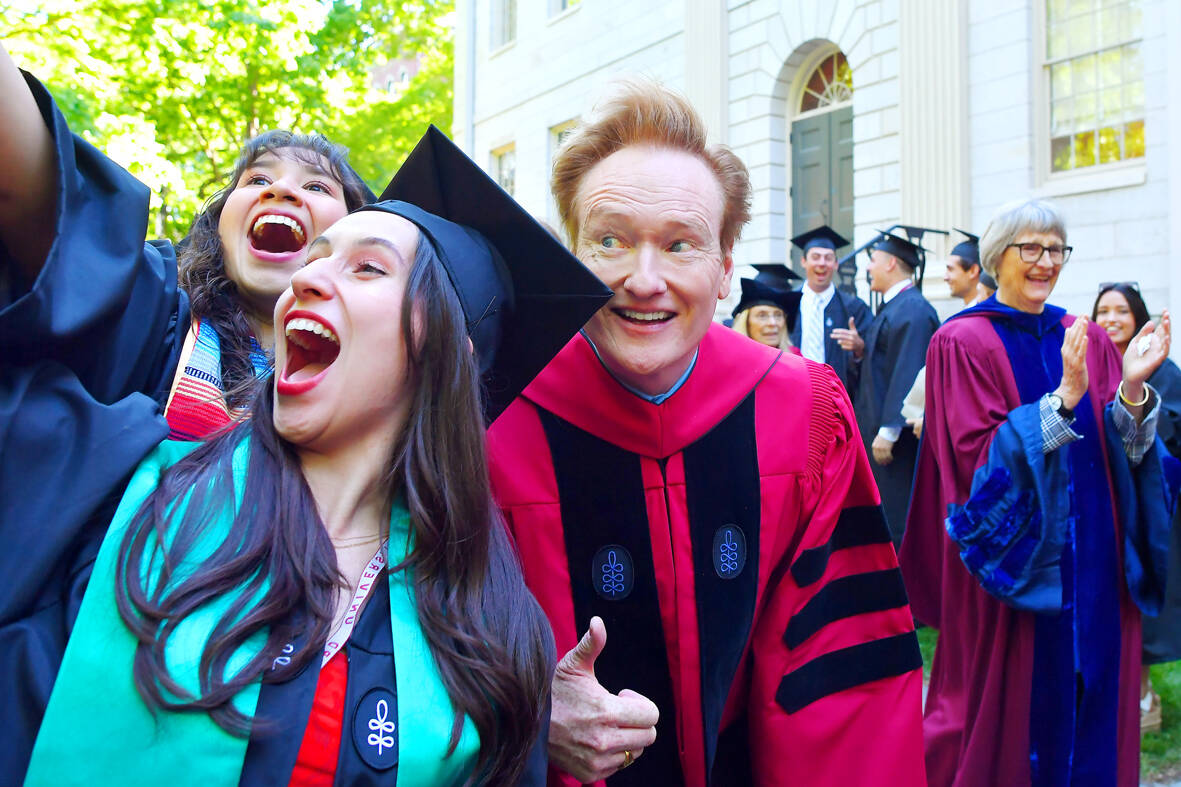
Photo: AP
According to a Yahoo/YouGov poll this year, the fear of coming across as cringe has stopped more than half of Gen Z (those born between the mid-1990s and early-2010s) from expressing themselves freely online and 55 percent of those surveyed said it had stopped them from opening up emotionally.
New York University professor and writer Ocean Vuong raised concerns that his students are becoming “more and more self-conscious about trying.” In an interview with ABC News, he said: “There’s a surveillance culture around social media. And they will say: ‘I want to be a poet, I want to be a good writer, but it’s a bit cringe’ … this ‘cringe culture’ is ‘I don’t want to be perceived as trying and having an effortful attempt at my dreams.’”
So what is “cringe?” According to Roger Giner-Sorolla, a professor of social psychology at the University of Kent, it has become a slang term for the feeling of “vicarious shame.” This, he says, places a person who has done something embarrassing or even morally shameful “under the dim regard of other people.” Mark Beal, a professor of communications at Rutgers University who has written several books about Gen Z, would “put it in the bucket of feeling awkward, feeling embarrassed, feeling ‘uncool.’”
A key aspect of “cringe” is a lack of self-awareness.
“The implication of cringe is that if you had any self-awareness, you would realize that this reflects really poorly on you,” Giner-Sorolla says. “A good example,” says Dean Burnett, a Cardiff-based neuroscientist, “is when the older generation try to get involved with younger generations’ trends, behaviors; that’s cringe.”
A boomer saying someone has “rizz” or is “delulu” without irony, say. It’s the act of “trying to do something and failing, but not knowing you’re failing at it.”
The catalog of things that Gen Z finds cringe is huge: sincerity, trying too hard, enthusiasm; any behavior that isn’t nonchalant. But, paradoxically, also inauthenticity. Then a big one is millennials — pretty much anything they do, say, think or wear. Skinny jeans, the crying-laughing emoji, “the millennial pause,” trainer socks and referencing which Harry Potter house they would be in.
Natalie Soibatian, 24, a visitor experience coordinator at a museum in the US, made a TikTok video last year about her worries that cringe is “crippling an entire generation.”
Has she ever felt held back by a fear of being cringe? “Definitely,” she says.
She remembers going to a club in Los Angeles a few years ago, where, she says: “No one was dancing.” It’s not how she expected nightlife to be when she was growing up, but she gets it. For a generation under constant surveillance.
“It’s a fear of being seen and being perceived.”
She is not immune to this herself — and used to feel similarly: “You look to your friends,” she says. “Are they participating?
“Everybody is afraid of being recorded,” she says. “And whether it’s their dancing abilities or just being able to participate and looking goofy, nobody is willing to participate unless somebody else starts, and nobody’s willing to start any more.”
So can Gen Z get over the fear of cringe? According to Giner-Sorolla, the way to survive is to “narrow your focus … have a reference group of people you can be authentic with, and even if other people think your authenticity is cringe, at least you’ve got your people.”
Burnett is of a similar mind.
“Having connections, having friends, having people you can relate to and share with, that’s good for the brain,” he says.
What about thousands of connections online?
“That’s not a healthy default, and that’s what I think holds people back.” While everyone would benefit from having a community, he says, “not everyone benefits from an audience.”
There is also freedom in being outright cringe — as Whitney has discovered. Online, an idea has gained traction that is known as “climbing cringe mountain,” a concept that the New York Times described as “an inescapable step of adulthood for the members of Gen Z who grew up with their entire lives — even the embarrassing stuff — being documented online.”
And there is a meme-mantra: “to be cringe is to be free;” it has been embraced as a rallying cry. As Marzelia says: “The world opens up for you on the other side of cringe.”
The first time Whitney posted her cringe content, she describes a weight being lifted. “It was like: ‘Oh, who cares, now it’s out there, it’s out there … now I just get to do whatever.’”
For Soibatian, she has found a reframing that might help anyone stuck at the base camp of cringe mountain: mountain. “If somebody is clearly judging another person for doing something that they deem as cringe, that, for me, is cringy.”

Taiwan’s English education system is being pulled apart by three opposing forces. Bilingual Nation 2030 pulls students toward English and global communication. Artificial Intelligence (AI) readiness pulls them toward digital judgment, verification and AI-mediated work. But Taiwan’s old exam culture pulls them back toward memorization, grammar drills, timed reading and correct answers. If the education system keeps using old exams to define success, it risks producing graduates who are neither genuinely bilingual nor genuinely AI-ready, but trained for tasks machines can already perform. The first force is Bilingual Nation 2030. Launched in 2018, the policy aimed to “help Taiwan’s workforce connect

It seems every few days one bumps into one of those “real man” comments in which Taiwan is urged to “face reality” or similar, and “make a deal,” with the speaker implying that soon it will be too late. “Deal” advocates always present themselves as having a superior grip on reality, and the manly ability to make the “hard choice.” Their testosterone-laden language often echoes that of Taiwan sellout advocates. Note that such commentary always specifies a process (“make a deal, work with, make progress”), never the end state of what occupation by a violent authoritarian colonialist state will entail. In

There are shadowy cabals plotting to sell out Taiwan to be annexed by China, by invasion if necessary. Fortunately, they are buffoons. In 2019, former Bamboo Union gangster and founder of the China Unification Promotion Party (CUPP), Chang An-le (張安樂, colorfully known as “White Wolf”), led a protest at the Legislative Yuan against comments made by then-premier Su Tseng-chang (蘇貞昌) that in the event of an attack by China, he would never surrender, but would protect the nation by fighting to the end, even if he only had a broom. Chang had party members bring a wooden casket that they
June 1 to June 7 "If all Taiwanese were as afraid of dying as you, then what would happen?” Physician Shih Chiang-nan (施江南) reportedly said this to his wife Chen Chiao-tung (陳焦桐) after she urged him to stop intervening on behalf of Taiwanese soldiers stranded overseas after serving in the Japanese Army during World War II. Shih had clashed with high-ranking officials over the issue, engaged in several heated arguments with Taiwan governor-general Chen Yi (陳儀) and allegedly shouted at general Ko Yuan-fen (柯遠芬), chief of staff of the Taiwan Garrison Command, over


 RSS
RSS