


Raw, bleak and at times difficult to watch, That Burning House (失樂園) does not shy away from depicting child sexual and physical abuse within children care homes.
The movie is structured in three parts. “Stuffed Toy” depicts a severely bullied and abused boy (Hung Chun-hao, 洪君昊) living in a group home. Neglected and mistreated even by the staff, he is about to reach his breaking point.
“Dog” shows the day-to-day life and conflicts at another care home and the surrounding community. The plot largely revolves around the uneasy dynamics between resident troublemaker Bear (Chen Yu-yan, 陳俞諺) and well-meaning care worker Renxing (Fandy Fan, 范少勳), who also clashes with the more pragmatic care home director Ting (Ding Ning, 丁寧).

Photo courtesy of Key Stone Communication
“Sea” follows a young man, Yang (Tseng Jing-hua, 曾敬驊), who is lured into an overseas scam compound in South Korea that is run by gangsters. Hoping to make some quick money to pay off family debt, he ends up being brutally exploited himself.
The three narratives are interwoven throughout the film with their connections not immediately apparent, which makes the opening half somewhat disorienting — but this is later resolved.
Reports of widespread bullying and peer sexual violence in a care institution in 2017 inspired director Tsai Yin-chuan (蔡銀娟) to begin the project. After years of field research, including living at these institutions to observe daily life firsthand, the former social worker sought to present a more comprehensive picture of the systemic issues that she witnessed. These include chronic funding shortages, emotional strain on under-resourced staff, negative public perceptions and the difficulties children face after aging out of the system at 18, all of which contribute to a self-perpetuating cycle.
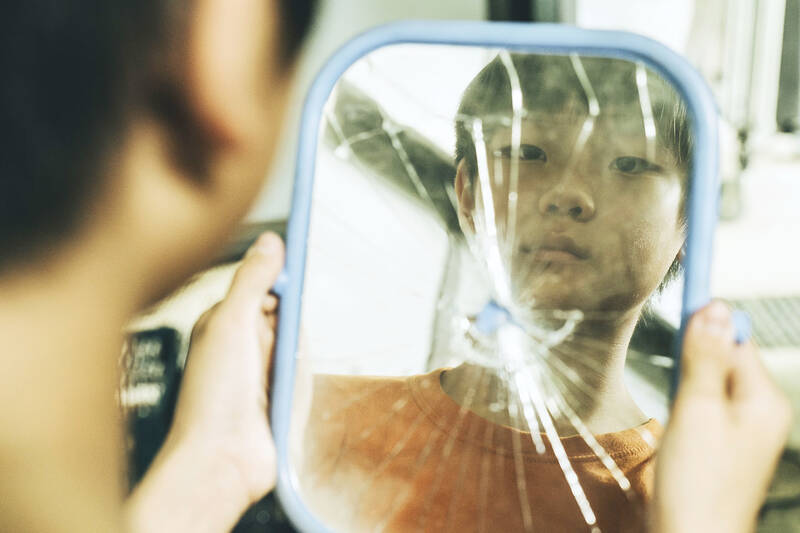
Photo courtesy of Key Stone Communication
This approach builds on Tsai’s previous work, the acclaimed series Tears on Fire (火神的眼淚), which also looks beyond the everyday tribulations of firefighters to examine broader institutional problems.
That Burning House not only depicts the various forms of harm that can emerge in such volatile environments, but also examines what drives children into these patterns and how they may continue with each generation without meaningful intervention. It’s easy to assign blame and pass judgement, whether on the institution or the children themselves, but as the film’s Chinese title “Paradise Lost” (失樂園) indicates, “angels” can be pushed into becoming “demons” with enough despair and despondency, Tsai says in an interview.
As shown in the movie, when such scandals break out, public fury quickly shifts toward frontline workers, with officials even questioning why they can’t handle “such an easy job” of looking after children and scoffing at their requests for additional funding to expand staffing. This attitude, as the film suggests, can compel some institutions to cover up the incidents.
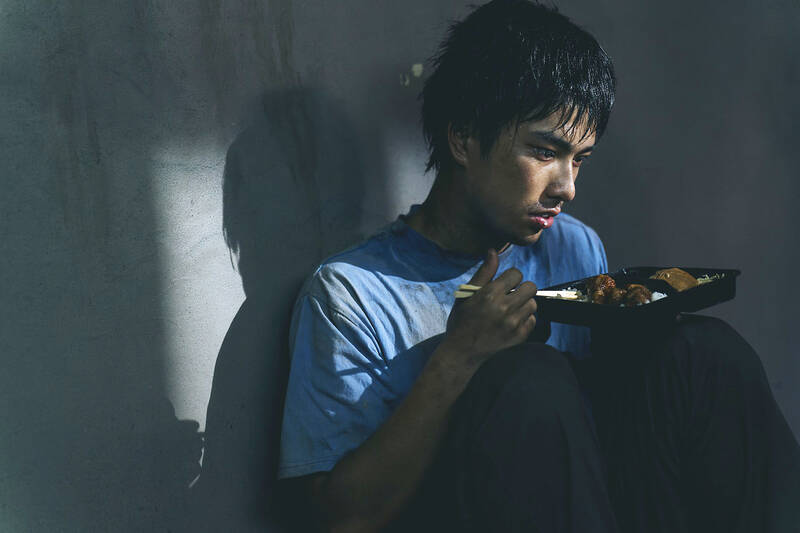
Photo courtesy of Key Stone Communication
At one point, care home director Ting loses her composure in a government meeting: “They have to patrol every two to three hours at night, and can only wash up after the children are asleep, yet still have to write their reports afterwards. How is this an easy job?”
The film also shows staff constantly managing all sorts of crises during the day, from breaking up fights to handling moments of extreme distress and unexpected visits from parents. The limits of their compassion are constantly tested, especially when a child they care about has repeatedly caused serious harm to others. Yet, Tsai says donors often hesitate when told that funding may go toward supporting staff rather than directly benefiting children, overlooking the fact that the two are closely interconnected.
Fan portrays his role convincingly, having, along with other cast members, spent time in the homes prior to filming.
An often overlooked part of the issue is what happens to the children after they age out of the system. Not only are they suddenly on their own without adequate support, in some cases they have to support family members who were previously unable to care for them. With limited access to stable employment and lingering stigma due to their backgrounds, they are left vulnerable to exploitation or gang involvement.
It is not easy to incorporate so many points while keeping a cohesive narrative, but Tsai largely succeeds in giving a sense of the overall picture.
The film’s recurring bursts of emotional intensity hit hard and can feel exhausting, which may obscure the sharper critique of the structural problems it seeks to address. At the same time, it leaves a lasting impression, especially given that its scenarios are drawn from real-life cases.
Too often, such incidents are reduced to brief or sensationalized news reports, and the sensitivity surrounding victims’ privacy can make documentation difficult. With That Burning House, however, Tsai tackles in an unsettling manner child care homes with depth and nuance.

Taiwan’s English education system is being pulled apart by three opposing forces. Bilingual Nation 2030 pulls students toward English and global communication. Artificial Intelligence (AI) readiness pulls them toward digital judgment, verification and AI-mediated work. But Taiwan’s old exam culture pulls them back toward memorization, grammar drills, timed reading and correct answers. If the education system keeps using old exams to define success, it risks producing graduates who are neither genuinely bilingual nor genuinely AI-ready, but trained for tasks machines can already perform. The first force is Bilingual Nation 2030. Launched in 2018, the policy aimed to “help Taiwan’s workforce connect

It seems every few days one bumps into one of those “real man” comments in which Taiwan is urged to “face reality” or similar, and “make a deal,” with the speaker implying that soon it will be too late. “Deal” advocates always present themselves as having a superior grip on reality, and the manly ability to make the “hard choice.” Their testosterone-laden language often echoes that of Taiwan sellout advocates. Note that such commentary always specifies a process (“make a deal, work with, make progress”), never the end state of what occupation by a violent authoritarian colonialist state will entail. In

There are shadowy cabals plotting to sell out Taiwan to be annexed by China, by invasion if necessary. Fortunately, they are buffoons. In 2019, former Bamboo Union gangster and founder of the China Unification Promotion Party (CUPP), Chang An-le (張安樂, colorfully known as “White Wolf”), led a protest at the Legislative Yuan against comments made by then-premier Su Tseng-chang (蘇貞昌) that in the event of an attack by China, he would never surrender, but would protect the nation by fighting to the end, even if he only had a broom. Chang had party members bring a wooden casket that they

June 1 to June 7 "If all Taiwanese were as afraid of dying as you, then what would happen?” Physician Shih Chiang-nan (施江南) reportedly said this to his wife Chen Chiao-tung (陳焦桐) after she urged him to stop intervening on behalf of Taiwanese soldiers stranded overseas after serving in the Japanese Army during World War II. Shih had clashed with high-ranking officials over the issue, engaged in several heated arguments with Taiwan governor-general Chen Yi (陳儀) and allegedly shouted at general Ko Yuan-fen (柯遠芬), chief of staff of the Taiwan Garrison Command, over


 RSS
RSS