


Over the years, springtime has become synonymous with bold choreographic exploration at Cloud Gate Theater (雲門劇場) through its annual Spring Riot program.
Initiated in 2001 by former artistic director Lin Hwai-min (林懷民) but paused for five editions, the program resumed in 2024 under Cheng Tsung-lung (鄭宗龍), once again giving artists access to their stage, audience, resources and dancers.
Typically, Spring Riot performances venture off the beaten path, offering an excellent opportunity for adventurous dance lovers to explore unfamiliar ground.
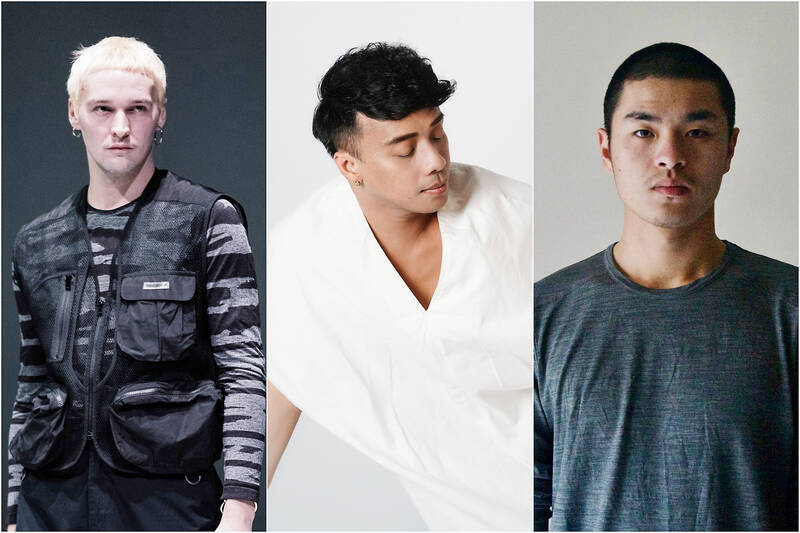
Photo courtesy of Iringo Simon, Tjimur Dance Theater and Lin Yin-ting
This year’s lineup brings together three international and multi-generational artists: Indigenous Paiwan-Taiwanese artist Baru Madiljin, Hungarian choreographer-performer Viktor Szeri and Taiwanese choreographer-performer Lin Pin-shuo (林品碩), who all discussed their work with Taipei Times.
Madiljin was asked to create a work for Spring Riot in 2024, when both Tjimur Dance Theater (蒂摩爾古薪舞集), where he is in-house choreographer, and Cloud Gate Dance Theater (雲門舞集) performed at Kunstfest Weimar in Germany.
‘SHE, ADORNED BY HER OWN BODY’
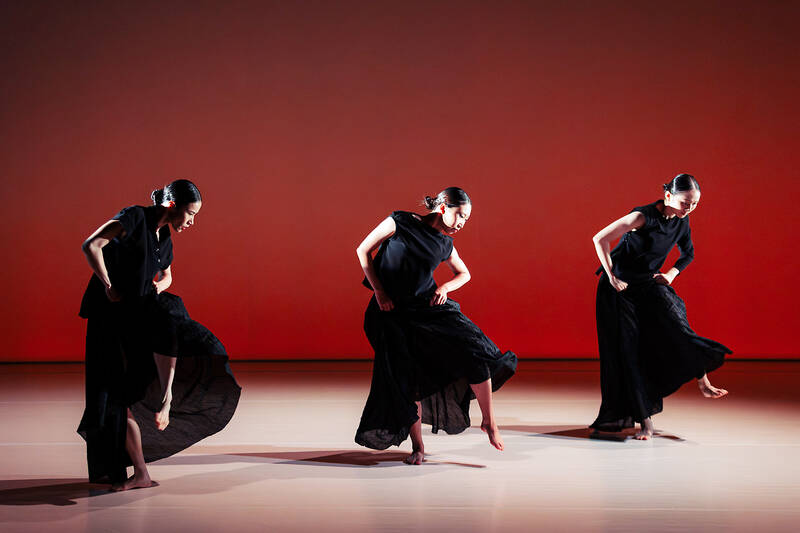
Photo courtesy of Lee Chia-yeh
After presenting a first sketch of She, Adorned by Her Own Body (她,以身盛裝) during last year’s Spring Riot, he now returns with a reworked version of the trio.
Madiljin works with three female Cloud Gate dancers, drawing on everyday gestures within the Paiwan indigenous community — pounding betel nuts, embroidering, smoking pipes — paralleling the life stages of Paiwan girls as they grow older.
Creating a work with another professional dance company is a personal first, and comes with both pressure and challenges, the choreographer said.
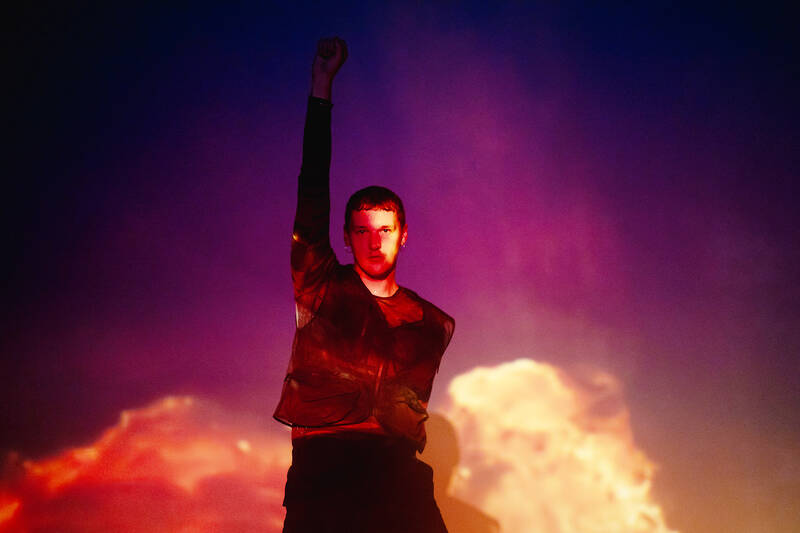
Photo courtesy of Claudiu Popescu
Unlike working with Paiwan dancers, the process requires extensive discussion and explanation to bridge gaps in cultural references, to ensure the movement’s intention was clearly understood and accurately conveyed.
At the same time, Madiljin also recognizes the strong connection to nature and the movement vocabulary informed by martial arts that both companies share, allowing him to work with a groundedness that feels familiar.
‘FATIGUE’
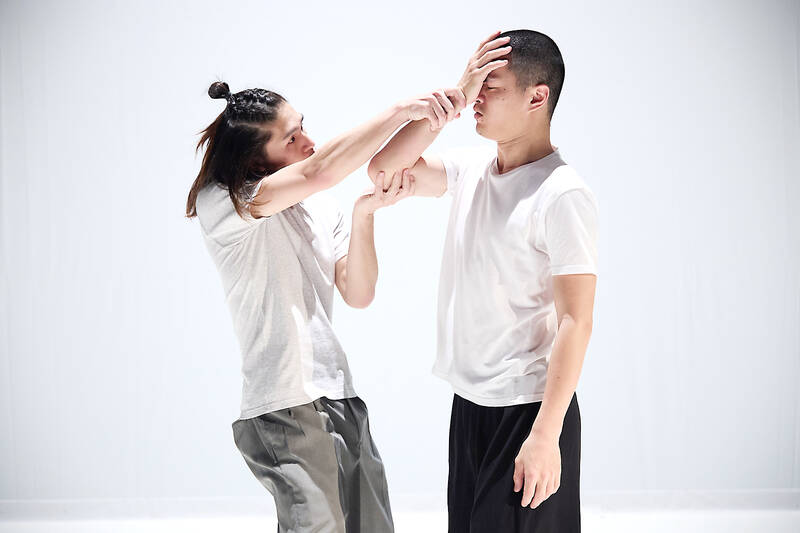
Photo courtesy of Chen You-wei
Szeri presents FATIGUE, a self-performed solo from 2022, exploring burnout and exhaustion.
These themes reflect Szeri’s personal experience as a freelance artist, feeling trapped in a system of continuous productivity, where value is measured by visibility, novelty and output rather than by sustainability, care or creative depth.
The work quickly gained recognition across Europe, winning the 2023 Rudolf Laban Award and appearing at international platforms such as dunaPart and Aerowaves, which ultimately caught Cheng’s attention and led to his Spring Riot invitation.
Rather than a therapeutic work, Szeri emphasizes that FATIGUE creates an intimate world for audiences to enter, inviting them to adopt his perspective and experience how he perceives and feels things.
Through sound (Andras Molnar), projection (Tamas Pall) and lighting (Ferenc Payer), he constructs an immersive atmosphere that encourages the audience to slow down and turn inward.
Bringing FATIGUE to Taipei marks Szeri’s debut on a stage in Asia.
During his time as a Cloud Gate company dancer, Lin didn’t make a secret of his ambition to take on creative leadership and pursue choreography.
‘CATCH AND THROW’
In the past two editions of Spring Riot, he developed experimental fragments in the Work-in-Progress section, which are now moving from the studio to the stage as a cohesive piece, titled Catch and Throw (拋接的身體).
Although Catch and Throw has known a relatively long development process, the choreographer says that the time available to create a first work is never sufficient.
Feedback from early showings have prompted Lin to reflect on how to preserve the core of the piece, without allowing it to be overly shaped by public opinion.
Central to the work are the physical forces of falling, and the instinctive responses required to survive the dangers of gravity and height.
He performs alongside his brother, Lin Yin-ting (林胤廷), in which he finds the ideal partner to mirror his own physique, a matching counterpoint, “someone able to throw me up and catch me,” Lin said.

Ajay Verma, a consultant gastroenterologist at Kettering general hospital in Northamptonshire, says our gut is a “complex machine.” “It is constantly providing us with the nutrition we need, initially to grow and develop, and then for us to survive, thrive and repair from injury and illness.” How can we keep it functioning well? Put simply: “Make sure what you put into it is balanced, and that you clear out its waste products adequately,” Verma says. “In a general gastroenterology clinic, the most common conditions we see are irritable bowel syndrome (IBS), gastroesophageal reflux disease, inflammatory bowel disease and constipation,” says Nisha
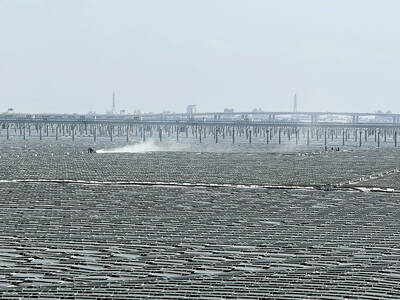
The arithmetic is straightforward and uncomfortable. By the end of 2025, Taiwan had committed itself to a 50-30-20 electricity mix — half natural gas, 30 per cent coal, 20 per cent renewables. The Ministry of Economic Affairs’s (MOEA) own monthly energy reports tell a different story. Natural gas reached 47.8 per cent of generation last year. Coal stood at 35.4 per cent, comfortably above its target ceiling. Renewables came in at 13.1 per cent, well short of the 20 per cent Taipei had pledged a decade earlier. Installed renewable capacity reached roughly half of the 12 gigawatts (GW) the government
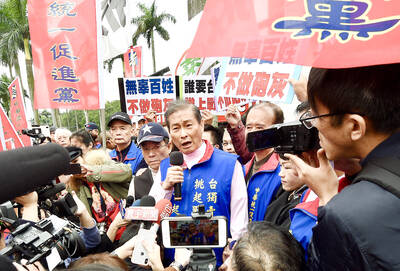
There are shadowy cabals plotting to sell out Taiwan to be annexed by China, by invasion if necessary. Fortunately, they are buffoons. In 2019, former Bamboo Union gangster and founder of the China Unification Promotion Party (CUPP), Chang An-le (張安樂, colorfully known as “White Wolf”), led a protest at the Legislative Yuan against comments made by then-premier Su Tseng-chang (蘇貞昌) that in the event of an attack by China, he would never surrender, but would protect the nation by fighting to the end, even if he only had a broom. Chang had party members bring a wooden casket that they
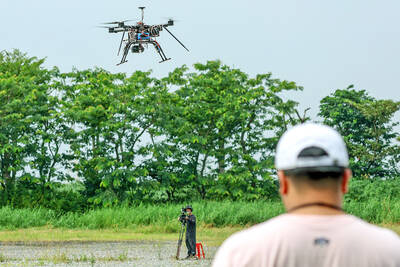
Taiwan’s drone exports are taking off, fuelled by the war in Ukraine, as Taiwanese companies seek a stake in the fast-growing global market for unmanned aerial vehicles (UAV). Low-cost drones used for reconnaissance and strikes are in high demand as governments around the world boost defense spending in the face of intensifying conflicts. A relative new player in the increasingly competitive industry, Taiwan’s pitch is to be an “Asian hub” for the production of UAVs and components free of Chinese materials, or “non-red.” That means its UAVs can be up to three times more expensive than their Chinese competitors, like the world’s biggest


 RSS
RSS