


Despite its “legendary songstress” billing and colorful poster of a woman singing into a microphone, La Paloma (傳奇女伶高菊花) is not a story of stardom. Instead, it unfolds as a tragic, heart-rending account of a promising young life derailed by the White Terror.
Since childhood, Shih Chao-ling (施昭伶) often had to go looking for her mother, who was likely passed out drunk somewhere, and bring her home and care for her. She was never told about the trauma that shaped the life of her mother — the late songstress Paicu Yatauyungana, better known as Kao Chu-hua (高菊花).
The film includes interviews with a nearly 80-year-old Paicu at her home in the Tsou village of Tapangu in 2009, where she appears gracefully in full stage glamour — leopard-print jacket, fur hat, heavy makeup — and speaks frankly about her life.

Photo courtesy of Wild Fire Music
“The things I’ve been through, you couldn’t bear to hear them,” she says, later wistfully singing the Spanish classic La Paloma in another scene: “Cucurucucu, dove, don’t cry anymore.” Her weathered voice remains powerful and resonant and tinged with sorrow.
But the plot is driven by Shih’s journey to learn about her mother’s past. She’s shown reading aloud her detailed diaries, going through declassified government archives with her son, her candid musings and emotional realizations showing a poignant gradual understanding. The film is particularly effective in this approach, intercut with scenes of Paicu’s younger brother reading passages and filling in gaps in the narrative.
The eldest daughter of Indigenous Tsou educator and politician Uyongu Yatauyungana, Paicu was once described in the press as a “lucky woman.” At 19, she had been offered a scholarship to study medicine in the US for 15 years, with the goal of returning to Taiwan to improve public health in Indigenous communities.
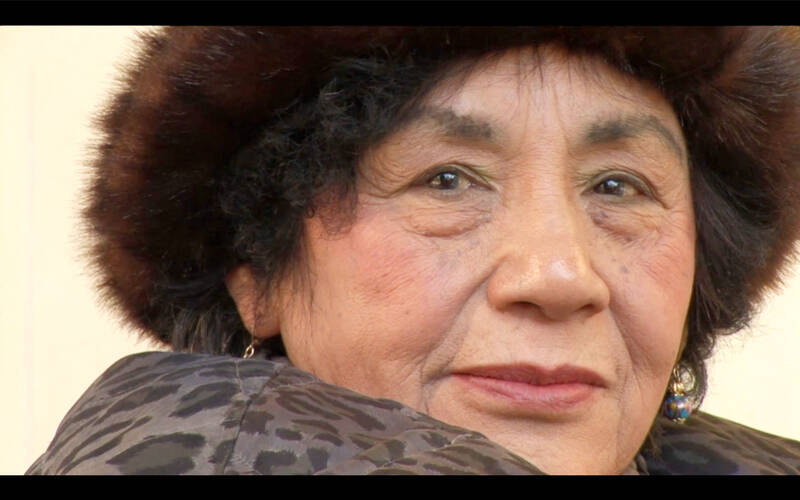
Photo courtesy of Wild Fire Music
She was studying English at a cram school when Uyongu was arrested in 1952. He had run afoul of the Chinese Nationalist Party (KMT) after resisting government troops during the 228 Incident, a 1947 anti-government uprising that was violently suppressed. He had also briefly advocated Indigenous autonomy, and was executed in 1954 under the standard White Terror charge of sedition.
For Paicu, this led to the collapse of the world she had known. Forced to take care of her 10 siblings, she turned to performing, developing a repertoire of English, Spanish and French songs such as Banana Boat Song and Cachito, and adopting the stage name Panana.
But as the daughter of a political criminal, Paicu remained under close surveillance, and was often summoned for questioning. After performances, she was at times blackmailed into sleeping with foreign officials, or into seducing communist captives to persuade them to defect. She faded from the spotlight after her siblings came of age.
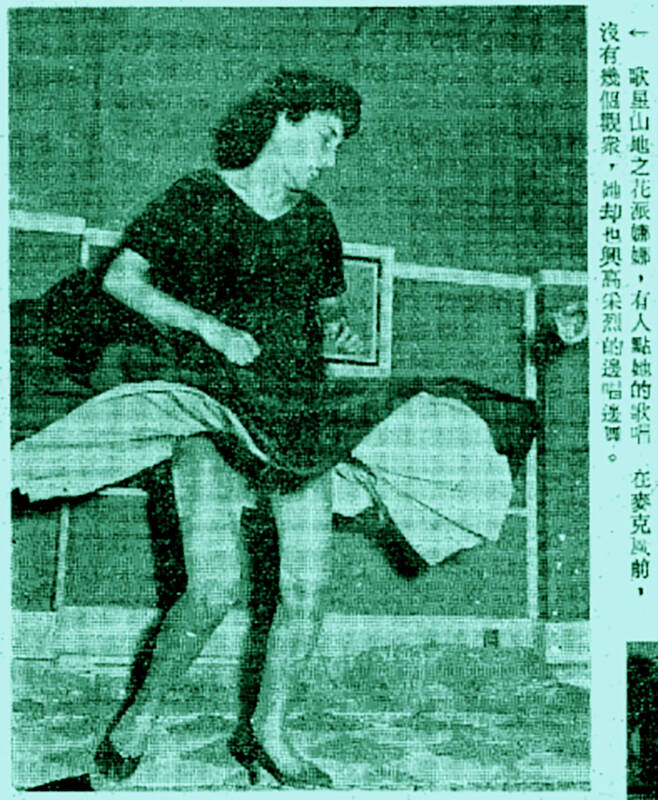
Photo courtesy of Wild Fire Music
While researching Polish-Taiwanese relations, Lin Wei-yun (林蔚昀) discovered evidence of such dealings with captured Polish sailors. She breaks down in the film as she recalls the shock of the discovery and the dilemma that followed: how could she approach the family and ask whether she could include it in her book?
Having won the audience choice award in last week’s Taiwan International Documentary Festival, the film is produced by Wild Fire Music (野火樂集), which also released an album of songs and poems by Uyongu, who taught his daughter music. Producer Hsiung Ju-hsien (熊儒賢) reportedly met Panana, by then largely forgotten by the public, while conducting field research in Tapangu in 2005.
The film’s layered approach, weaving together different voices and timelines, works well for such heavy material, especially with Shih’s perspective showing how trauma affects future generations. It is still surprising and heartbreaking to see how many White Terror stories have yet to be uncovered, with family members not even knowing anything. At a lean 72 minutes, the film carries ample historical context and emotional weight without feeling overburdened.
However, the film’s strongest moments are the scenes of Paicu Yatauyungana herself, calmly recounting what happened to her with poise. Instead of seeking transitional justice, all she wants is that her father was never killed, she says. It is fortunate that these interviews were captured before her death.
“At a time when I could be executed at any moment, I struggled desperately to survive,” she says. “I didn’t want to die.”

Taiwan’s English education system is being pulled apart by three opposing forces. Bilingual Nation 2030 pulls students toward English and global communication. Artificial Intelligence (AI) readiness pulls them toward digital judgment, verification and AI-mediated work. But Taiwan’s old exam culture pulls them back toward memorization, grammar drills, timed reading and correct answers. If the education system keeps using old exams to define success, it risks producing graduates who are neither genuinely bilingual nor genuinely AI-ready, but trained for tasks machines can already perform. The first force is Bilingual Nation 2030. Launched in 2018, the policy aimed to “help Taiwan’s workforce connect
It seems every few days one bumps into one of those “real man” comments in which Taiwan is urged to “face reality” or similar, and “make a deal,” with the speaker implying that soon it will be too late. “Deal” advocates always present themselves as having a superior grip on reality, and the manly ability to make the “hard choice.” Their testosterone-laden language often echoes that of Taiwan sellout advocates. Note that such commentary always specifies a process (“make a deal, work with, make progress”), never the end state of what occupation by a violent authoritarian colonialist state will entail. In
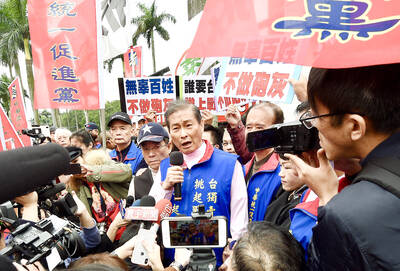
There are shadowy cabals plotting to sell out Taiwan to be annexed by China, by invasion if necessary. Fortunately, they are buffoons. In 2019, former Bamboo Union gangster and founder of the China Unification Promotion Party (CUPP), Chang An-le (張安樂, colorfully known as “White Wolf”), led a protest at the Legislative Yuan against comments made by then-premier Su Tseng-chang (蘇貞昌) that in the event of an attack by China, he would never surrender, but would protect the nation by fighting to the end, even if he only had a broom. Chang had party members bring a wooden casket that they
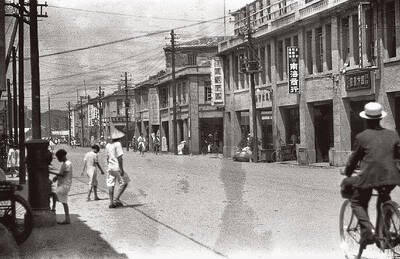
June 1 to June 7 "If all Taiwanese were as afraid of dying as you, then what would happen?” Physician Shih Chiang-nan (施江南) reportedly said this to his wife Chen Chiao-tung (陳焦桐) after she urged him to stop intervening on behalf of Taiwanese soldiers stranded overseas after serving in the Japanese Army during World War II. Shih had clashed with high-ranking officials over the issue, engaged in several heated arguments with Taiwan governor-general Chen Yi (陳儀) and allegedly shouted at general Ko Yuan-fen (柯遠芬), chief of staff of the Taiwan Garrison Command, over


 RSS
RSS