


On my way to the sprawling Wuci Fish Market (梧棲), I happened upon the Taichung Aquarium. The rows of seafood — salmon, milkfish and varieties of bivalves laid out on ice — could wait. Instead, I paid my NT$500 admission and stepped inside the aquarium to see the real thing: hundreds of species of fish, alive and swimming in tanks of every shape and size.
That was in September last year, and the conversations were loud and full of excitement.
RELAXING EXPERIENCE

Photo courtesy of the Taichung Aquarium
Six months later, visiting the aquarium is a much quieter experience. While the jellyfish and penguins are still there, the jostling crowds have thinned inside the imposing, five-story building, located in the seaside district of Cingshuei (清水), about 20km from downtown Taichung.
“Now’s a good time to visit,” said Lin Jhen (林真), the aquarium’s assistant manager. “You can slow down and just watch the animals.”
Officials say the 22,500-square-meter facility has seen about 400,000 visitors since its opening nine months ago. The aquarium, with a total investment of NT$1.3 billion, was conceived of more than a decade ago, but was delayed because of budgetary, policy and political issues spanning three mayoral terms.
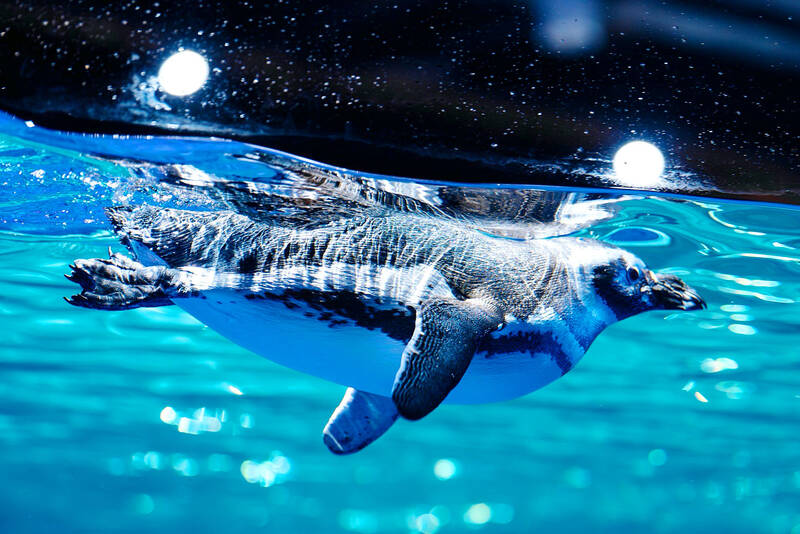
Photo courtesy of the Taichung Aquarium
On this particular Sunday, the crowds are sparse as Lin starts the tour on the third floor, and right away I can tell it’s a different kind of aquarium. The tanks look like lotus flowers, or perhaps champagne glasses, with long stems and open coupes at the top.
There are 22 of these tanks in all, with many of them at eye-level for young visitors. Others are high enough that you can see the undersides of the silver barbs and other freshwater fish circling above.
The cascading heights of the tanks is meant to mimic the experience of traveling down the nearby Dachia River.
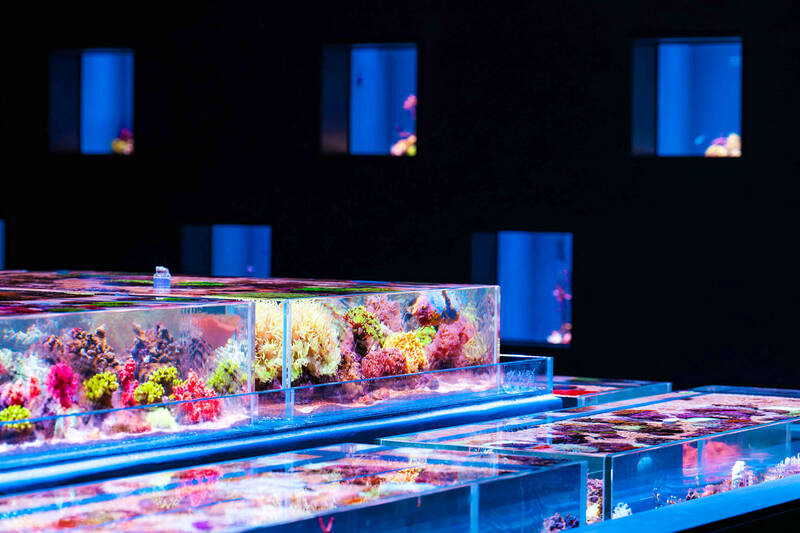
Photo courtesy of the Taichung Aquarium
‘UNIQUE PERSPECTIVE’
“It’s a very unique perspective,” said Lin, who has been involved in the design and layout of the aquarium for the last three years.
Visitors who want to know more about the fish and their aquatic habitat need to use an audio guide, which is available through a Line app or posted QR codes. This lack of interpretive signage, Lin said, is intentional in order to minimize distractions.
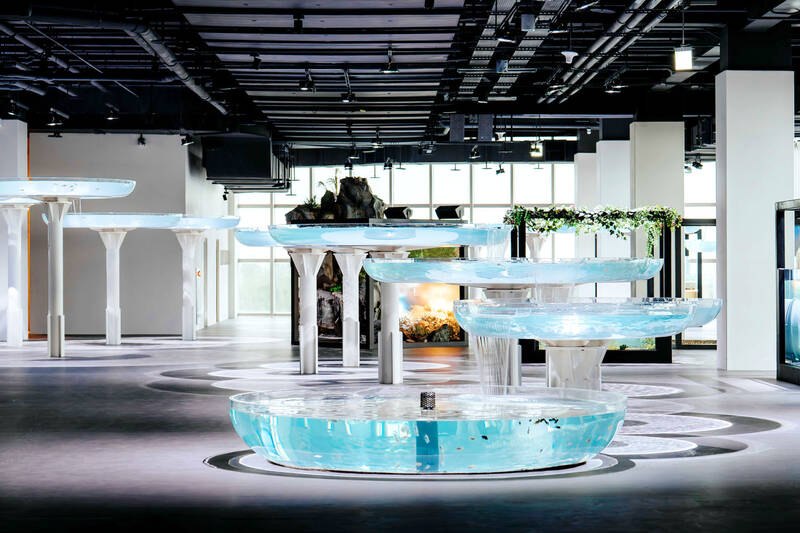
Photo courtesy of the Taichung Aquarium
Upstairs on the fourth floor, a two-year-old girl splashes barefoot in the shallows of a tidal pool, which replicates the nearby coastal wetlands. Water floods the expansive concrete floor of the intertidal zone twice an hour, and while most of the aquarium is meant for quiet viewing, this area rings with shrieks and laughter from young children.
One of the aquarium’s unique features is its open-topped tanks, which offer an intimate look at marine ecosystems and their inhabitants. In one child-friendly exhibit, fiddler crabs and mudskippers scramble about as children peer from above.
“We’re trying to reduce the boundary between visitors and exhibitions in order to enhance their connection,” Lin said of the open design of the tanks. “They can observe and get very, very close.”
In total, the aquarium has 149 tanks, the largest measuring 14 meters high and 7 meters wide and holding 575 tons of seawater. This massive curved tank is designed to simulate the Kuroshio Current, with schools of open-water fish — including leopard sharks and stingrays — alongside an array of colorful coral reef fish.
And all of these tanks, smudged with the fingerprints of curious children, need cleaning, which happens twice per day.
“It’s hard to keep [the tanks] clean,” Lin said, noting the added challenge of managing the excited kids who want to put their hands in the water to actually touch the fish.
ENVIRONMENTAL AWARENESS
Increasing environmental awareness, Lin said, is one of the goals of this small, yet innovative aquarium overlooking the choppy waters of the Taiwan Strait.
Take the humble starfish, for example. Many people don’t know how it moves or where its stomach is located. An experienced diver familiar with Taiwan’s marine life, Lin said she hopes the aquarium can reduce the boundary between visitors and exhibits, creating a more intimate experience and sparking a deeper appreciation of these marine creatures and their ecosystems.
“It’s like my baby,” Lin said of her own connection with the aquarium. “I want to show you what I love.”
Making the trip from Taoyuan was a self-described jellyfish lover. She and her companion snapped photos in the dimly-lit room housing about 20 species of jellyfish in large, backlit tanks. The exhibit, the largest of its kind in Taiwan, combines an 8-meter-wide tank housing nearly 1,000 moon jellyfish with an immersive projection screen complete with ambient music that feels flowing and meditative, much like the jellyfish.
“When [visitors] leave the aquarium all they remember is the jellyfish,” Lin said.
One of the aquarium’s other unique features is that it also serves as a research and breeding center for marine life. In the jellyfish laboratory, for instance, visitors can watch the breeding process of jellyfish and coral, with the goal of avoiding the need to capture or purchase these animals from outside the aquarium.
Visitors can also observe the work at the aquatic animal rescue center, which takes in non-native freshwater species, such as crayfish and snakeheads, that owners may no longer want. Acceptance is subject to space availability and an application process.
“Don’t release [creatures] into local ponds and rivers,” Lin said.
PENGUINS!
The final stop on the tour is the open-air penguin exhibit. The six Magellanic penguins have been swimming less these days during the breeding season, which resulted in four eggs, all of which were infertile. The aquarium hopes the penguins will breed again, with the goal of eventually increasing the total number to 18 in the coming years.
As in other spots in the aquarium, visitors are asked to keep their voice down so as not to distract the penguins as they communicate with each other.
“Coming in here is one of my favorite calming activities,” Lin said.
In fact, after the two-hour tour I also felt calmer. Skipping the aquarium’s cafe, where you can grab meals such as roasted chicken or grilled fish, I drove around the corner to my original destination: the sprawling fish market.
As I bought a beautiful salmon fillet and bag of clams for dinner, I asked myself whether my visit to the aquarium had given me a better appreciation of where my food comes from. And, indeed, I think it had.
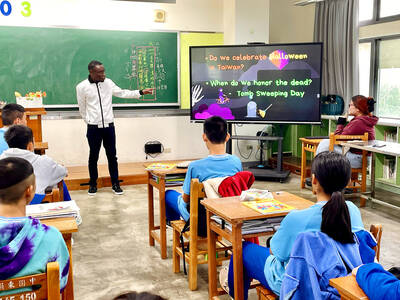
For many people, Bilingual Nation 2030 begins and ends in the classroom. Since the policy was launched in 2018, the debate has centered on students, teachers and the pressure placed on schools. Yet the policy was never solely about English education. The government’s official plan also calls for bilingualization in Taiwan’s government services, laws and regulations, and living environment. The goal is to make Taiwan more inclusive and accessible to international enterprises and talent and better prepared for global economic and trade conditions. After eight years, that grand vision is due for a pulse check. RULES THAT CAN BE READ For Harper Chen (陳虹宇), an adviser
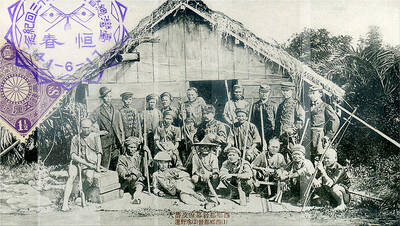
Traditionally, indigenous people in Taiwan’s mountains practice swidden cultivation, or “slash and burn” agriculture, a practice common in human history. According to a 2016 research article in the International Journal of Environmental Sustainability, among the Atayal people, this began with a search for suitable forested slopeland. The trees are burnt for fertilizer and the land cleared of stones. The stones and wood are then piled up to make fences, while both dead and standing trees are retained on the plot. The fences are used to grow climbing crops like squash and beans. The plot itself supports farming for three years.
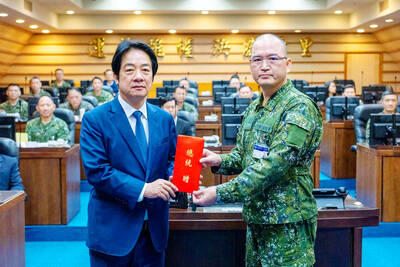
President William Lai (賴清德) on Nov. 25 last year announced in a Washington Post op-ed that “my government will introduce a historic US$40 billion supplementary defense budget, an investment that underscores our commitment to defending Taiwan’s democracy.” Lai promised “significant new arms acquisitions from the United States” and to “invest in cutting-edge technologies and expand Taiwan’s defense industrial base,” to “bolster deterrence by inserting greater costs and uncertainties into Beijing’s decision-making on the use of force.” Announcing it in the Washington Post was a strategic gamble, both geopolitically and domestically, with Taiwan’s international credibility at stake. But Lai’s message was exactly
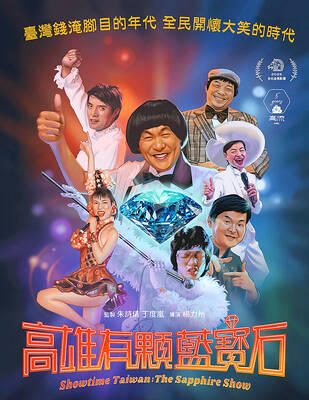
May 4 to May 10 It was once said that if you hadn’t performed at the Sapphire Grand Cabaret (藍寶石大歌廳), you couldn’t truly be considered a star. Taking the stage at the legendary Kaohsiung club was more than just a concert. Performers were expected to entertain in every sense, wearing outlandish or revealing costumes and staying quick on their feet as sharp-tongued, over-the-top hosts asked questions and delivered jokes that would be seen as vulgar, even offensive, by today’s standards. Opening in May 1967 during a period of strict political and social control, Sapphire offered a rare outlet for audiences in


 RSS
RSS