


Politicians from the Chinese Nationalist Party (KMT) often complain of being “smeared red” (抹紅), which is sometimes translated as “red baiting,” a term used to discredit political opponents by associating them with communism, especially during the Cold War.
In a column last week, “Donovan’s Deep Dives: Why ‘dictator’ sticks” (April 23, page 12) we examined why, for some voters, smearing the Democratic Progressive Party (DPP) and President William Lai (賴清德) as “dictatorial” feels right, despite Taiwan clearly not being under authoritarian rule. A combination of the DPP’s internal party culture of stifling dissent and the shadowy machinations of party factions leads many to suspect they intend to do the same in government, though there is no substantive evidence to support this.
The KMT is indisputably a Chinese nationalist party, hence their name. They were founded in China to overthrow the hated foreign Manchurian Qing imperial regime and restore Han Chinese rule. They identify as Chinese and view Taiwan as ultimately a part of China, tragically separated by historic events.
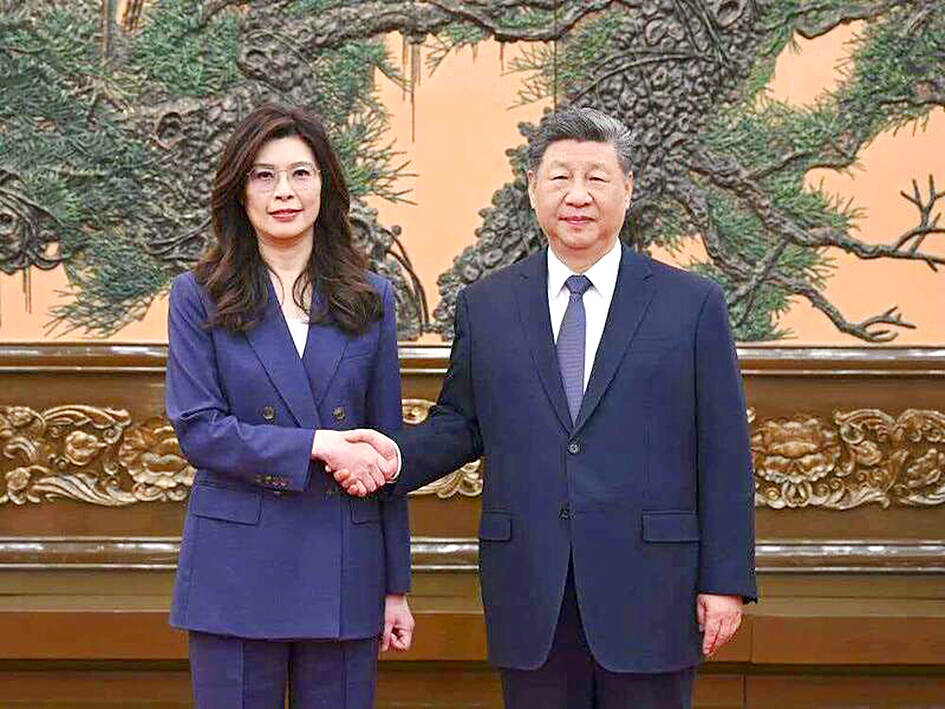
Photo courtesy of the KMT
Calling the KMT “pro-China” is not controversial. That does not automatically equate to pro-Chinese Communist Party (CPP), which is where the “smear red” part comes in.
The KMT is a diverse party, and for those in the party who are not pro-CCP, this “smearing red” is a genuine insult. For example, some are deeply pro-Republic of China (ROC) and recall the history of the brutal Chinese Civil War fought between the KMT and CCP — where many KMT loyalists were betrayed and slaughtered. Many remain loyal to the ideals of party founder Sun Yat-sen (孫逸仙) and the ROC.
The problem for those politicians, and for the party in general at the ballot box, is that since the early 2000s, many in the party have become increasingly friendly to the CCP, and some behave in ways that can only be interpreted as pro-CCP.
To a large portion of the electorate, there are fears that KMT politicians intend to “sell out” Taiwan to Beijing. The problem for more moderate KMT figures is that these fears are not entirely unfounded.
COLLAPSING TRUST
Traditionally, the public trusted the KMT to resist any efforts by the CCP to take Taiwan. After all, they hated the Communists who exiled them from China, and would fight tooth and nail to protect their government-in-exile from the “commie bandits.”
Despite KMT Chairman Lien Chan’s (連戰) outreach to Beijing and his visit there in 2005, the image of the KMT as anti-Communist remained largely intact.
In the run-up to the 2008 election, then KMT presidential candidate Ma Ying-jeou (馬英九) issued his famous “no unification, no independence, no war” pledge.
Ma campaigned on closer ties with China; however, he framed it primarily in economic terms. Taiwan’s wages and economy were stagnating. China was booming and voters got starry-eyed at the thought of taking part in the China gold rush.
Ma won in a landslide, and in his first term set about restoring the direct “three links” — flights, shipping and post — between Taiwan and China that had been cut by Chiang Kai-shek (蔣介石). He also negotiated a pact on trade goods, allowing for more direct trade between the two sides.
Whether these were a good idea is still debated, but they produced enough benefit that future DPP administrations have not touched them, and they remain in force.
It was in his second term that he lost the trust of the Taiwanese voters by negotiating a services pact and tried to ram it through the legislature through procedural trickery. The pact would have been a national security disaster, allowing for Chinese investment and control of nearly every key services business, including telecommunications, news media, financial services, infrastructure, and much, much more.
It was finally clear to the public that he was paving the way for eventual “reunification” with China. Hundreds of thousands poured into the streets to stop it in what became known as the Sunflower movement.
Ma was not the moderate he pretended to be, and suspicion of the intentions of the entire party were called into question. Ma has since publicly discussed his desire for “reunification” — most notably on the eve of the 2024 national elections in an interview with Deutsche Welle.
Initially, the KMT did not understand the gravity of the situation and how far their stock had fallen.
In January 2015, Eric Chu (朱立倫) took over as party chair. It was a critical time, they were preparing for the January 2016 national elections. He initially took stances almost identical to Ma’s, including visiting Beijing to meet CCP Secretary-General Xi Jinping (習近平) in May.
Top politicians in the party were savvy enough to know that they were likely to lose in the presidential election, and the only candidate willing to come forward was Hung Hsiu-chu (洪秀柱), who was even more pro-CCP than Ma.
Her poll ratings slid precipitously, and Chu reluctantly stepped in to replace Hsu as the party’s presidential candidate. He shifted gears to a more moderate stance, but it was still essentially “Ma lite.”
He and the party lost in a landslide, which happened again in 2020. The leadership was hapless and disoriented, sticking largely with Ma-era themes, making it easy — and likely accurate — for the DPP to smear them red.
APPEALING TO MODERATES
Two landslide losses in national elections in a row appeared to wake them up. Following their 2020 loss, they elected Johnny Chiang (江啟臣) as party chair.
Chiang is as close to mainstream public opinion as is possible within the KMT. He attempted — but failed — to get the wildly unpopular “1992 consensus” removed from the party platform. The “1992 consensus” states that Taiwan is a part of China.
However, Chiang was essentially a temporary caretaker chairman and not enough of a heavyweight to lead the party through real election cycles, when it really matters.
For that, the party voted Eric Chu back in as chair in 2021. Chu campaigned against “red unificationists.” In office, he visited the US, where he called the “1992 consensus” a “non-consensus consensus” and took pro-American stances.
Yet, voters had reasons to remain suspicious. While Chu did not repeat his 2015 visit to China, he did reopen direct contacts with the CCP by repeatedly sending his vice chairman.
Immediately after taking office in 2021, he was also sent a congratulatory note by Xi Jinping, which Chiang never got. Chu’s response was right out of Ma’s playbook, down to blaming the DPP — Taiwan’s democratically elected government — for “anti-China” policies and for creating “a tough situation across the Strait.”
Chu was speaking two different languages to two different audiences, one meant for the CCP and the hardline base, the other for the pro-American and anti-reunification moderate voters.
He had some success in winning over moderate voters, and though the party did not win the presidency in 2024, they did not lose in a landslide.
He also had help from the DPP’s efforts to smear the KMT red, which had become performative and sometimes lacking substance. This was especially true in the 2022 local elections, when the DPP attempted to “smear red” the KMT in local elections, where the issues are traffic, potholes and parks. The DPP overplayed the “red” card in a context where it made little sense, and voters saw through it and punished the DPP in a landslide.
Then, last October, the KMT base rallied to elect hardliner and pro-CCP Cheng Li-wun (鄭麗文) as party chair.
She appears to genuinely believe that her pro-peace efforts with Beijing will be a vote-getter in the 2028 national elections.
That is unlikely. She will not only have to convince moderate voters that she and the KMT can be trusted, but also the CCP.
The CCP has an abysmal track record on honoring their agreements, and has become increasingly aggressive and explicit in their aims to annex Taiwan, making it a tough sell.
Donovan’s Deep Dives is a regular column by Courtney Donovan Smith (石東文) who writes in-depth analysis on everything about Taiwan’s political scene and geopolitics. Donovan is also the central Taiwan correspondent at ICRT FM100 Radio News, co-publisher of Compass Magazine, co-founder Taiwan Report (report.tw) and former chair of the Taichung American Chamber of Commerce. Follow him on X: @donovan_smith.

Michael slides a sequin glove over the pop star’s tarnished legacy, shrouding Michael Jackson’s complications with a conventional biopic that, if you cover your ears, sounds great. Antoine Fuqua’s movie is sanctioned by Jackson’s estate and its producers include the estate’s executors. So it is, by its nature, a narrow, authorized perspective on Jackson. The film ends before the flood of allegations of sexual abuse of children, or Jackson’s own acknowledgment of sleeping alongside kids. Jackson and his estate have long maintained his innocence. In his only criminal trial, in 2005, Jackson was acquitted. Michael doesn’t even subtly nod to these facts.
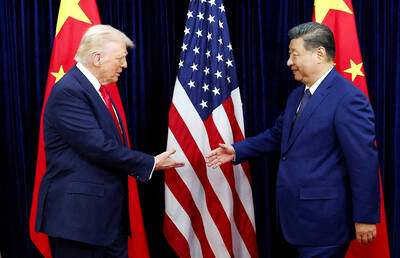
The March/April volume of Foreign Affairs, long a purveyor of pro-China pablum, offered up another irksome Beijing-speak on the issues and solutions for the problems vexing the People’s Republic of China (PRC) and the US: “America and China at the Edge of Ruin: A Last Chance to Step Back From the Brink” rang the provocative title, by David M. Lampton and Wang Jisi (王緝思). If one ever wants to describe what went wrong with US-PRC relations, the career of Wang Jisi is a good place to start. Wang has extensive experience in the US and the West. He was a visiting
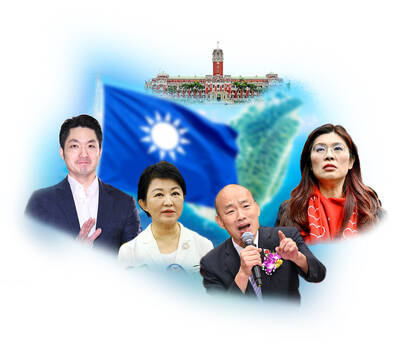
The January 2028 presidential election is already stirring to life. In seven or eight months, the primary season will kick into high gear following this November’s local elections. By this point next year, we will likely know the Democratic Progressive Party (DPP) candidate and whether the Taiwan People’s Party (TPP) will be fielding a candidate. Also around this time, the Chinese Nationalist Party (KMT) will either have already completed their primary, or it will be heading into the final stretch. By next summer, the presidential race will be in high gear. The big question is who will be the KMT’s
One of the challenges with the sheer availability of food in today’s world is that lots of us end up spending many of our waking hours eating. Whether it’s full meals, snacks or desserts, scientists have found that it’s not uncommon for us to be mindlessly grazing at some point during all of our 16 or so waking hours. The problem? As soon as this food hits the bloodstream in the form of glucose, it initiates the release of the hormone insulin. This in turn activates a switch present in every one of our cells, which is responsible for driving cell


 RSS
RSS