


Potentially millions of Americans suddenly have a much easier path to Canadian citizenship, prompting a rush of people to explore their ancestry and file paperwork seeking dual citizenship.
For people like Zack Loud of Farmington, Minnesota, it was a surprise to learn that under a new law, Canada already considered him and his siblings citizens because their grandmother is Canadian.
“My wife and I were already talking about potentially looking at jobs outside the country, but citizenship pushed Canada way up on our list,” he said.

Photo: Bloomberg
Since the new law took effect on Dec. 15 last year immigration lawyers in the US and Canada say they have been overwhelmed by clients seeking help submitting proof of citizenship applications. Driven by politics, family heritage, job opportunities and other factors, thousands of Americans are exploring whether the easier process makes now the right time to gain dual citizenship.
Nicholas Berning, an immigration attorney at Boundary Bay Law in Bellingham, Washington, said his practice is “pretty much flooded with this.”
“We’ve kind of shifted a lot of other work away in order to push these cases through,” he said.
And immigration attorney Amandeep Hayer said his Vancouver, BC, area practice went from about 200 citizenship cases a year to more than 20 consults per day.
HOW THE LAW WORKS
Canada has been changing its citizenship laws for decades, whether to update historic interpretations of law or to address discrimination issues.
Previously, Canadian citizenship by descent could only be passed down to one generation, from a parent to a child. That changed when Canadian bill C-3 took effect Dec. 15 last year and opened up citizenship to anyone born before that date who could prove they have a direct Canadian ancestor — a grandparent, great-grandparent or even more distant ancestor.
Those born on or after Dec. 15 need to show their parent met a residency requirement of 1,095 days.
Under the new law, descendants of Canadians already are considered citizens, but they must provide proof to obtain a certificate of citizenship. Hayer estimated that there are millions of Americans who are Canadian descendants.
“You are Canadian, and you’re considered to be one your whole life,” said Hayer, who advocated for the new law in the Parliament of Canada. “That’s really what you’re applying for, the recognition of a right you already have vested.”
“The best way I can put it is like, if a baby’s born tomorrow in Canada, the baby’s Canadian even though they don’t have the birth certificate,” he said.
DUAL CITIZENSHIP
American applicants have different motivations, but many say President Donald Trump’s efforts on immigration and other topics have led them to seek dual citizenship.
Michelle Cunha, of Bedford, Massachusetts, said she decided to move to Canada after reflecting on decades of political activism and deciding she had “nothing left to give.”
“I put in my best effort for 30 years. I have done everything that I possibly can to make the United States what it promises the world to be, a place of freedom, a place of equality,” Cunha said. “But clearly we’re not there and we’re not going to get there anytime soon.”
Troy Hicks, who had a great-grandfather born in Canada, said he was spurred by an international trip.
“I recently went to Australia and you know, first words out of the first person I talked to in Australia was basically an expletive about Trump and the US,” said Hicks, of Pahrump, Nevada. “It was just like, whoa, I walked off a 20-hour flight and literally the first words of somebody’s mouth to me were that. ... So the idea of doing that with a Canadian passport just seemed easier, better, more palatable.”
Maureen Sullivan, of Naples, Florida, said she was motivated by the Trump administration’s immigration crackdown in Minnesota, which hit home when her teenage nephew encountered federal officers near his high school in St. Paul. Sullivan, whose grandmother was Canadian, said she sees citizenship in Canada as an option in case things in the US “really go south.”
“When I first heard about the bill, I couldn’t believe it. It was like this little gift that fell in my lap,” Sullivan said. “There was kind of this collective excitement among the (family) who just felt like, we wanted to feel like we were doing something to take care of our security in the future if needed.”
HOW MUCH WILL IT COST?
For those with documentation ready at hand, the proof of citizenship application fee is a relatively inexpensive 75 Canadian dollars (US$55).
But costs will climb for those seeking help from an attorney or genealogist.
Cunha said she used an attorney and estimates the cost will be about US$6,500.
However, Mary Mangan, of Somerville, Massachusetts, filed her application in January using advice from online forums.
“There are some situations where a lawyer might be the right thing, but for many people, I would guess 90 percent of people can probably do this on their own,” Mangan said.
The Web site for the Immigration, Refugees and Citizenship Canada office, which processes applications, says processing times for a certificate is around 10 months, with more 56,000 people awaiting a decision.
The agency said that from Dec. 15 to Jan. 31, it confirmed citizenship by descent for 1,480 people, though not all were Americans. Last year, 24,500 Americans gained dual US-Canada citizenship.
WHAT DO CANADIANS THINK?
Fen Hampson, professor of international affairs at Carleton University in Ottawa, said Canadians are generally a “welcoming people.”
“I think where people start looking askance is someone who’s never been to Canada, who has very thin ties. They can get a passport, becoming Canadians of convenience. People don’t like that,” he said.
Hampson said some also worry a surge of interest from Americans could delay efforts by refugees and asylum-seekers fleeing vulnerable situations.
“Canadians don’t like queue jumpers,” Hampson said.
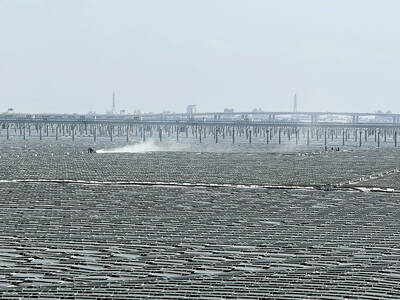
The arithmetic is straightforward and uncomfortable. By the end of 2025, Taiwan had committed itself to a 50-30-20 electricity mix — half natural gas, 30 per cent coal, 20 per cent renewables. The Ministry of Economic Affairs’s (MOEA) own monthly energy reports tell a different story. Natural gas reached 47.8 per cent of generation last year. Coal stood at 35.4 per cent, comfortably above its target ceiling. Renewables came in at 13.1 per cent, well short of the 20 per cent Taipei had pledged a decade earlier. Installed renewable capacity reached roughly half of the 12 gigawatts (GW) the government

There are shadowy cabals plotting to sell out Taiwan to be annexed by China, by invasion if necessary. Fortunately, they are buffoons. In 2019, former Bamboo Union gangster and founder of the China Unification Promotion Party (CUPP), Chang An-le (張安樂, colorfully known as “White Wolf”), led a protest at the Legislative Yuan against comments made by then-premier Su Tseng-chang (蘇貞昌) that in the event of an attack by China, he would never surrender, but would protect the nation by fighting to the end, even if he only had a broom. Chang had party members bring a wooden casket that they

Taiwan’s drone exports are taking off, fuelled by the war in Ukraine, as Taiwanese companies seek a stake in the fast-growing global market for unmanned aerial vehicles (UAV). Low-cost drones used for reconnaissance and strikes are in high demand as governments around the world boost defense spending in the face of intensifying conflicts. A relative new player in the increasingly competitive industry, Taiwan’s pitch is to be an “Asian hub” for the production of UAVs and components free of Chinese materials, or “non-red.” That means its UAVs can be up to three times more expensive than their Chinese competitors, like the world’s biggest
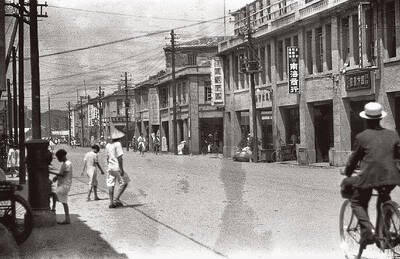
June 1 to June 7 "If all Taiwanese were as afraid of dying as you, then what would happen?” Physician Shih Chiang-nan (施江南) reportedly said this to his wife Chen Chiao-tung (陳焦桐) after she urged him to stop intervening on behalf of Taiwanese soldiers stranded overseas after serving in the Japanese Army during World War II. Shih had clashed with high-ranking officials over the issue, engaged in several heated arguments with Taiwan governor-general Chen Yi (陳儀) and allegedly shouted at general Ko Yuan-fen (柯遠芬), chief of staff of the Taiwan Garrison Command, over


 RSS
RSS