


Competing for attention with Jennifer Lopez is no easy task. But at a recent wedding in India where the American star performed in a barely-there sparkly leotard, it was arguably the cake that stole the show.
The towering multi-tier construction, several meters high and inspired by Rajasthani architecture, became a talking point among guests and featured prominently in media coverage of the 500-guest extravaganza in November last year. Its designer was French celebrity pastry chef Bastien Blanc-Tailleur, whose creations are to cakes what Haute Couture is to fashion: one-off, handmade and requiring extraordinary investments in time and money.
“We rarely work on a wedding that has a budget of less than a million euros,” the 34-year-old said in his studio outside Paris, surrounded by five of his latest edible sculptures.
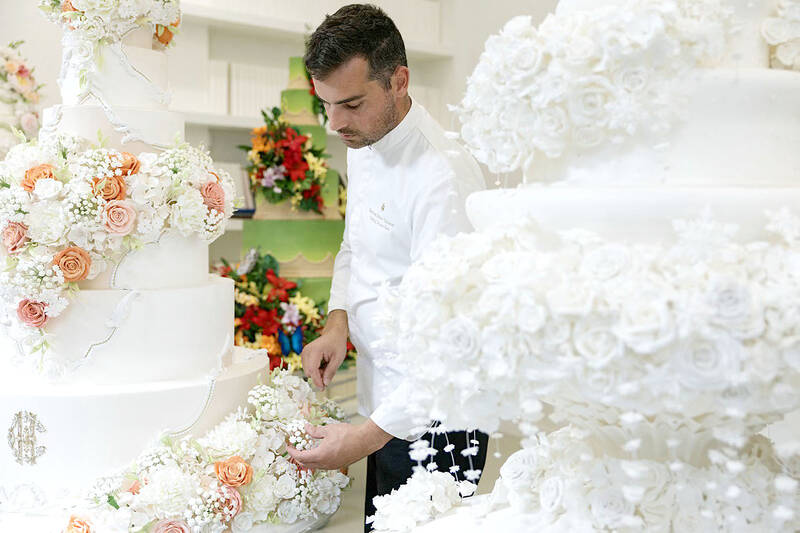
Photo: AFP
The marriage ceremony of billionaire heiress Netra Mantena and tech entrepreneur Vamsi Gadiraju last November in Udaipur cost a reported US$6.7 million, with J-Lo said to have pocketed two million for her appearance.
Blanc-Tailleur declines to reveal prices, saying only that his most modest custom-made cakes start at 20,000 euros (US$23,500) and the elaborate signature pieces can cost multiple times that.
The Indian order comprised five cakes in total: the main creation with tumbling orchids, elephants and dome-shaped pavilions in white sugar-paste, and then two more cakes for the families, as well as another pair which were lowered from the ceiling. They took an estimated 3,500 hours of work.
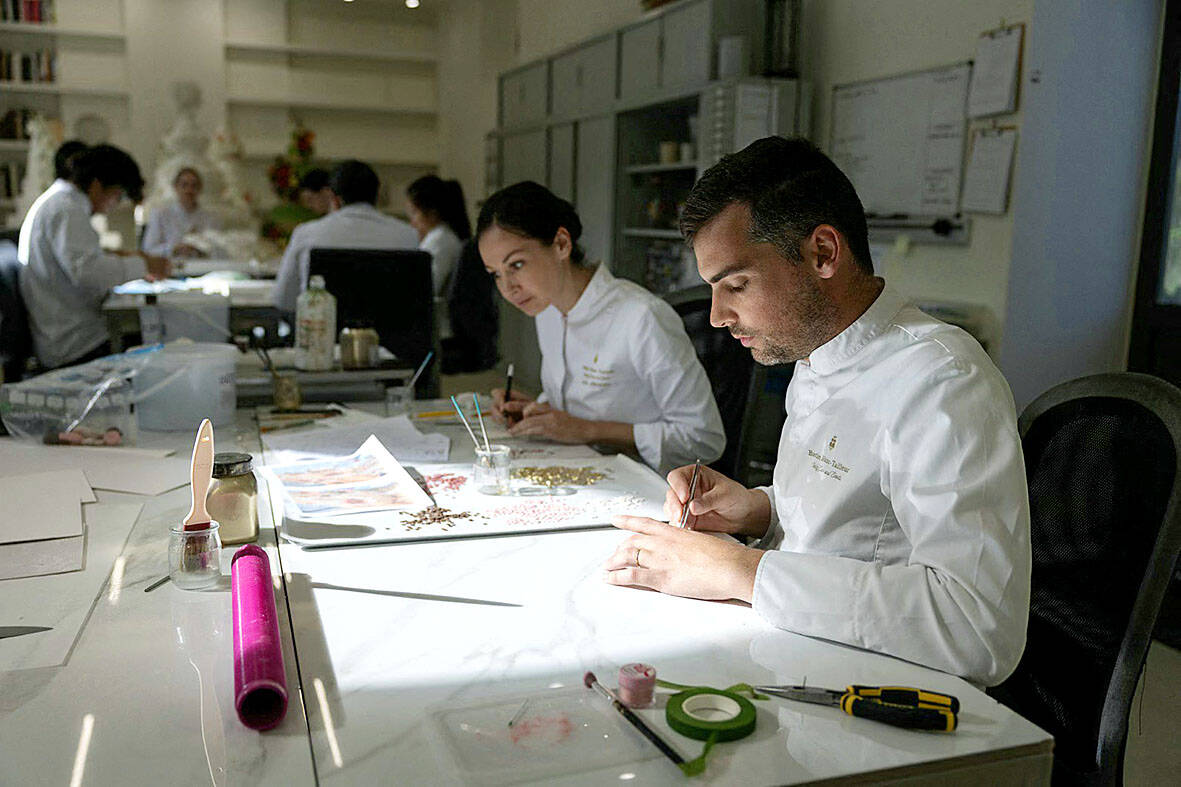
Photo: AFP
“We probably hit the top limit of what we’re capable of,” Blanc-Tailleur explained, adding: “It was one of the projects that I’m the most proud of.”
CHALLENGES
Blanc-Tailleur’s artistry, which he said draws on French traditions dating back to the 1700s which then spread to Britain and America, depends on the patronage of wealthy clients around the world. Middle East royals, wealthy American scions and European aristocrats compete for his limited services: with a full-time staff of only 10, he can only produce about 20 to 25 cakes a year.
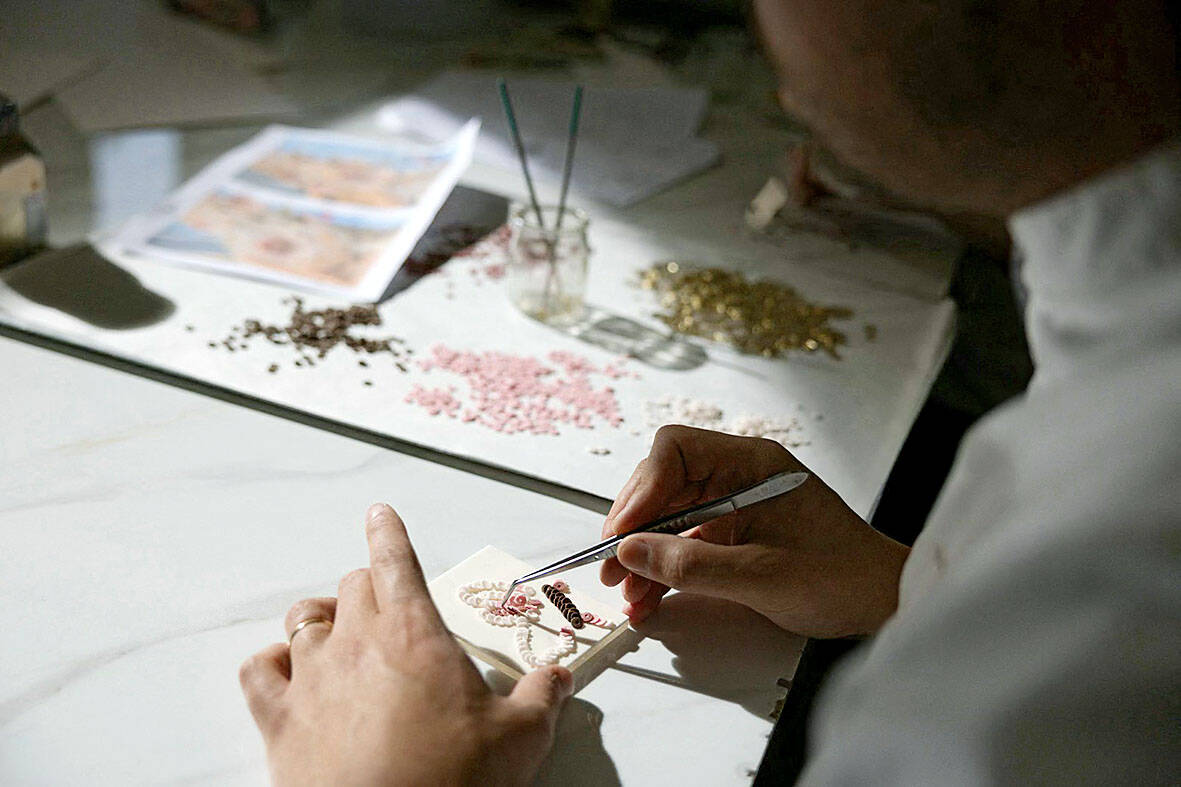
Photo: AFP
The US and Israeli attack on Iran on Feb. 28, which has sparked a regional conflict encompassing much of the Middle East, has upended the well-laid plans of some of these customers.
“Lots of weddings have been pushed back to next year or the year after,” he said. “Several clients who were going to get married in Israel or in Lebanon or in Saudi Arabia have changed and are going to get married in France instead,” he added.
In the eight years since he started his business, he’s had other challenges: the COVID epidemic in 2020-21, as well as problems transporting and finishing his fragile cakes at the ultra-VIP castles and hotels that serve as venues. Logistical issues at the Indian event last November meant Blanc-Tailleur faced a last-minute dash to source eggs and butter for the cake’s base.
“Right up until the last-minute we were not sure we were able to deliver the project in the best way,” he said.
On another occasion, an over-zealous customs official in Saudi Arabia opened the specially designed boxes used to protect the cakes in transit, but neglected to close them properly, causing damage to the icing.
NO LIMITS
Blanc-Tailleur started out as a baker’s apprentice before rising into kitchen management jobs in his twenties at the prestigious George V hotel in Paris and the team of celebrated French chef Yannick Alleno. He said he retained a key lesson from Alleno, the holder of 18 Michelin stars at his various restaurants.
“He used to say that when you’re thinking about a project, you shouldn’t think about how you’re going to do it. Otherwise, you limit yourself in the creative process,” Blanc-Tailleur said.
His designs are drawn by hand on white card — he disdains AI and ultra-realist renderings that remove the joy of discovering the final product. A compulsive collector — of butterflies, seashells, stones and carvings from flea markets — Blanc-Tailleur estimates he has about 2,000 to 3,000 different molds to help make prototypes and the final icing moldings.
“The flowers are the bit that takes the most time,” he said, with roses, orchids, even hydrangeas all made with hand-sculptured layers of icing to match a moodboard provided by the wedding planner.
With so much energy-intensive work and international travel — he attends the weddings of most of his clients — Blanc-Tailleur has little time for himself.
“I’ve been engaged for four years,” he admitted, with no date set for his own marriage.
The arithmetic is straightforward and uncomfortable. By the end of 2025, Taiwan had committed itself to a 50-30-20 electricity mix — half natural gas, 30 per cent coal, 20 per cent renewables. The Ministry of Economic Affairs’s (MOEA) own monthly energy reports tell a different story. Natural gas reached 47.8 per cent of generation last year. Coal stood at 35.4 per cent, comfortably above its target ceiling. Renewables came in at 13.1 per cent, well short of the 20 per cent Taipei had pledged a decade earlier. Installed renewable capacity reached roughly half of the 12 gigawatts (GW) the government
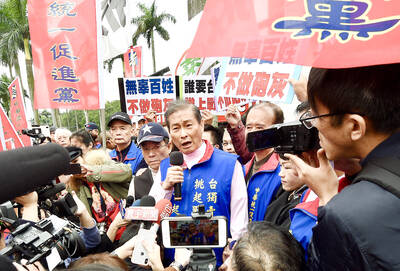
There are shadowy cabals plotting to sell out Taiwan to be annexed by China, by invasion if necessary. Fortunately, they are buffoons. In 2019, former Bamboo Union gangster and founder of the China Unification Promotion Party (CUPP), Chang An-le (張安樂, colorfully known as “White Wolf”), led a protest at the Legislative Yuan against comments made by then-premier Su Tseng-chang (蘇貞昌) that in the event of an attack by China, he would never surrender, but would protect the nation by fighting to the end, even if he only had a broom. Chang had party members bring a wooden casket that they
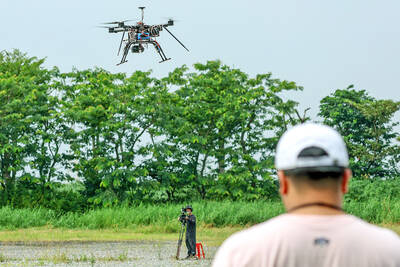
Taiwan’s drone exports are taking off, fuelled by the war in Ukraine, as Taiwanese companies seek a stake in the fast-growing global market for unmanned aerial vehicles (UAV). Low-cost drones used for reconnaissance and strikes are in high demand as governments around the world boost defense spending in the face of intensifying conflicts. A relative new player in the increasingly competitive industry, Taiwan’s pitch is to be an “Asian hub” for the production of UAVs and components free of Chinese materials, or “non-red.” That means its UAVs can be up to three times more expensive than their Chinese competitors, like the world’s biggest
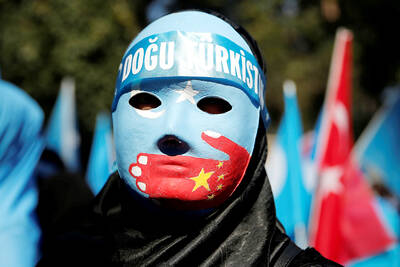
It seems every few days one bumps into one of those “real man” comments in which Taiwan is urged to “face reality” or similar, and “make a deal,” with the speaker implying that soon it will be too late. “Deal” advocates always present themselves as having a superior grip on reality, and the manly ability to make the “hard choice.” Their testosterone-laden language often echoes that of Taiwan sellout advocates. Note that such commentary always specifies a process (“make a deal, work with, make progress”), never the end state of what occupation by a violent authoritarian colonialist state will entail. In


 RSS
RSS